
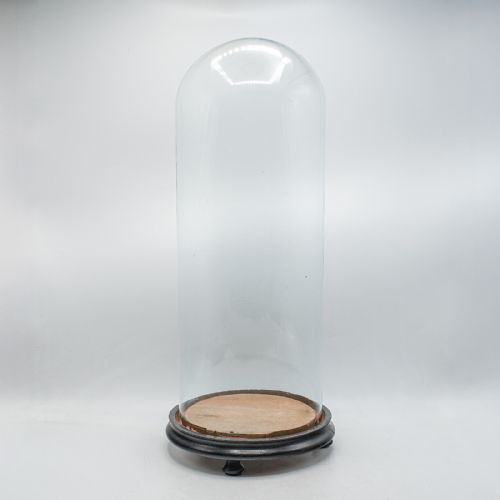


English Glass Display Dome
An English glass display dome offers a clear protective canopy for precious ornaments, taxidermy, and botanical specimens while keeping dust at bay.
English Glass Display Dome
An English glass display dome is a protective glass cover designed to showcase delicate objects and curiosities. These pieces emerged strongly during the Victorian and Edwardian periods, serving both domestic and scientific purposes.
You are most likely to encounter Victorian and Edwardian examples on this page, often tailored to house taxidermy, clocks, or collector specimens. The forms range from tall bell shapes to wide ovoid covers and flat-backed display cases.
The objects combine blown glass bells with fitted timber bases, frequently lined with fabric to cushion the items placed inside. They reflect a nineteenth-century desire to preserve and display natural history and household ornaments.
How they were made
The primary materials recorded in these pieces are blown glass and timber, specifically ebonised wood, beech, oak, mahogany, and pine. Glass makers formed the transparent domes by hand, producing sturdy protective covers of varying heights and widths.
Bases were constructed from seasoned timber, occasionally incorporating fabrics such as felt, baize, or leather to form a stable platform for the specimen or ornament. Joinery on the wooden stands ranged from simple turned plinths to more elaborate mahogany and oak frames.
The archive for this search includes specialised forms such as ovoid clock domes, bell bottom covers, and flat-backed display cases.
What varies in quality
Quality in an English glass display dome rests primarily upon the clarity and weight of the blown glass canopy. Thicker glass with fewer bubbles and distortion separates the finest examples from standard utilitarian covers.
The choice and finish of the wood base also determine the tier of the piece. Fine mahogany, oak, or ebonised wood plinths with precise turned mouldings elevate a display case far above simple pine or beech alternatives.
The English Glass Display Dome Glossary
- Taxidermy showcase
- A glass dome or case specifically utilised to protect and display preserved animals, birds, or insects. These enclosures maintained a dust-free environment for natural history specimens.
- Ebonised wood
- Timber treated with a dark stain or finish to imitate expensive ebony. This dark surface provided a contrasting frame that made the clear glass dome and its contents stand out.
- Baize
- A coarse woolen fabric often used to line the interior base of a display dome. It offered a soft surface for placing delicate ornaments and collectibles.
- Clock dome
- A specialised glass cover originally manufactured to protect mechanical mantel clocks and carriage clocks from dust and atmospheric moisture. These often feature precise circular footprints to match the clock base.
- Bell bottom
- A descriptor for a glass dome whose lower edge flares outward slightly. This traditional shape sits securely within a grooved wooden plinth.
English Glass Display Dome: Frequently Asked Questions
What did people put under glass domes?
Victorian and Edwardian households typically placed taxidermy specimens, botanical collections, and delicate ornaments beneath these glass covers. They also served to protect mechanical timepieces like carriage clocks and mantel clocks from dust.
Scientific specimens and precious souvenirs gained a secure, dust-free enclosure that allowed visitors to inspect the contents from every angle without risking physical damage.
How do I tell Victorian domes from Edwardian ones?
Victorian domes often display heavier proportions and darker, more ornate ebonised or mahogany wooden bases. They frequently accompanied elaborate taxidermy and scientific collections.
Edwardian examples tend toward slightly lighter construction, sometimes utilising beech or oak bases with simpler profiles. The glass manufacturing techniques also evolved subtly, though both eras relied on hand-blown methods.
Are all the bases made of wood?
Most bases recorded in these pieces are constructed from timber such as mahogany, oak, pine, beech, or ebonised wood. These wooden plinths provide the necessary weight to anchor the tall glass canopy.
Many of these wooden bases feature integrated fabric linings like felt, baize, or leather to cushion the displayed items and create a finished presentation surface.
How should I clean an antique glass dome?
The glass canopy can be lifted carefully from its wooden base and cleaned with a soft cloth and mild glass cleaner. Care must be taken due to the fragile and often heavy nature of antique blown glass.
The wooden base and any fabric lining should be dusted gently with a dry brush, avoiding liquid cleaners that might stain or warp the timber and antique textiles.