





English Georgian Sideboard
An english georgian sideboard brings substantial timber and practical storage into a room, offering the surface area and proportions that serious hosts value.
English Georgian Sideboard
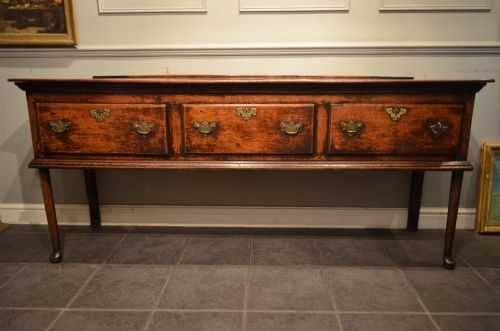
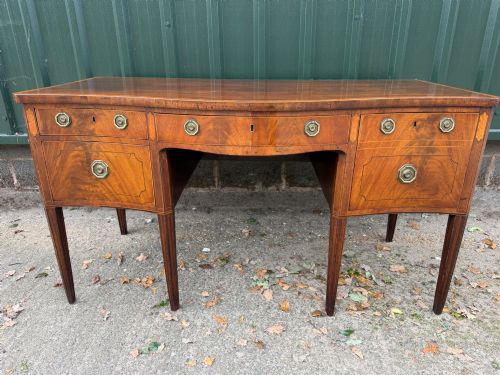
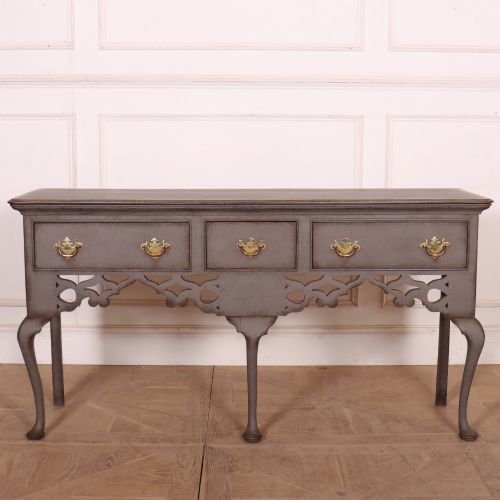
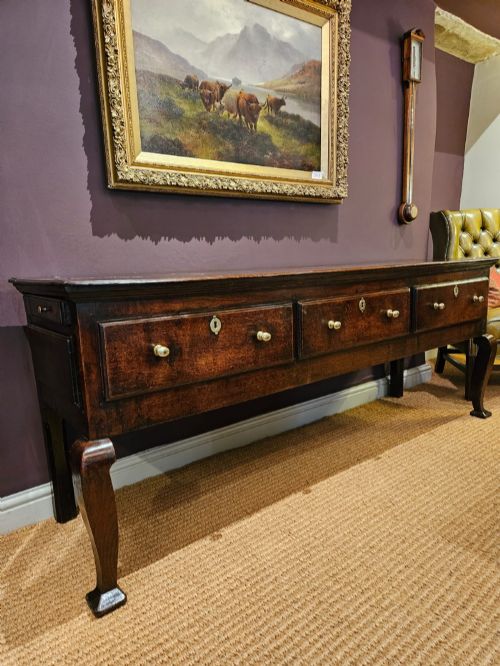
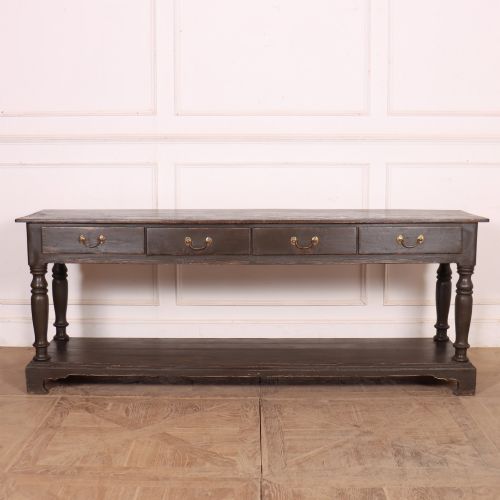
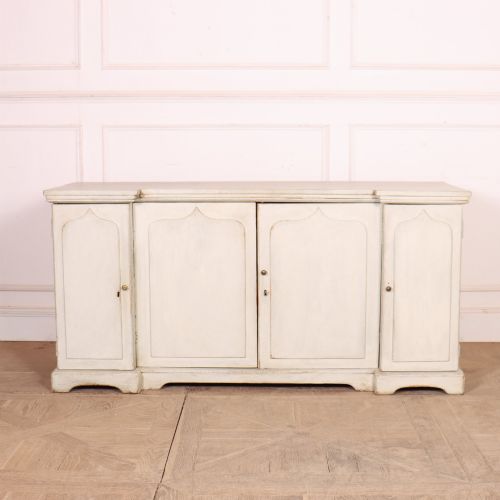
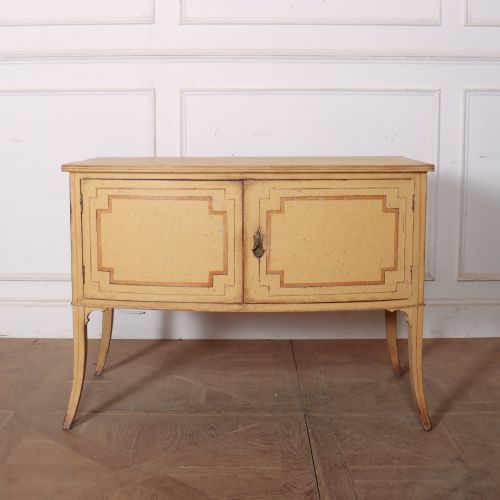
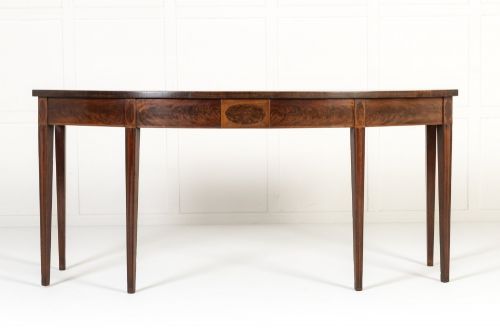
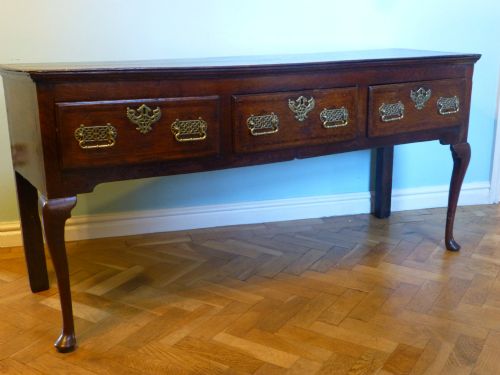
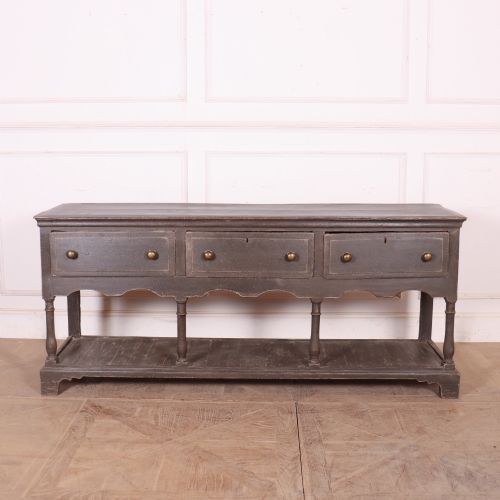
An english georgian sideboard encompasses heavy oak dresser bases, serving tables, and formal mahogany dining pieces originating from the eighteenth and nineteenth centuries. You encounter sturdy potboard dresser bases and country house serving tables built for domestic service rather than light display.
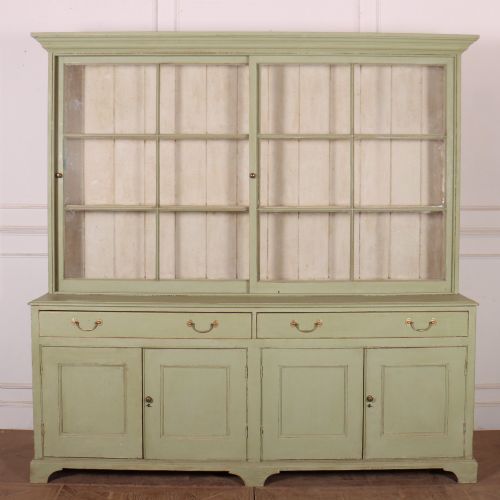
The pieces on this page span vernacular oak and elm constructions alongside refined mahogany and satinwood forms. Many examples feature potboards or multiple drawers designed to organise dining rooms and kitchens.
Materials and construction
Cabinet makers relied primarily on solid oak, pine, and mahogany, often pairing denser timbers for frames with softer woods for secondary elements like drawer linings. Elm and ash appear in regional country pieces alongside painted timber surfaces.
Joinery methods involved traditional pegged joints, hand-cut dovetails for drawers, and substantial board construction for potboards and table tops. Brass hardware and occasional inlay work provide finishing details on more formal items.
English Georgian Sideboard Retail Price Guide 2026
Typical asking prices for english georgian sideboard among the pieces listed under this phrase on Sellingantiques today, from the lower quarter to the upper quarter. They describe what is for sale here now, not the wider market.
Current listings feature eighteenth and nineteenth-century pieces built from oak, pine, mahogany, and painted timber.
Distinguishing quality
The hierarchy of quality rests on timber selection, the crispness of any carved detail, and the integrity of the original structure. A dense, well-figured oak or mahogany surface with minimal timber replacement commands greater appreciation than heavily altered or softwood-dominant equivalents.
Proportion and surface finish dictate the character of each piece. Original painted finishes or patinated bare timber retain historical honesty, whereas clumsy restoration or stripped surfaces diminish the visual weight of the furniture.
The English Georgian Sideboard Glossary
- Potboard
- A lower open shelf built into the base of a dresser or serving table, traditionally used for storing pots and heavy kitchen equipment. This lower tier provides structural rigidity to the legs.
- Dresser base
- A low cabinet featuring drawers and sometimes a potboard, lacking the upper plate rack of a full dresser. These serve as utilitarian sideboards in dining spaces.
- Serving table
- A long table designed for dining rooms to hold dishes before service. These forms often feature cabriole or straight legs with one or more frieze drawers.
- Commode
- A decorative low cabinet or chest of drawers introduced from French influence during the eighteenth century. They frequently showcase fine veneers like burr elm and satinwood.
English Georgian Sideboard: Frequently Asked Questions
What is an english georgian sideboard?
These pieces are large wooden storage items and serving surfaces created during the Georgian era and subsequent nineteenth-century revivals. They include oak dresser bases, mahogany serving tables, and side cabinets built for domestic utility.
They function as focal points in dining rooms and kitchens, offering deep drawers and surface space for serving food or displaying heavy tableware.
How were these sideboards used?
Historically, households utilised these heavy wooden tables and bases in kitchens and dining rooms for food preparation and the storage of heavy pewter or ceramic dishes. The low potboards held bulky kitchen pots out of the way.
Today, buyers use them in modern living spaces and large kitchens to provide concealed storage while functioning as serving surfaces or media consoles.
How do I tell oak from mahogany pieces?
Oak furniture exhibits a pronounced open grain with visible medullary rays, often showing a warm brown tone that deepens with age. These pieces lean towards country house or vernacular aesthetics.
Mahogany presents a smoother, tighter grain with reddish-brown hues that suit more formal neoclassical and Regency interiors. The timber choice reflects the intended social status of the original room.
Are painted finishes original?
Painted timber appears across various regional pieces, but determining whether a coat of paint dates to the original period of manufacture requires examining underlying wear patterns and pigment composition. Many pieces received later decorative coats during country house updates.
Both stripped natural wood and historic painted surfaces hold distinct places in the market, depending on the regional style and the specific era of the piece.