



English Earthenware Dog Pair
An english earthenware dog pair brings instant warmth to a mantelpiece, offering the enduring charm of nineteenth-century domestic ceramics.
English Earthenware Dog Pair
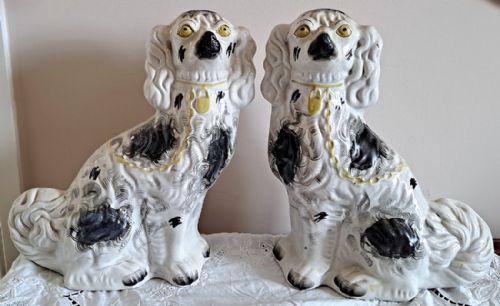
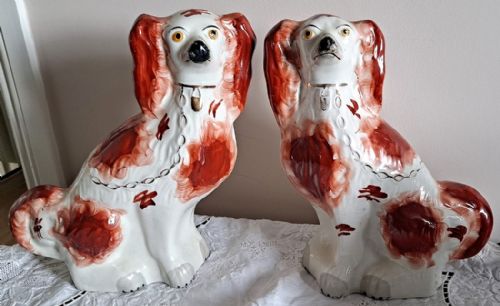
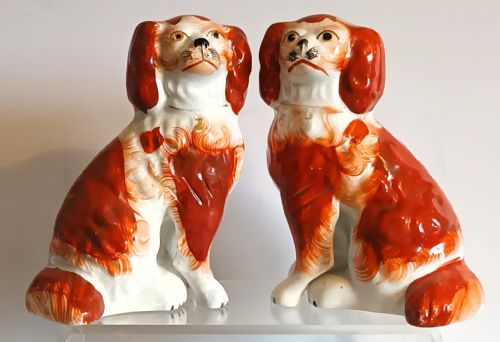
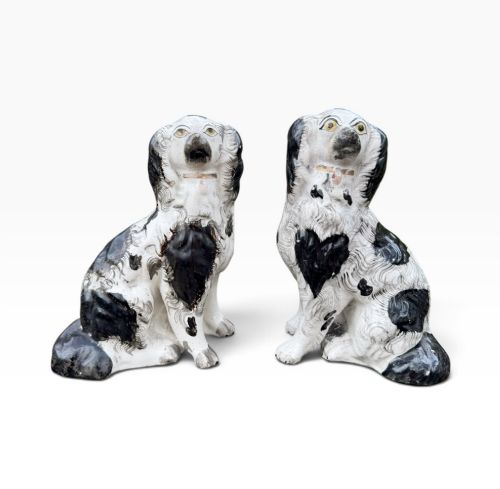
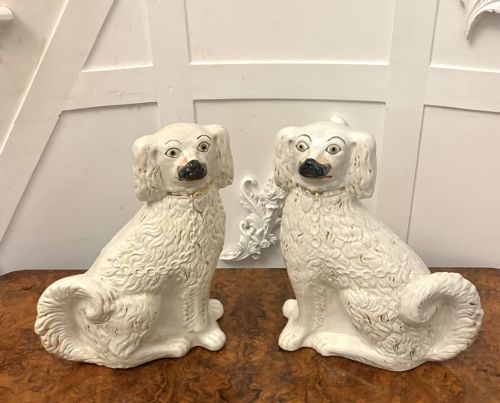
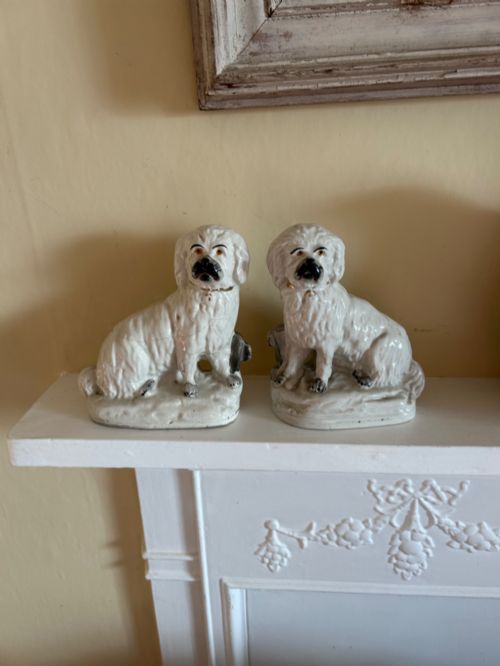
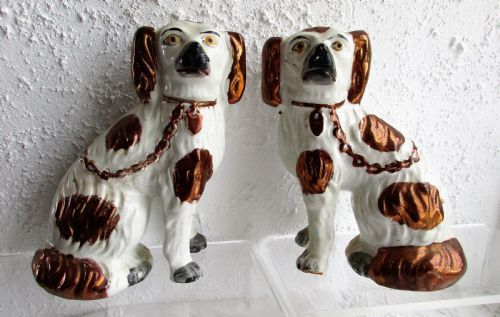
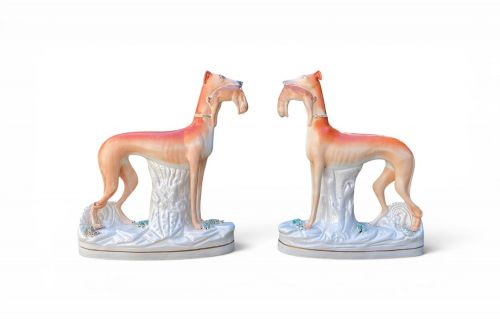
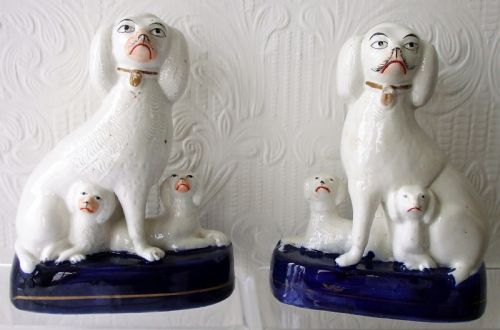
When searching for an english earthenware dog pair, collectors encounter nineteenth-century Staffordshire figures depicting spaniels, greyhounds, poodles, and terriers. These mantle ornaments were modelled in pairs, often designed to face one another from opposite ends of a fireplace.
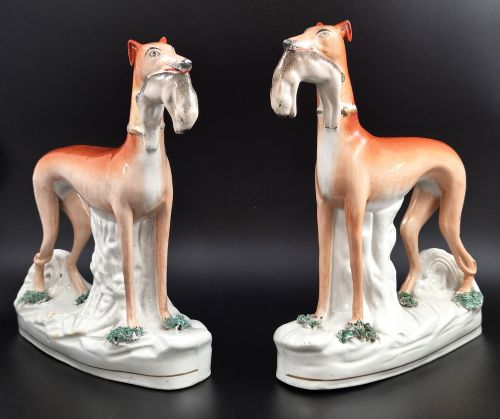
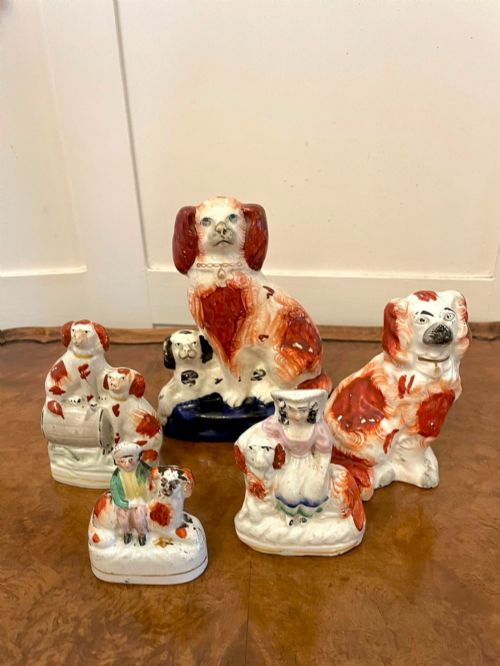
The selections on this page span the Victorian era, heavily representing mid to late nineteenth-century productions. Alongside standard spaniels, listings include rarer forms such as greyhounds with hares, poodles with pups, and quill holders.
Originating primarily from Staffordshire potteries, these ceramic figures capture the domestic tastes of the period. Their forms range from miniature models to large decorative pairs fitted with glass eyes.
Materials and construction
Gilt accents and gold leaf often highlight collars, lockets, and chains on the figures. Selected examples incorporate glass eyes to add a realistic expression to the ceramic bodies.
English Earthenware Dog Pair Retail Price Guide 2026
Typical asking prices for english earthenware dog pair among the pieces listed under this phrase on Sellingantiques today, from the lower quarter to the upper quarter. They describe what is for sale here now, not the wider market.
The documented dates span from eighteen-fifty through to eighteen-ninety, covering the entirety of the later nineteenth century.
Assessing quality in earthenware figures
Quality rests heavily on the crispness of the moulding and the control shown during the hand-painting of the enamel details. Finer examples display cleanly defined fur textures and precisely applied facial markings rather than hurried brushwork.
The preservation of the original glaze and the intactness of any gold leaf or gilt highlights distinguish superior survivals. Additionally, unusual subject matter such as hunting scenes or accompanying pups elevates certain pairs above standard spaniels.
James Dudson
The English Earthenware Dog Pair Glossary
- Earthenware
- A porous type of pottery fired at lower temperatures, requiring a glaze to become impermeable to liquids. It serves as the primary ceramic body for nineteenth-century Staffordshire figures.
- Staffordshire pottery
- Ceramics produced within the pottery towns of Staffordshire, England, famous for domestic figures and mantle ornaments. This region generated the vast majority of Victorian animal figurines.
- Lead glaze
- A glassy coating applied to pottery before firing to give a glossy surface and seal the earthenware body. It provides the characteristic shine seen on Victorian dogs.
- Enamel paint
- Vitreous colours applied over the glazed ceramic surface and refired to fuse with the body. Artisans utilised these paints to depict markings, eyes, and collars.
- Quill holder
- A desk accessory featuring a modelled figure with an integrated receptacle for holding writing feathers. Greyhound figures occasionally served this functional desk purpose.
English Earthenware Dog Pair: Frequently Asked Questions
How were these dogs displayed?
Victorian households traditionally placed an english earthenware dog pair on the mantelpiece of a parlour or sitting room. They were positioned at either end of the fireplace, facing inward toward each other.
Beyond the hearth, owners set them on side tables, chests of drawers, and an assortment of desk surfaces as decorative ornaments.
What dog breeds are commonly found?
Spaniels dominate the available varieties, particularly the seated comforter spaniels with painted patches and gilded chains. Poodles, greyhounds, and Maltese terriers appear less frequently but form a distinct segment of the listings.
Certain greyhound models incorporate practical elements like quill holders, while others are depicted alongside hares or with their pups.
How do I date these figures?
Dating relies on stylistic clues, manufacturing traits, and historical periods spanning the nineteenth century. Victorian pieces often exhibit specific glazing characteristics and modelling styles associated with Staffordshire potteries active between the eighteen-fifties and eighteen-nineties.
Miniature versions and specific colour palettes, such as solid white or distinct black and white combinations, further help narrow the production timeframe.
Are glass eyes common?
Glass eyes appear on selected large nineteenth-century examples, adding a lifelike gaze to the ceramic figures. Most pieces instead rely on painted enamel eyes applied directly onto the glazed earthenware surface.
When present, glass eyes are typically found on larger Staffordshire spaniels produced towards the end of the Victorian period.