



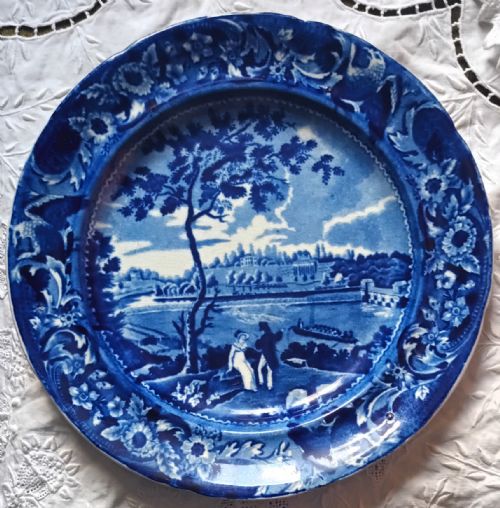


English Earthenware Display Plates
English earthenware display plates bring vibrant tin-glazed colours and intricate transfer prints into a room, offering centuries of historic character.
English Earthenware Display Plates
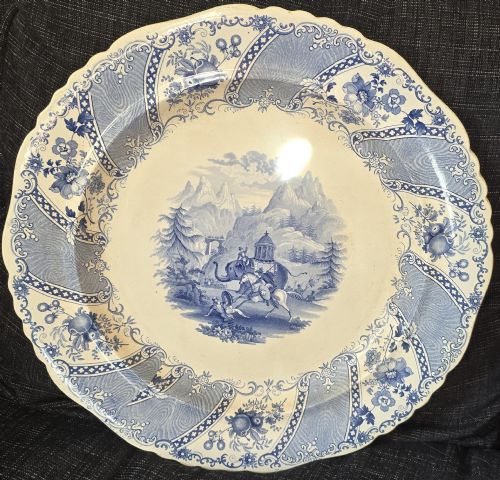
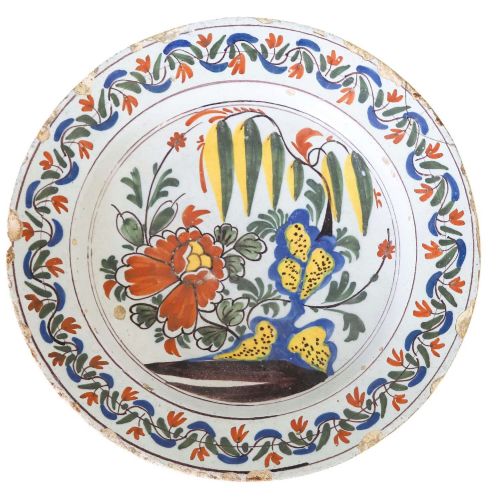
When you search for english earthenware display plates, you encounter centuries of ceramic history spanning from early tin-glazed chargers to later transfer-printed wares. The pieces on this page are predominantly larger wall-hanging chargers and cabinet plates originating from the eighteenth and nineteenth centuries.
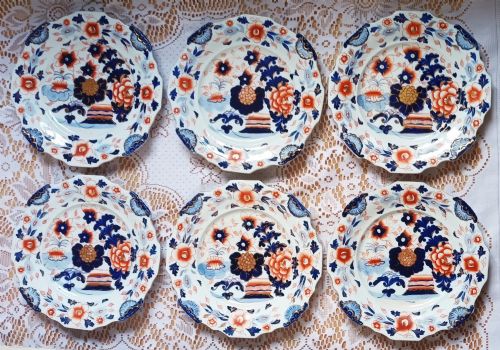
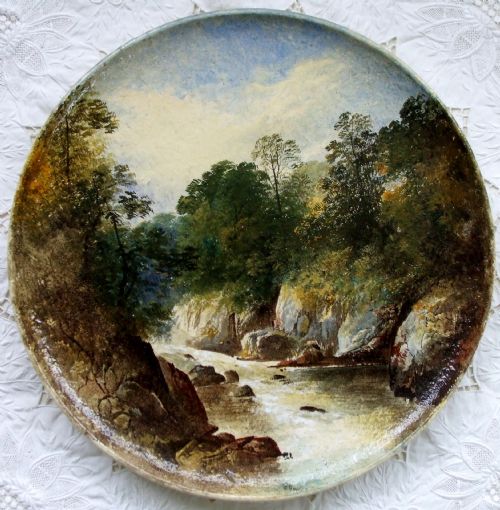
The selection ranges from early eighteenth-century Delftware and Lambeth pieces decorated with polychrome or blue and white pigments to nineteenth-century Staffordshire transfer-printed pottery and mid-century art pottery designs. Forms vary from small tea plates to large forty-three centimetre chargers intended for prominent display.
Georgian and Victorian examples dominate the available selection, often bearing landscape scenes, floral motifs, or Chinoiserie patterns painted by hand or applied through copperplate transfer. These objects reflect the changing tastes of British households across successive decorative eras.
Materials and production methods
Makers utilised porous clay bodies coated in tin glaze or lead glaze to provide a smooth white surface suitable for painting or transfer printing. Cobalt pigment and polychrome enamel colours were applied directly to the unfired or biscuit-fired surface, absorbing into the glaze during high-temperature kiln firing.
Transfer printing involved etching designs onto copper plates, inking them, and transferring the impression onto tissue paper which was then pressed onto the ceramic body. Later twentieth-century pieces introduced tubelined decoration, where raised clay lines created compartmentalised cells for vibrant coloured glazes.
English Earthenware Display Plates Retail Price Guide 2026
Typical asking prices for english earthenware display plates among the pieces listed under this phrase on Sellingantiques today, from the lower quarter to the upper quarter. They describe what is for sale here now, not the wider market.
Listings feature 18th-century tin-glazed earthenware alongside 19th-century transfer-printed pottery, ironstone china, and mid-century art pottery plates.
Assessing quality and craftsmanship
Quality rests primarily on the crispness of the brushwork and the precision of the transfer printing. Hand-painted examples with rich, steady cobalt strokes or multi-coloured enamel palettes stand apart from routine output through the artistic confidence of their execution.
The clarity of the tin glaze and the stability of the fired body also distinguish superior items. Well-potted chargers with minimal warping from the kiln and deep, luminous glaze surfaces represent the finest standards achieved by period potteries.
Stubbs·William Yale·Charlotte Rhead Crown Ducal·Wedgwood Queen s Ware·William Adams·Masons Ironstone·Minton
The English Earthenware Display Plates Glossary
- Charger
- A large decorative plate, typically over thirty centimetres in diameter, designed primarily for display on walls or sideboards rather than dining.
- Tin Glaze
- An opaque white ceramic glaze containing tin oxide, which provides a smooth background for hand-painted blue and white or polychrome decoration.
- Transfer Printing
- A mechanical decoration technique where an engraved copper plate applies a printed ink design onto the ceramic surface before glazing.
- Ironstone
- A durable type of heavy earthenware patented in the nineteenth century that bridges the gap between common pottery and porcelain.
- Tubelining
- A decorative ceramic technique where liquid clay is piped through a nozzle onto the surface to outline patterns before painting.
English Earthenware Display Plates: Frequently Asked Questions
How were display plates used?
Display plates and large chargers were historically mounted on walls, set into dresser racks, or stood on sideboards to showcase wealth and artistic taste. Unlike utilitarian tableware, many featured decorative borders and pictorial scenes intended exclusively for visual appreciation.
Over successive centuries, households collected these pieces to brighten panelled rooms and display regional topographical views, botanical studies, or elaborate Chinoiserie compositions to visiting guests.
How do I distinguish Delftware from later pottery?
Early Delftware pieces feature a porous earthenware body covered in an opaque tin glaze that often shows minor surface crazing or edge chipping revealing the buff clay beneath. The hand-painted cobalt or polychrome pigments sink directly into this softer white glaze.
Later nineteenth-century pottery typically utilises harder ironstone or refined earthenware bodies combined with mechanical transfer printing rather than freehand brushwork, yielding a much more uniform and consistent surface finish.
Can I hang antique plates on the wall safely?
Wall mounting is entirely feasible provided you use properly adjusted spring-clip hangers that distribute pressure evenly across the rim without scratching the glaze. Ensure the mounting wire and wall fixing are rated to support the weight of heavier earthenware chargers.
Avoid hanging plates in areas subject to direct sunlight, high humidity, or sudden temperature fluctuations, which can stress the historic ceramic body and fragile tin glaze over time.
What does polychrome mean on old plates?
Polychrome decoration refers to the use of multiple distinct colours painted onto the ceramic surface, typically combining iron red, yellow, green, and manganese purple alongside blue. This palette provides a richer, more varied visual impact than standard blue and white pieces.
On eighteenth-century pieces, these colours were often applied by hand over the white tin glaze before a final kiln firing fixed the pigments permanently into the surface.