


English Door Keeper
An English door keeper keeps heavy portals firmly ajar with the solid weight of cast iron, brass, or bronze.
English Door Keeper
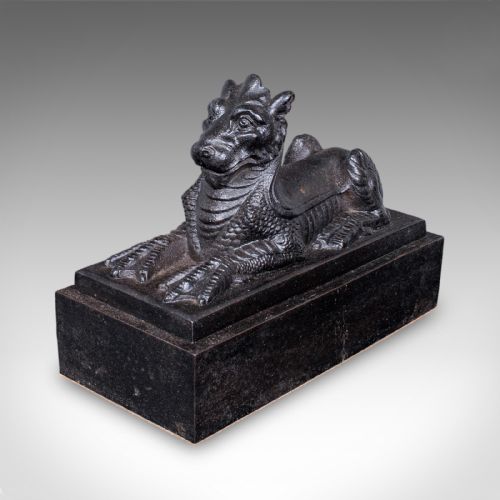
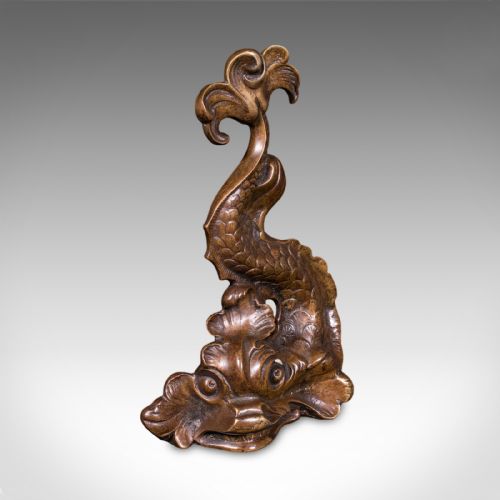
An English door keeper is a heavy sculptural object designed to hold interior doors open against drafts, taking the form of figures, animals, and heraldic motifs. When you search for this phrase, you find Victorian, Regency, Edwardian, and later examples fashioned as lions, dogs, knights, and dolphins.
The pieces on this page appear in cast iron, brass, and bronze, often retaining traces of old paint. Animal subjects range from playful border collies and foxes to regal lions and mythical dolphins.
Victorian examples dominate the selection, showing the period's fondness for figurative cast iron work and Gothic revival details. Regency and Edwardian variations sit alongside them, offering distinct sculptural forms from different eras.
Materials and Methods
Foundries produced most English door keepers using heavy cast iron or brass, pouring molten metal into sand moulds to achieve crisp detail. Iron examples provide the necessary weight to secure heavy timber doors without sliding.
Some pieces combine materials, pairing iron bodies with brass or bronze details, while others receive a layer of protective paint. Craftsmen finished the surfaces by hand, leaving tool marks and textural variations characteristic of nineteenth-century foundry work.
A cast iron knight stands ready to guard the drawing room door.
Assessing Quality and Character
Substantial physical weight distinguishes better castings, ensuring the object functions properly as a doorstop. Original surface patination and honest wear add character that modern reproductions lack.
The English Door Keeper Glossary
- Door keeper
- An alternative term for a heavy doorstop designed to hold doors open. These objects serve both a utilitarian purpose and a decorative function in a room.
- Cast iron
- A strong, heavy alloy of iron and carbon poured into moulds while molten. It provides the essential mass required for keeping heavy interior doors stationary.
- Patina
- The surface texture and coloration developed through age, handling, and wear. It indicates the authentic age of the metal.
- Regency
- A British design period spanning the early nineteenth century. Pieces from this era often feature classical or mythical motifs.
English Door Keeper: Frequently Asked Questions
How heavy are these door stops?
These objects possess significant physical weight, typically several kilograms, to anchor heavy wooden doors effectively.
Cast iron and bronze variants provide the densest mass, ensuring the stop remains firmly in position against draughts.
Where should I place a door keeper?
Place the piece against the skirting board or floor near the open path of an interior door. It works best on hardwood, stone, or carpeted floors where its weight holds the door secure.
Position the object so the decorative face remains visible when the door rests against it.
How do I care for cast iron?
Keep the metal dry and dust it gently with a soft cloth to preserve the surface finish and any remaining original paint.
Avoid using harsh chemical cleaners or abrasive pads that can strip the historic patina or damage the iron.