


English Crystal Decanter
An english crystal decanter brings heavy-cut brilliance and refined spirit storage to the sideboard.
English Crystal Decanter
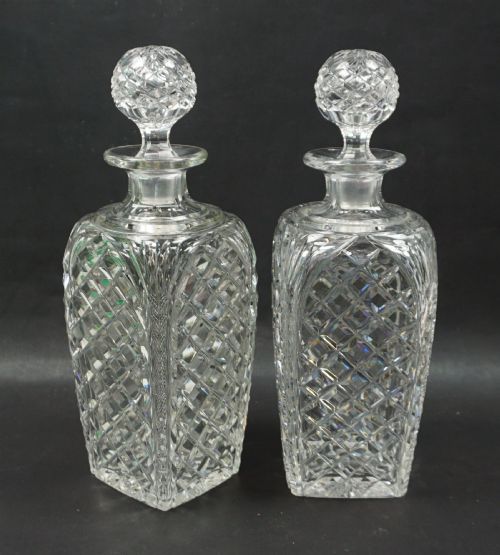
An english crystal decanter encompasses vessels designed to hold and serve wine, whiskey, spirits, and cordials. You will encounter forms ranging from low, stable ship's decanters to tall, tapered square sections and engraved claret jugs. These pieces span Georgian, Victorian, Edwardian, and Art Deco periods, frequently incorporating sterling silver or silver plate collars.
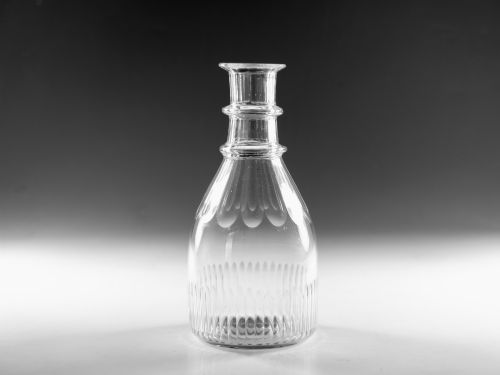
The selection on this page relies heavily on heavy lead glass and cut crystal, often paired with matching stoppers or metal mounts. Many examples reflect specific historical eras, such as three-ring Regency wine bottles or elaborately housed tantalus sets. They serve both a practical drinks-serving function and a decorative role in home barware.
How They Were Made
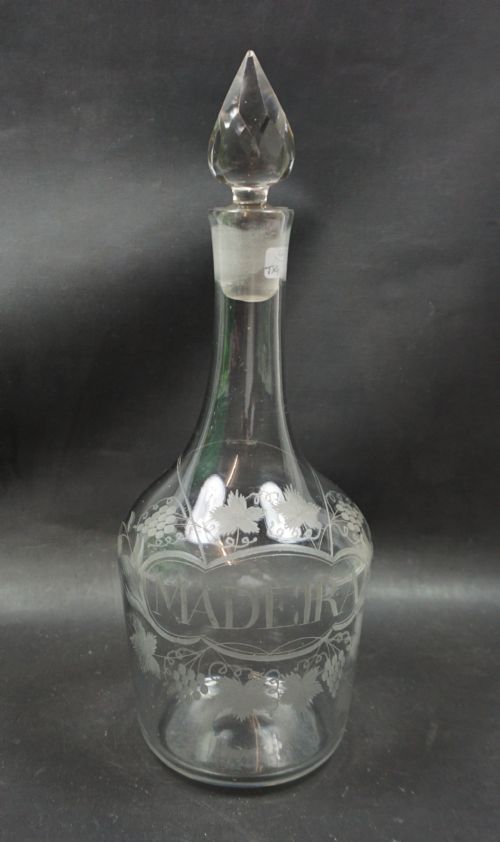
The primary materials recorded in these pieces are lead crystal and cut glass, often combined with sterling silver or silver plate for collars, mounts, and locking mechanisms. Artisans shaped the vessels using traditional glassblowing techniques before applying wheel-cutting, pillar-cutting, or delicate hand engraving.
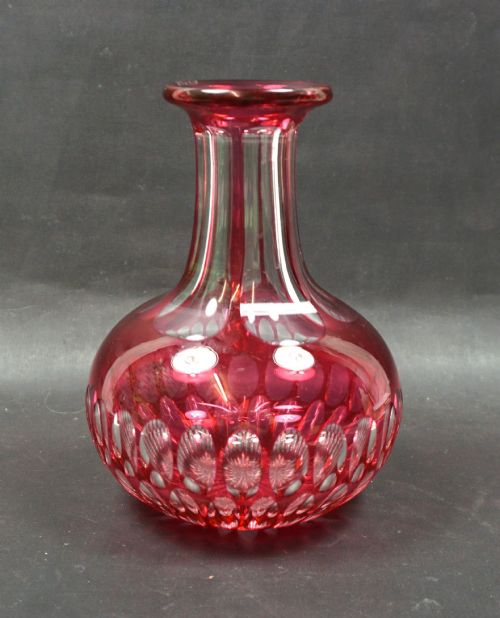
Overlay techniques appear in contrasting colours like cranberry or ruby over clear glass, while decorative additions include latticinio threads and cast metal hardware. Makers also utilised precious woods such as coromandel, burr walnut, and oak to construct fitted tantalus boxes and games compendiums.
Some Victorian spirit sets come locked in heavy oak frames so tight that even the most determined butler required a key.
What Varies in Quality
Quality rests upon the clarity and weight of the glass, alongside the precision and depth of the wheel-cut or engraved ornamentation. Superior examples feature crisp, sharp facets that catch the light directly, paired with heavy, well-balanced bases.
The calibre of the metalwork further elevates a piece, distinguished by solid sterling silver collars bearing clear hallmarks, or robust silver plate and secure locking mechanisms on fitted tantalus units.
Richardsons Birmingham·Barnsley and Co·Mappin and Webb·Hukin and Heath
The English Crystal Decanter Glossary
- Ship's decanter
- A form with a broad, flat base designed to prevent tipping at sea. Its distinct conical profile ensures stability on moving surfaces.
- Tantalus
- A locking wooden or metal frame that restrains decanters to prevent unauthorized pouring. It secures the stoppers beneath a metal bar while displaying the cut glass within.
- Claret jug
- A serving vessel specifically shaped for red wine, featuring a handle and a hinged metal lid. They frequently combine cut crystal bodies with sterling silver or silver-plated mounts.
- Lead crystal
- Glass containing a significant lead oxide content that increases weight, refractive index, and brilliance. This material allows for deep, sharp facet cutting.
- Latticinio
- A decorative glass technique utilising fine opaque white or coloured glass threads embedded within clear metal. It creates intricate internal patterns across jugs and carafes.
English Crystal Decanter: Frequently Asked Questions
How do I use a tantalus?
A tantalus secures a set of decanters within a locked wooden or metal framework, preventing guests from pouring drinks without a key.
By engaging the lock, a metal bar drops over the stoppers, holding the glass vessels firmly in place while still showcasing the cut crystal.
What is the difference between lead crystal and glass?
Lead crystal contains metallic oxide that adds considerable weight, superior clarity, and higher light refraction compared to standard glass.
This composition allows artisans to execute deep, sharp cuts that sparkle brightly under ambient room lighting.
How do I care for antique decanters?
Antique decanters require careful hand washing with warm water and mild detergent, avoiding sudden temperature changes to protect the historic glass.
Stoppers should be stored separately or loosely rested in the neck to prevent them from becoming permanently stuck over time.