

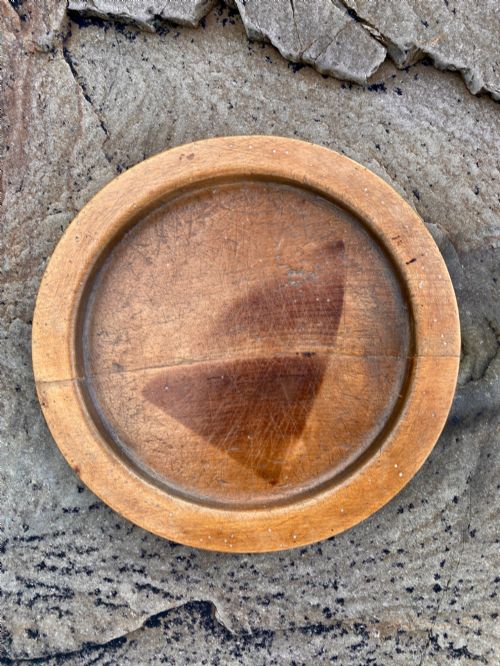


English Country Platter
An English country platter brings rustic character to a room, offering tactile warmth through timber and metal shaped by centuries of domestic use.
English Country Platter
An English country platter represents the utilitarian domestic ware shaped by domestic life across Georgian and Victorian households. These serving pieces include large wooden trenchers, heavy chargers, and transfer-printed earthenware designed for everyday service.
The version most commonly met on this page is the substantial wooden platter turned from sycamore or ash, alongside sturdy pewter dishes bearing touchmarks from provincial makers. Such items reflect the practical needs of English dining before mass production standardised the kitchen.
Surviving examples span the eighteenth and nineteenth centuries, carrying the marks of open hearths, table service, and daily handling. They bridge the gap between humble kitchen utility and the decorative warmth collectors seek today.
Materials and construction
Wood platters take shape through lathe-turning domestic timbers such as sycamore and ash, relying on the tight grain of local hardwoods to resist splitting under heavy use. Makers selected timber for strength, finishing the surface simply to let the natural grain dominate.
Metal items like pewter dishes and chargers employ an alloy of tin and lead cast in moulds, then hammered and smoothed by hand on a lathe. Makers stamped their touchmarks onto the rim to certify the metal purity.
Ceramic pieces utilise earthenware and porcelain bodies shaped through moulding or throwing, finished with glazes that receive hand-painted pigments or blue and white transfer printing. Kiln firing sets the vitreous surface, sealing the clay against moisture.
English Country Platter Retail Price Guide 2026
Typical asking prices for english country platter among the pieces listed under this phrase on Sellingantiques today, from the lower quarter to the upper quarter. They describe what is for sale here now, not the wider market.
Listings feature items spanning the eighteenth and nineteenth centuries, including Georgian and Victorian periods.
Distinctions in quality
The distinction between ordinary utility ware and superior pieces lies in the crispness of the timber turning and the weight of the metal. Heavier pewter plates retain their shape and clean rims, while well-turned wooden platters display balanced proportions and deep, even colour.
Maker identification elevates a piece significantly, as touchmarks from established pewterers or stamped marks on ceramics indicate higher workshop standards. Craftsmanship shows in the precision of a transfer print or the careful hand-painting of landscape scenes.
T & H Compton·John Rogers & Son·Jennens & Bettridge
The English Country Platter Glossary
- Trencher
- A large wooden platter or board used for cutting and serving food at the table before ceramic plates became common.
- Charger
- A large decorative or serving dish placed beneath other courses, commonly fashioned from pewter or earthenware.
- Touchmark
- A stamped seal or hallmark applied by a metalworker or pewterer to guarantee the standard of their alloy.
- Transfer printing
- A decorative technique applying engraved designs to ceramics using paper tissue soaked in metallic oxide pigment.
English Country Platter: Frequently Asked Questions
What are English country platters made of?
These domestic items appear in native hardwoods like sycamore and ash, alongside pewter alloys and ceramic earthenware.
Each material served a distinct purpose in the historic dining room, from heavy metal chargers to turned wooden trenchers.
How were these platters used historically?
Platters served family meals, held joints of meat, or acted as central chargers on the dining table before individual plates took over.
Wooden versions also functioned as cutting boards for bread and cheese in domestic kitchens.
How do I care for antique wood?
Keep wooden items away from direct heat sources and dramatic humidity changes to prevent the timber from warping or splitting.
Treat the surface occasionally with neutral mineral oil to nourish the grain without damaging the historic finish.
How can I tell the age of pewter?
Pewter age is indicated by the style of the rim, the weight of the metal, and the touchmark stamped into the reverse.
Earlier examples often feature broader rims and softer surface patinas developed through generations of polishing.