



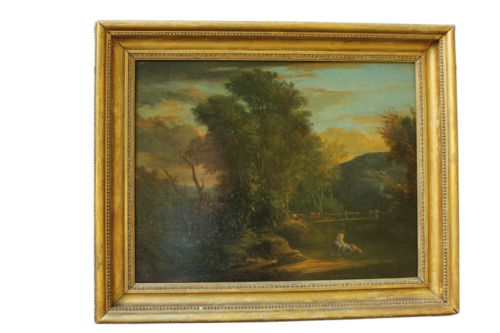
English Country Pastoral Painting
An english country pastoral painting brings the quiet rhythms of rural life, riverbanks, and harvest fields directly into the room.
English Country Pastoral Painting
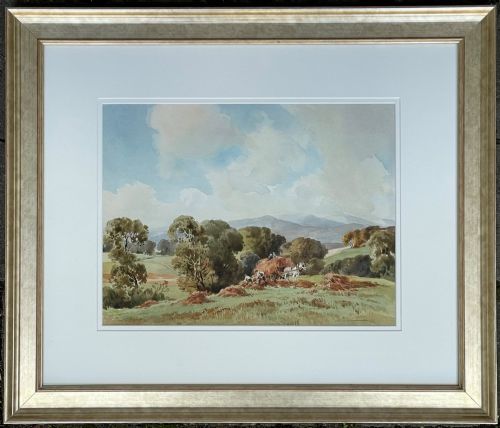
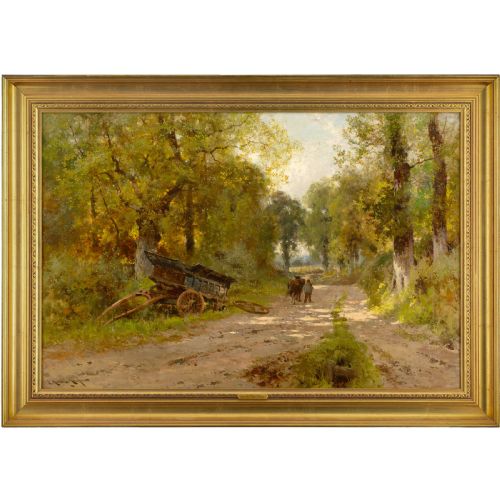
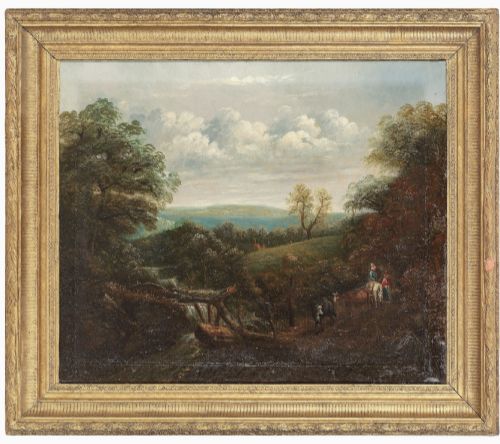
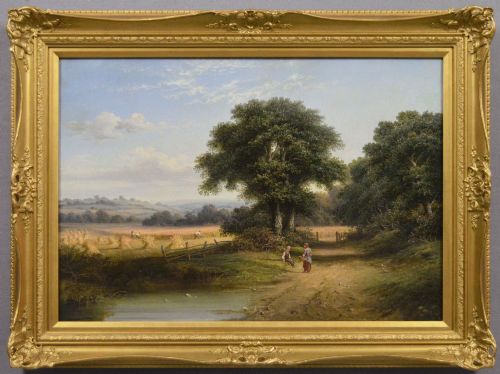
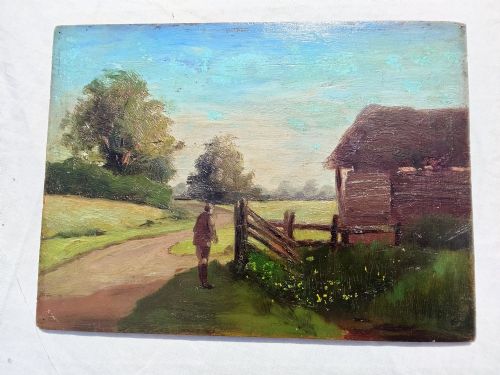
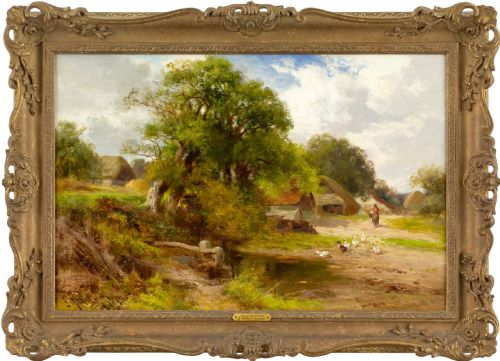
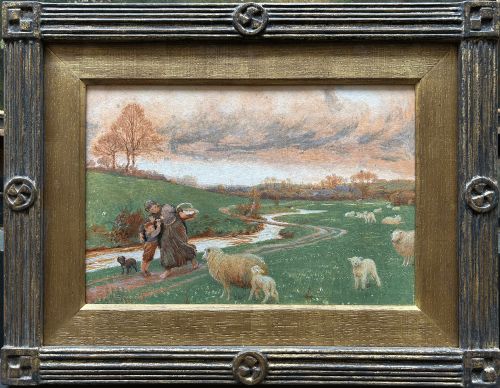
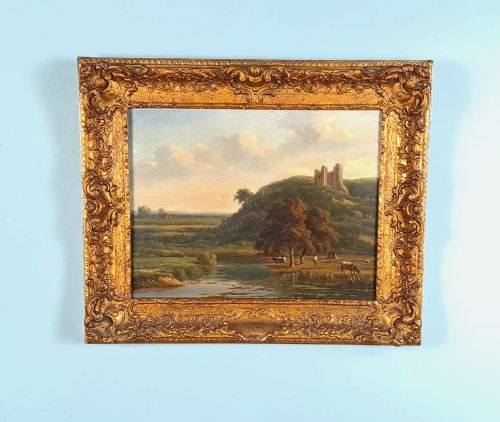
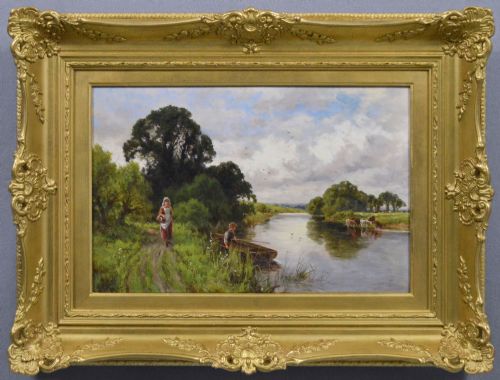
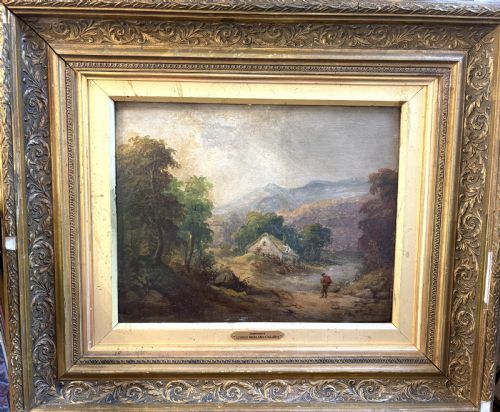
An english country pastoral painting captures the traditional scenery of rural Britain, featuring farmyards, rivers, cottages, and agricultural workers across various historical periods. The works on this page span from the Georgian era through the Victorian period and into the early twentieth century.
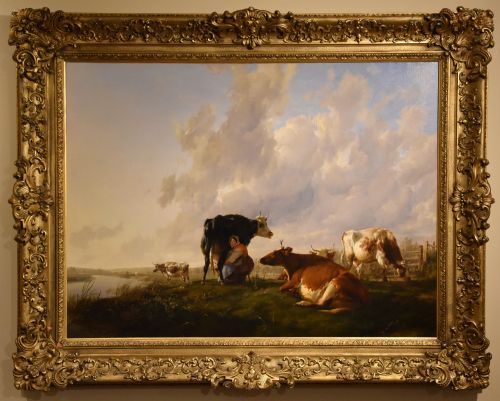
Most pieces portray tranquil agricultural scenes such as cattle grazing, sheep resting in farmland, or figures near harvest fields. Canvas and wood panel formats dominate the oil paintings, alongside detailed nineteenth-century watercolour paintings.
Makers range from regional British school painters to noted artists working within traditional landscape conventions. Buyers encounter everything from intimate watercolours of thatched cottages to large framed oil paintings of livestock.
How They Were Made
Artists painted these works primarily using oil paint on canvas or wooden board, while others utilised watercolour on paper. Gesso served as a traditional base preparation for frames and panel surfaces before the application of pigment.
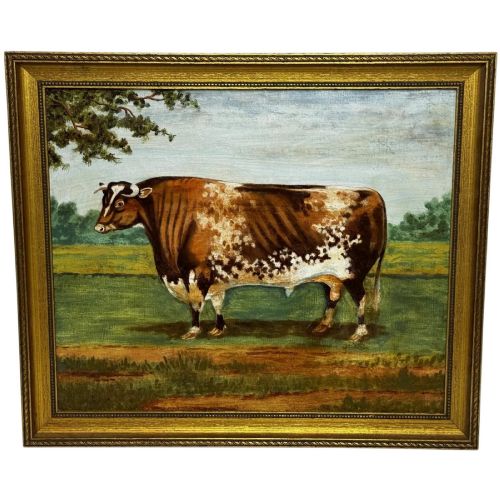
Prized shorthorn bulls and border collies occasionally steal the pastoral landscape from the human farmers.
What Varies in Quality
The distinction between standard works and exceptional pieces rests upon the confidence of the brushwork and the precision of natural light. Master painters create genuine atmospheric depth, making skies and water appear luminous and convincing.
Compositional balance and the rendering of anatomical details in figures and animals distinguish accomplished works from routine studio output. Stronger examples demonstrate careful observation of rural textures, from thatched roofs to animal coats.
John Horace Hooper·Thomas Sidney Cooper·Henry H Parker·George Morland·Ernest Higgins Rigg·Thomas Baker of Leamington·William Manners·Claude Hayes
The English Country Pastoral Painting Glossary
- Oil on Canvas
- Pigment mixed with drying oil applied to a woven fabric support stretched across a wooden frame. This medium allowed artists to build rich layers of colour and texture.
- Watercolour
- A paint consisting of colour suspended in a water-soluble binder, traditionally applied to paper. It produces translucent washes suited to delicate pastoral lighting.
- Gesso
- A paint mixture consisting of a neutral binder mixed with chalk, gypsum, or pigment. It prepares wooden boards and canvas surfaces for painting.
- English School
- A term describing artists trained or working within British artistic traditions rather than continental European academies. It encompasses generations of landscape painters.
- Board
- A rigid flat support made from wood used instead of canvas. Artists frequently utilised wooden panels for smaller landscape studies.
English Country Pastoral Painting: Frequently Asked Questions
What subjects appear in these paintings?
These works depict rural British life, including harvest fields, rivers, farmyard animals, cottages, and agricultural workers. Scenes often feature cattle, sheep, horses, and daily countryside routines.
Artists drew inspiration from specific regional landscapes across Berkshire, Sussex, Yorkshire, and the Thames Valley. Each piece records the changing seasons and traditional rural labour of past centuries.
How do I date an antique pastoral painting?
Dating relies on stylistic clues, framing methods, materials, and artist signatures or exhibition records. Victorian works often show narrative detail, while later pieces lean towards impressionist brushwork.
Examining the canvas weave, stretcher construction, and backing boards provides further physical evidence of age. Signed pieces allow direct comparison with recorded exhibition dates and biographies.
Where should I hang a pastoral painting?
These works suit traditional sitting rooms, studies, dining spaces, and hallways where natural light enhances the painted tones. Pairing a framed oil painting with traditional furniture creates a cohesive historical interior.
Direct sunlight should be avoided to protect both watercolours and oil pigments from fading over time. Stable room humidity helps preserve wooden panels and canvas integrity.
What is the difference between oil and watercolour?
Oil paintings utilise pigment bound in drying oil on canvas or wood, offering rich textures and deep colour saturation. Watercolours apply water-soluble pigments onto paper, creating lighter and more translucent effects.
Watercolours generally require protective glass framing to prevent moisture and surface damage. Oil paintings remain unglazed, allowing the textured brushwork to be viewed directly.