




English Coastal Seascape
An English coastal seascape captures the shifting light and maritime trade of our shores, bringing harbours and open waters into your interior.
English Coastal Seascape
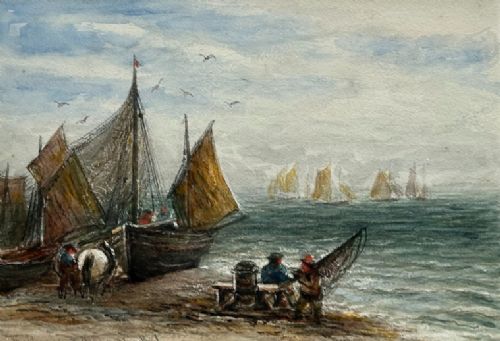
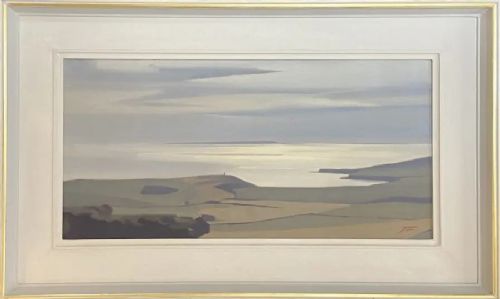
An English coastal seascape depicts the shores, harbours and fishing communities of Britain through traditional paintings and works on paper. The selection spans the nineteenth century up to the mid-twentieth century, featuring regional views from Cornwall and Yorkshire to Norfolk and the south coast.
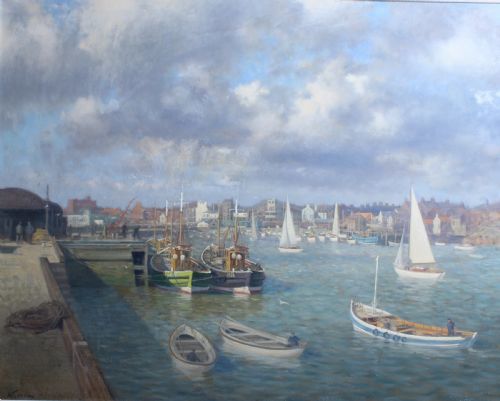
Most items you encounter here are original oils or watercolours framed for display, recording local topography like Brixham, Scarborough or St Ives. Painters from these periods focused on working vessels, piers and fishermen on the beach rather than idealised vistas.
You will find works ranging from detailed Victorian watercolours to looser twentieth-century impressions involving impasto and board. Each piece records a specific maritime location along the coastline at low tide, in stormy weather or under bright sunshine.
How they were made
Artists applied oil paint to canvas, panel or card, or watercolour pigments to paper, utilising brushes to build up the movement of choppy seas and coastal skies. Support materials include nineteenth-century canvas stretched over wooden frames alongside later oils executed on board.
Framing often involves period wood mouldings, sometimes finished with giltwood, which complement the marine subject matter. Several works incorporate impasto techniques to give texture to sea foam and chalk cliffs.
Watercolours rely on careful washes of pigment on paper to capture the translucent quality of coastal light and tidal flats. Many bear signature traces of pencil underdrawing and precise brushwork characteristic of traditional British marine art.
English Coastal Seascape Retail Price Guide 2026
Typical asking prices for english coastal seascape among the pieces listed under this phrase on Sellingantiques today, from the lower quarter to the upper quarter. They describe what is for sale here now, not the wider market.
Listings feature traditional media including oil on canvas, oil on board, and watercolour on paper across the nineteenth and twentieth centuries.
What varies in quality
Quality rests on the artist's ability to render maritime atmosphere, rigging and coastal architecture with conviction. Stronger pieces demonstrate a confident handling of light on water and accurate depiction of local vessels such as trawling luggers or cobles.
The sensitivity of the colour palette and the balance of composition separate standard topographical records from accomplished artistic works. Superior examples preserve the original surface texture and retain their period frames without heavy restoration obscuring the hand.
James Orrock·William Banks Fortescue·Charles Napier Hemy·Helen Layfield Bradley·Thomas Bush Hardy
The English Coastal Seascape Glossary
- Impasto
- Paint applied thickly to a canvas or board so that it stands out from the surface, creating visible texture in elements like waves and clouds.
- Lugger
- A traditional two-masted fishing vessel frequently seen in nineteenth-century West Country marine paintings.
- Coble
- A type of open fishing boat with a flat floor traditionally used along the northeast coast of England.
- Aquatint
- A printmaking technique that produces tonal areas resembling watercolour washes, seen in older coastal sets.
- Giltwood
- Wood carved and covered with a thin layer of gold leaf, commonly found on period picture frames.
English Coastal Seascape: Frequently Asked Questions
How do I date an English coastal seascape?
Dating relies on stylistic evidence, artist signatures, and framing materials. Nineteenth-century works often feature traditional riggings and sombre palettes, whereas twentieth-century pieces lean towards brighter palettes and looser brushwork.
Examine the back of the canvas or board for old exhibition labels, dealer stamps, or handwritten inscriptions that frequently record the specific year or location depicted.
Where should I hang a marine painting?
Hang these works away from direct sunlight to protect watercolours and oil pigments from fading. Rooms with stable humidity help preserve the wooden frames and canvas supports.
Position them at eye level where the detail of the harbour or coastal light can be appreciated closely without glare from nearby windows.
What is the difference between oil and watercolour marine art?
Oils offer rich textures and deep colours suited to stormy seas and heavy skies. Watercolours provide a lighter, more luminous quality that captures bright coastal air.
Watercolours require glass protection against moisture, while oil paintings on canvas breathe naturally within stable indoor environments.
Are these coastal scenes topographically accurate?
Many works record actual British harbours, piers and cliffs from life or detailed sketches. Artists often inscribed the exact location, such as St Ives or Whitby, directly onto the mount or verso.
Local landmarks like pleasure piers and chalk formations help historians verify the precise stretch of coastline shown.