



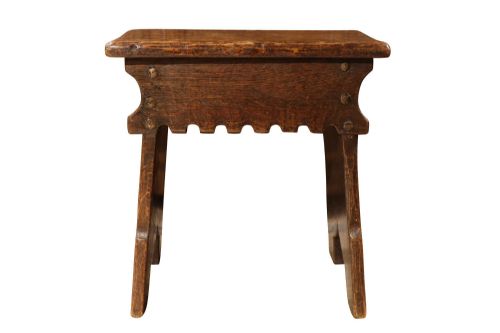


English Carved Oak Bench
An English carved oak bench brings centuries of solid craftsmanship and rich domestic history directly into a hallway or living space.
English Carved Oak Bench
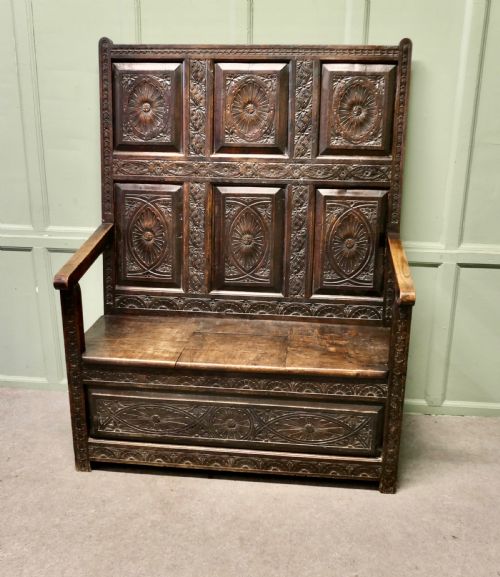
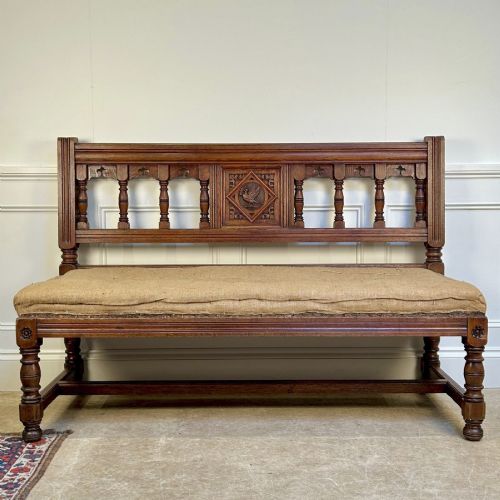
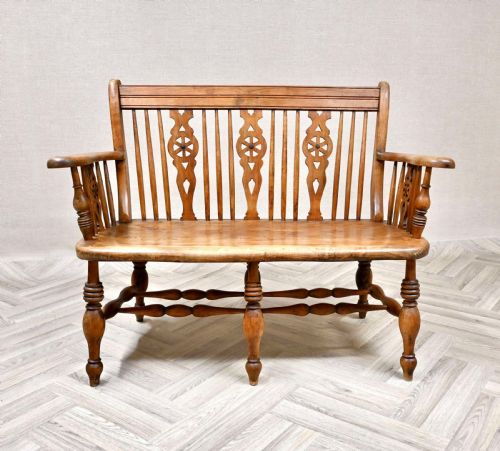
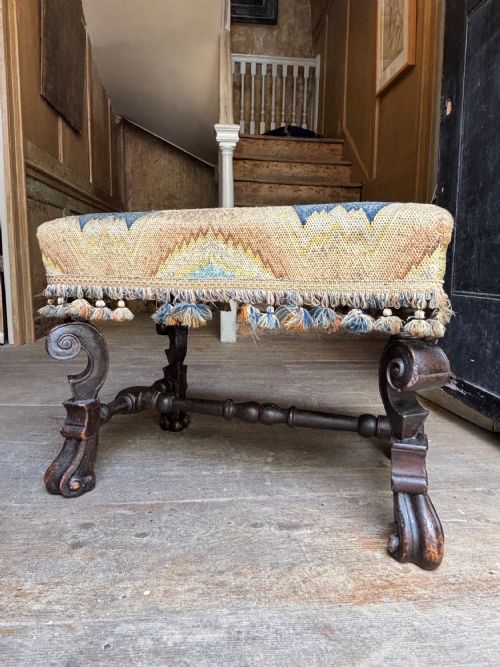
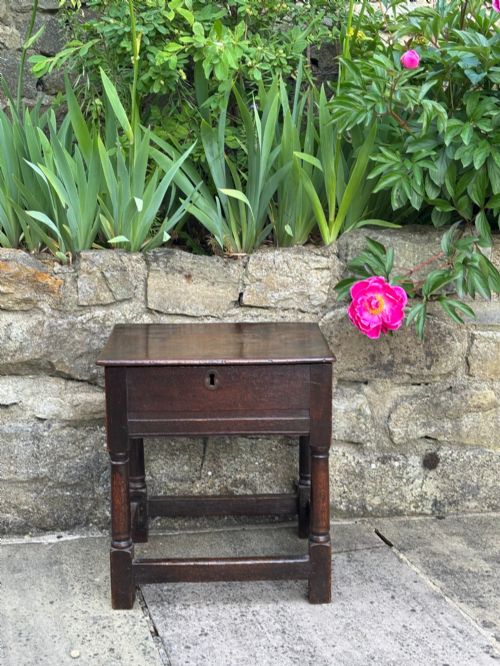
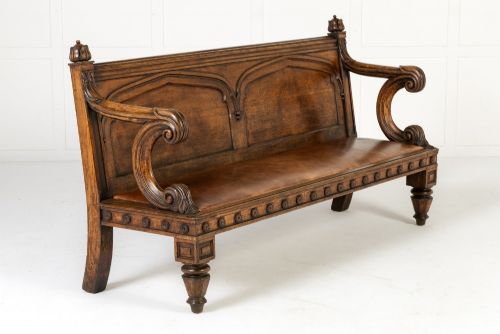
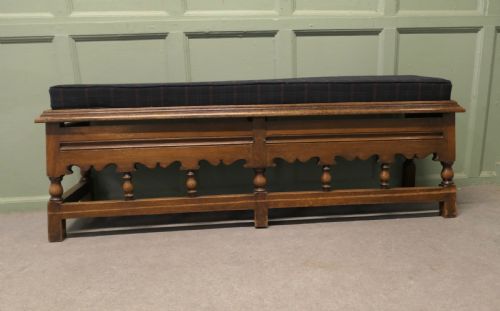
When you search for an english carved oak bench, you encounter a robust seating form that spans multiple centuries of British cabinet making. The pieces collected here include traditional settles, high-backed hall benches, and smaller joint stools that served essential functions in early households.
The selection ranges from seventeenth-century wainscot pieces with deeply carved panels to nineteenth-century Gothic revival adaptations and later rustic farmhouse designs. Settles with integrated box bases and monks benches that convert into tables appear frequently among these listings, offering practical storage alongside seating.
Most examples originate from English workshops, utilising native timbers shaped by generations of regional joiners. Whether you find an eighteenth-century high-back box settle or a Victorian hall seat, each object carries the weight and utility of traditional domestic architecture.
How they were made
Construction relies heavily on solid oak, selected for its density and durability, occasionally supported by secondary timbers like elm, ash, or yew in structural elements or secondary framing. Joinery techniques such as pegged construction and mortise and tenon joints ensure the framework remains rigid without relying on modern metal fasteners.
Carving is executed directly into the solid timber panels, displaying motifs ranging from geometric strapwork to exuberant baroque flourishes and Gothic tracery. Surfaces are finished with traditional methods that preserve the natural grain, sometimes complemented by iron or brass hardware, leather, hessian, or cane details.
Listings span from seventeenth-century joinery to 1920s window seats, predominantly shaped from solid oak with occasional elm and iron elements.
What varies in quality
The distinction between standard examples and superior pieces rests on the depth and crispness of the hand carving and the integrity of the original timber. Early seventeenth-century works display a sculptural confidence in their relief work that later revival pieces occasionally imitate with mechanical stiffness.
Originality of construction heavily dictates desirability, particularly regarding pegged joints, unaltered box bases, and untouched patina developed through centuries of use. Altered proportions, replaced panels, or extensive modern repairs reduce the historical integrity of an otherwise solid piece.
Gillows·James Shoolbred
The English Carved Oak Bench Glossary
- Settle
- A wooden bench with a high back, solid arms, and frequently a box compartment beneath the seat for storage. It was designed to block drafts in large, open rooms.
- Joint Stool
- A sturdy wooden stool constructed using mortise and tenon joinery with pegged joints, common in sixteenth and seventeenth-century households.
- Wainscot
- A type of heavy wooden construction utilising panelled framing, frequently seen on the backs of early seventeenth-century benches and settles.
- Box Bench
- A seating form incorporating a concealed storage compartment beneath the hinged seat lid, combining furniture utility with domestic organisation.
- Pegged Construction
- A traditional method of securing joints by driving wooden pins through overlapping timber sections rather than using metal nails.
English Carved Oak Bench: Frequently Asked Questions
How do I use an oak settle today?
These benches fit naturally into entryways, hallways, or dining spaces where their integrated storage boxes prove useful for daily organisation. Placing one against a living room wall provides both sturdy seating and a strong historical anchor for the room.
Because the timber is robust, they withstand everyday household traffic easily. Pairing a high-backed settle with a simple textile cushion softens the seating while preserving the visible woodwork.
Are these benches comfortable to sit on?
Early wooden benches were designed for utility and upright posture rather than deep lounging. Many feature tall panelled backs intended to block cold drafts in older homes rather than provide ergonomic padding.
Adding a loose squab cushion or folded textiles transforms the firm wooden seat for modern relaxation. The generous depth of nineteenth-century hall seats often accommodates additional soft furnishings comfortably.
How do I tell a seventeenth-century bench from a Victorian revival?
Seventeenth-century pieces display authentic tool marks, hand-split oak panels, and structural wear consistent with age and hand assembly. The joinery relies entirely on pegged tenons, and the timber develops a deep, dry patina over centuries.
Victorian revival pieces often utilise machine-sawn elements and sharper, more uniform carving styles influenced by Gothic and Jacobean revivals. Examining the underside and interior boards reveals the consistency of the saw marks and the age of the fixings.
What is a monks bench?
A monks bench is a dual-purpose piece of furniture featuring a hinged back that folds down flat over the armrests to form a table. This clever transformation provided an extra dining or working surface in smaller domestic spaces.
Most examples found on the market date from the Victorian period onwards, reviving earlier vernacular forms with hinged mechanisms. They remain practical additions to compact rooms needing multi-functional furniture.