
English Carved Coffer
When you search for an english carved coffer, you are looking at substantial domestic storage pieces built to hold documents, linen, and valuables.
English Carved Coffer
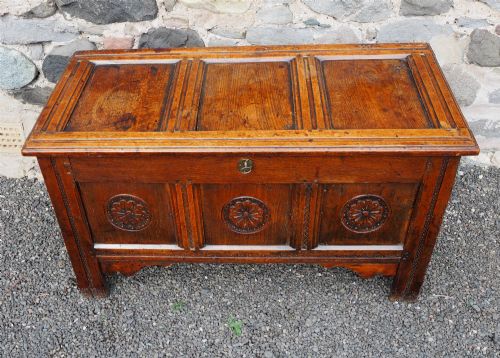
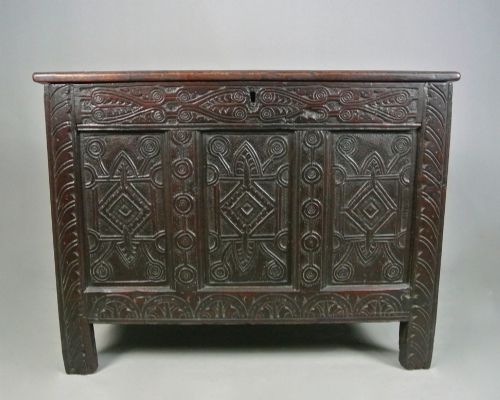
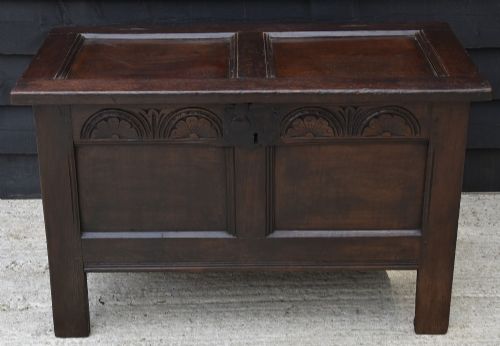
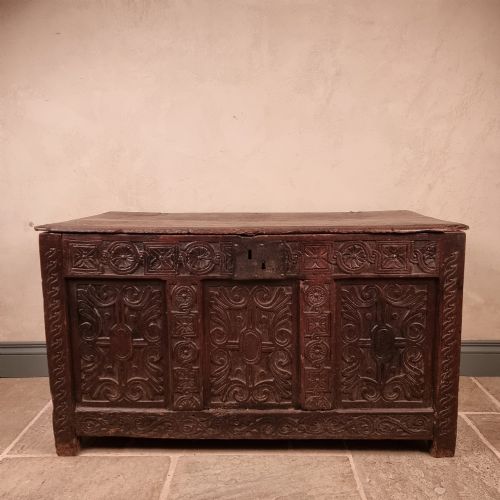
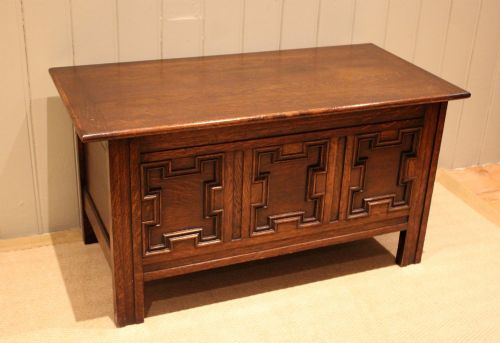
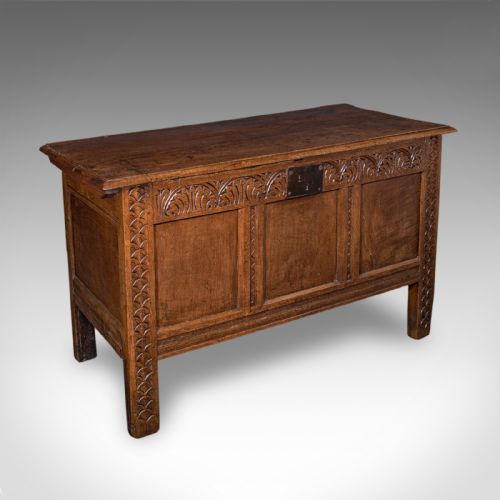
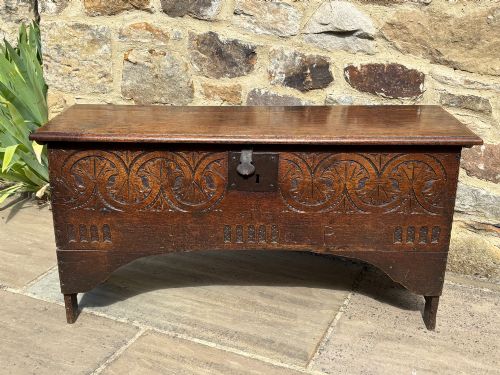
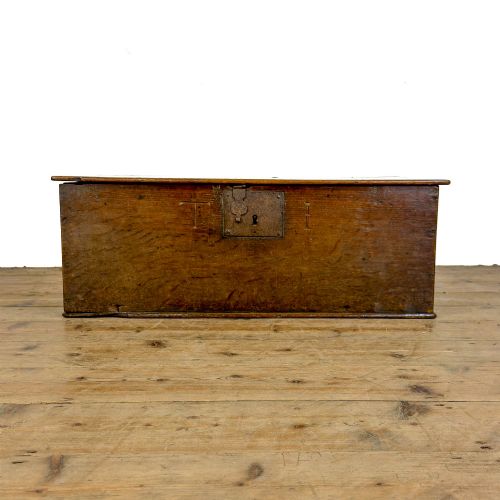
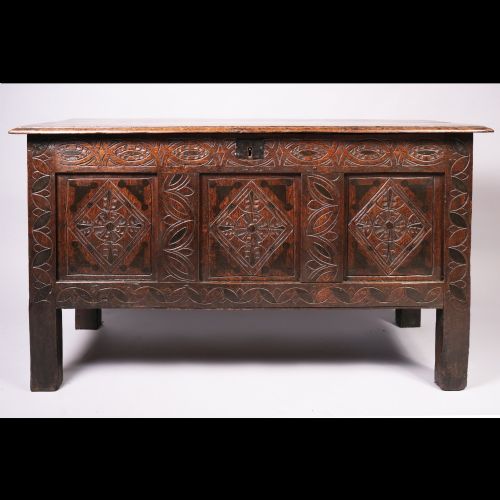
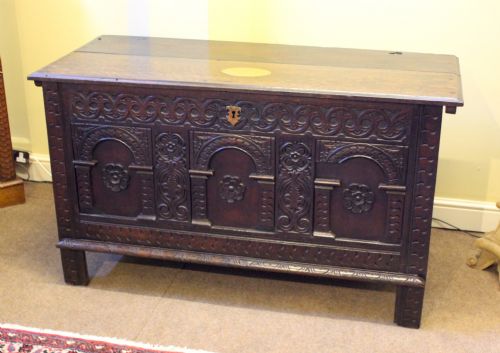
The english carved coffer appears predominantly in sturdy oak forms dating from the seventeenth and eighteenth centuries, reflecting domestic life across the Tudor, Jacobean, and Georgian periods. These storage pieces range from six-plank boarded trunks to joined panelled chests featuring chip carving, lozenge patterns, and arcading.
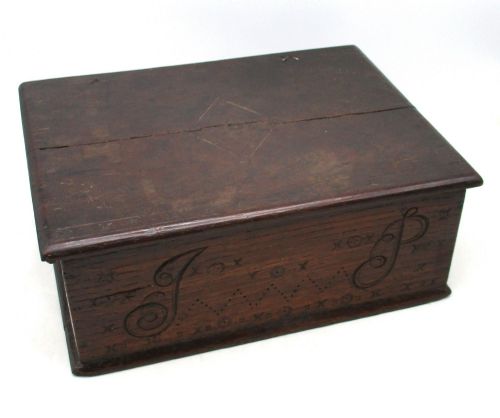
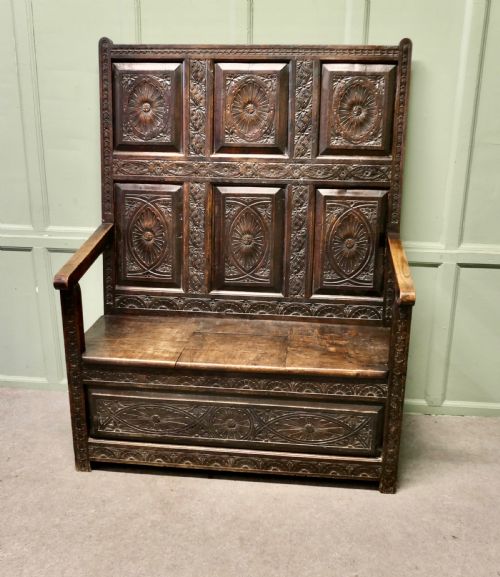
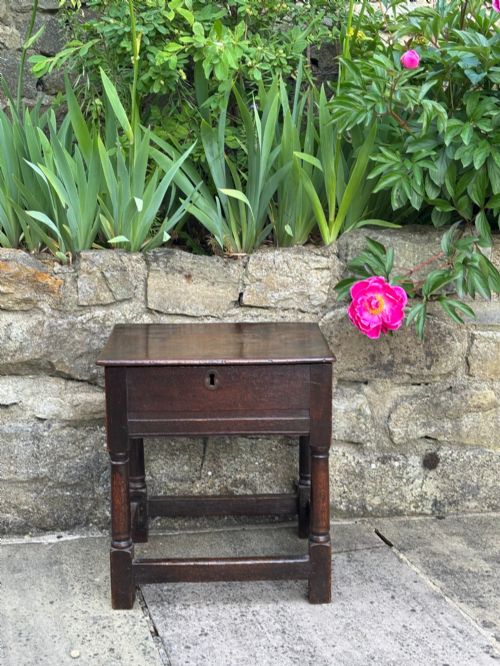
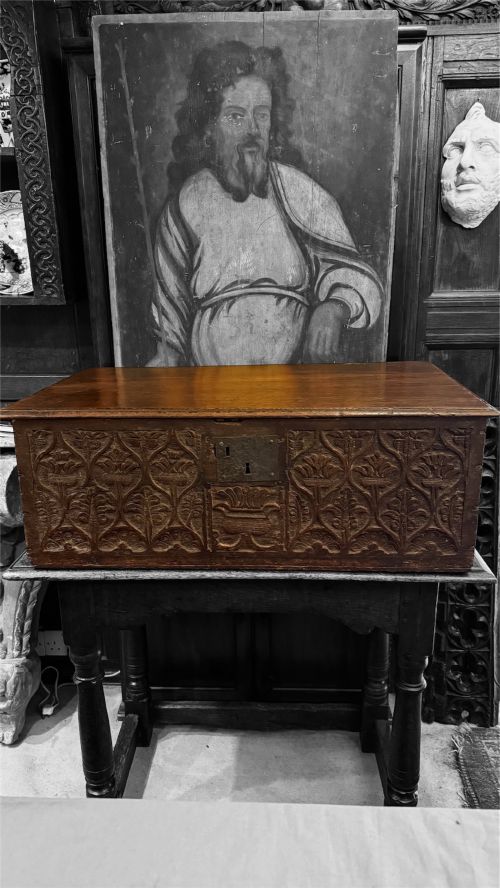
Beyond standard blanket chests, buyers frequently encounter related forms such as smaller document boxes, bible boxes, and mule chests fitted with lower drawers. Regional variations like the Dorset coffer also appear, alongside occasional box settles and miniature panel assemblies.
Construction relies heavily on traditional joinery methods using pinned mortise and tenon frames or simple board joints secured with iron work. Surfaces display hand-cut decoration executed with gouges and chisels, defining the utilitarian yet ornamental character of early English furniture.
Materials and Construction
Makers relied on native timber, primarily oak selected for its durability and grain, supplemented by occasional secondary woods and iron or brass hardware for hinges and locks. Boards were cleft or sawn manually, yielding thick structural members that could support heavy panel carving.
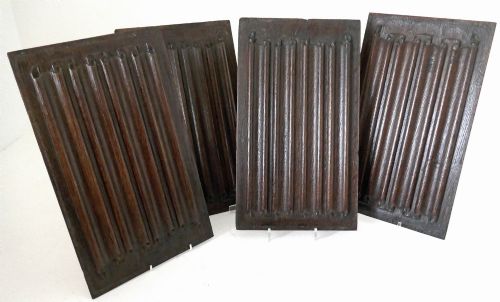
Surface ornamentation was applied directly to the solid wood using hand tools, producing chip carving, linenfold panels, and geometric mouldings unique to each period. Joinery utilised pegged tenons rather than metal fasteners, allowing the timber to expand and contract naturally over centuries.
Listings feature solid oak construction spanning the sixteenth, seventeenth, and eighteenth centuries, with occasional examples in burr walnut and mahogany.
Evaluating the Pieces
Quality rests on the depth and execution of the carving, the integrity of the original joined frame, and the survival of early surfaces. Pieces retaining their initial hinges, boarded lids, and untouched timber patination stand apart from those altered by later repairs or heavy restoration.
The ambition of the design dictates distinction, moving from plain boarded boxes to sophisticated triple-panel fronts with intricate arcade work or leaf motifs. Proportion and scale also govern the hierarchy, with smaller document boxes and diminutive coffers commanding particular attention for their domestic utility.
The English Carved Coffer Glossary
- Coffer
- A large wooden chest used for storing valuables, linen, or documents. These sturdy receptacles typically feature hinged lids and raised feet.
- Linenfold
- A style of wood carving that imitates folded linen cloth. It appears frequently on sixteenth and seventeenth-century panels.
- Mule chest
- A storage chest fitted with one or more drawers beneath the main compartment. This form emerged during the late seventeenth and eighteenth centuries.
- Chip carving
- A decorative technique where small chips are removed from the surface of the wood to create geometric patterns. It requires precise knife or chisel work.
- Arcading
- A row of arches supported by piers or columns, carved in relief onto panels or friezes. This classical motif was adopted widely in Jacobean joinery.
English Carved Coffer: Frequently Asked Questions
How do I date an antique coffer?
Dating relies on observing construction methods, hinge types, and the style of carving present on the panels. Joined frames secured by wooden pegs generally indicate earlier periods, while simpler board construction can persist across centuries.
Secondary clues include tool marks left by pit saws or hand chisels and the overall wear patterns on the timber. Comparing the decorative motifs, such as lozenges or arcading, to established period styles helps narrow the date of manufacture.
What were coffers originally used for?
These pieces served as secure storage for domestic valuables, family silver, important documents, and textiles before fitted wardrobes became common. Their heavy construction and locking lids made them reliable strongboxes in early households.
In addition to storage, they frequently doubled as benches, seating, or even tables within the main rooms of a home. Smaller variations, such as bible boxes, were designed to sit on tables for reading materials.
How should I care for an oak coffer?
Keep the wood away from direct heat sources and rapid temperature fluctuations to prevent the oak from splitting or warping. Maintaining a stable environment preserves the structural integrity of the ancient timber and joints.
Apply a traditional beeswax polish occasionally to nourish the surface and protect the grain without building up heavy chemical layers. Avoid using modern liquid cleaners that can strip the historic patination accumulated over centuries.
What is the difference between a coffer and a chest?
The terms are often used interchangeably, though a coffer traditionally implies a more secure storage container built with a heavy lid and locking mechanism for valuables. Chests can cover a broader range of domestic furniture designed for general storage.
Historically, coffers often featured more elaborate carved decoration and joined panel construction, whereas simpler chests might use boarded planks. Both forms share the fundamental purpose of holding household goods.