
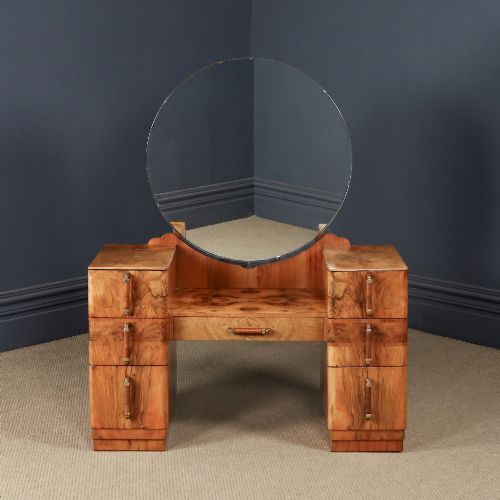


English Art Deco Mirror
An english art deco mirror brings bold geometry and tinted glass into a room, capturing the distinct design spirit of the interwar decades.
English Art Deco Mirror
When you search for an english art deco mirror, you find wall-hanging plates, overmantel centrepieces, and dressing table attachments dating principally from the nineteen twenties and nineteen thirties. These objects define an interior with clean architectural silhouettes, stepped profiles, and distinctive cloud or circular shapes.
Wall mirrors form the bulk of the selection, often rendered in rectangular, circular, or butterfly outlines. Overmantel versions provide a larger visual anchor above a fireplace, frequently combining bevelled glass panels with timber frames.
Beyond standard looking glasses, the category extends to functional hybrids where mirror glass integrates into clock faces or forms the surface of occasional tables. Surviving pieces demonstrate how glass became a primary decorative medium in British homes during this period.
Materials and technique
Makers utilised clear and coloured mirror glass, often incorporating peach, green, blue, or silvered tones to create striking visual depth. These tinted plates were cut into geometric segments and secured to wooden backing structures using brass screws and clips.
Timber frames and associated furniture pieces rely on walnut and burr walnut veneers selected for their rich grain patterns. Gilt wood, gesso, and chrome elements also appear, providing the metallic contrast characteristic of the style.
The site listings combine functional timepieces and wall optics, recording both clear glass and coloured peach, green, and blue variants from the interwar period.
Quality and construction
The distinction between standard production and finer work lies in the complexity of the glass assembly and the quality of the timber veneers. Superior examples feature multi-layered coloured glass panels cut with precise bevels rather than simple flat sheets.
Cabinetwork associated with dressing tables and cocktail cabinets demonstrates the maker's hand through careful book-matching of walnut veneers. The integration of mechanical elements, such as clock movements behind mirrored dials, also separates basic decorative items from sophisticated horological pieces.
Epstein·Smiths Clock Company·Walker and Hall
The English Art Deco Mirror Glossary
- Overmantel mirror
- A large wall glass designed specifically to hang above a fireplace mantelpiece. These pieces often dictate the scale of a room's principal reception space.
- Burr walnut
- A prized timber harvested from the wart-like growths on walnut trees, yielding intricate and swirling grain patterns. It is frequently applied as a veneer on cabinet furniture and table tops.
- Guilloche enamel
- A decorative technique involving precise engine-turned geometric patterns beneath a translucent coloured enamel coating. It appears on smaller handheld accessories from the period.
- Cloud mirror
- A wall glass featuring an undulating, asymmetrical silhouette reminiscent of stylised clouds. This form is a hallmark of interwar British wall decoration.
- Odeon mirror
- A stepped architectural glass design inspired by the monumental cinema architecture of the era. The layered frame creates a distinct sense of theatrical perspective.
English Art Deco Mirror: Frequently Asked Questions
Where should I hang an overmantel mirror?
Position the piece centrally above the fireplace opening, maintaining a modest gap between the mantel shelf and the lower frame. This placement reflects light from opposing windows and balances the vertical volume of the chimney breast.
Ensure the wall fixings engage directly with structural studs or utilise heavy-duty wall anchors appropriate for the substantial weight of these large glass assemblies.
How do I date a nineteen thirties mirror?
Examine the construction of the wooden backing boards, screw types, and suspension fixings for period manufacturing methods. Original mirrors often retain aged paper backing labels or maker stamps associated with interwar British production.
The presence of peach, green, or blue tinted glass panels alongside stepped wooden frames strongly points to manufacture during the nineteen twenties or nineteen thirties.
Can I place these pieces in a bathroom?
Interwar mirrors feature sensitive silvered backing coats and wooden or copper elements that react poorly to sustained high humidity. Placing them in damp environments accelerates the degradation of the reflective coating.
Keep these items within dry reception rooms, hallways, or bedrooms where temperature and moisture levels remain stable throughout the year.