
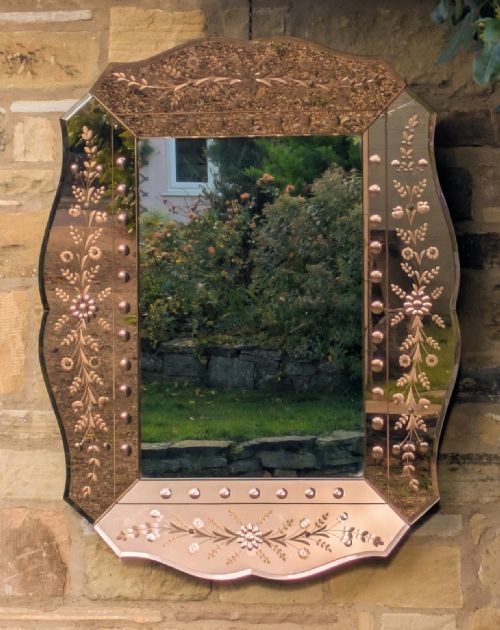


Scalloped Glass Mirror
A scalloped glass mirror brings clean lines and reflective light to a room, catching the eye with curved edge detailing.
Scalloped Glass Mirror
When you search for a scalloped glass mirror, you encounter pieces defined by shaped, curved edges that depart from straight rectangular frames. These range from small octagonal vanity mirrors to large overmantel mirrors designed to sit above a fireplace. The examples found here span multiple decades, drawing on periods from the nineteenth century through the Art Deco era.
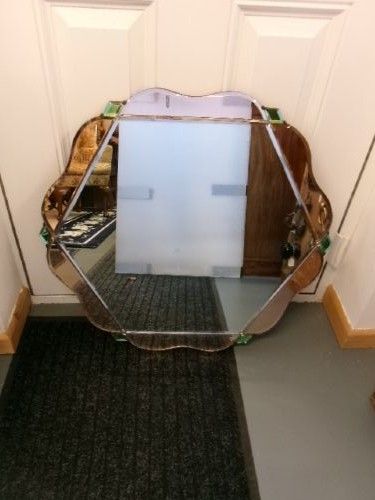
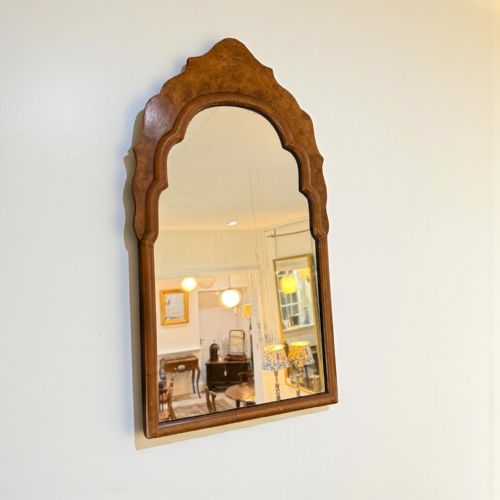
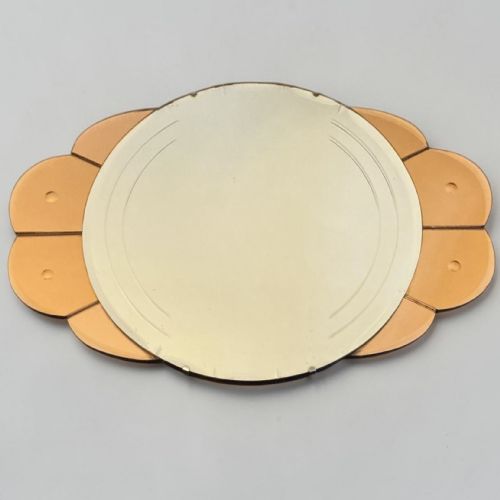
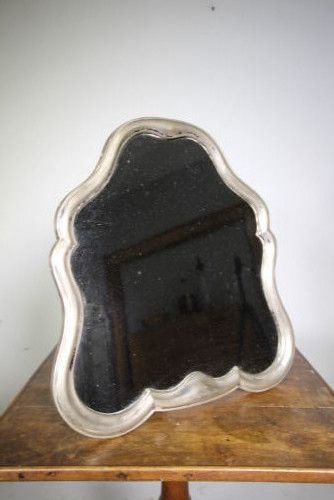
Art Deco interpretations appear frequently, often featuring peach-coloured glass, etched motifs, and frameless construction. Alongside these, nineteenth-century revival styles and Venetian designs offer alternative forms with gilt, mahogany veneer, and gesso detailing. Whether mounted on a wall or supported by an easel, each piece utilises shaped glass to create a distinct silhouette.
How they were made
Makers shaped the glass plates by cutting and grinding the perimeters into distinct curves, frequently finishing the edges with a bevel. Wooden backings, metal fittings, and original hanging chains provided the necessary structural support for wall-mounted and overmantel formats.
Frames incorporate diverse materials such as oak, walnut, gesso, and silver gilt. Some models utilise coloured glass panels, including peach and cobalt blue, combined with etched patterns to achieve their decorative effect.
What varies in quality
The precision of the glass cutting and the complexity of the edge bevelling set finer examples apart from simpler items. Uniformity in the curves and the clarity of the silvered mirror plate indicate higher standards of manufacture.
The integrity of the supporting materials, from substantial wooden backings to intact gesso and gilt work on the frames, influences the overall character of the piece. Original fittings and uncompromised glass surfaces distinguish better survivals.
The Scalloped Glass Mirror Glossary
- Bevel
- An angled edge cut along the perimeter of the glass plate. This technique catches light and adds depth to the mirror.
- Overmantel mirror
- A large mirror designed to be placed directly above a mantelpiece. These pieces often anchor the proportions of a chimney breast.
- Gesso
- A plaster-like mixture applied to wood frames before gilding or painting. It provides a smooth surface for detailed moulding.
- Cheval mirror
- A freestanding full-length mirror hung in a frame that allows it to tilt. The glass swings between vertical upright supports.
Scalloped Glass Mirror: Frequently Asked Questions
Where should I hang a scalloped glass mirror?
These mirrors suit spaces where reflected light opens up the room, such as above a fireplace mantel or in a hallway. Wall-mounted versions work effectively as focal points against plain or patterned walls.
Smaller variants, including vanity and tabletop pieces, sit well on dressing tables or sideboards where their shaped edges can be appreciated closely.
How do I identify an Art Deco mirror?
Art Deco pieces often feature geometric symmetry combined with curved silhouettes, frequently omitting traditional wooden frames in favour of layered glass plates. Details like peach-coloured glass and etched floral or abstract motifs point toward this twentieth-century movement.
Original hanging chains and wooden backings also help confirm the period of manufacture when examining older wall mirrors.
Can I use a mirror glass tray on a wall?
Many items designed originally as trays share the same decorative glasswork and scalloped edges as wall mirrors. Depending on the hanging hardware present, some can be adapted safely for wall display.
Checking the reverse for secure fixings ensures the piece can support its own weight if hung vertically.
How do I care for antique mirror glass?
Cleaning requires a soft cloth and a gentle glass cleaner applied sparingly to avoid seeping behind the plate. Protecting the silvered backing from moisture prevents further tarnishing and deterioration.
Handling the mirror carefully during repositioning preserves both the glass edges and any applied frame details like gesso or veneer.