

English Trunk
An english antique trunk carries the weight of centuries, offering robust storage in timber built for endurance.
English Trunk
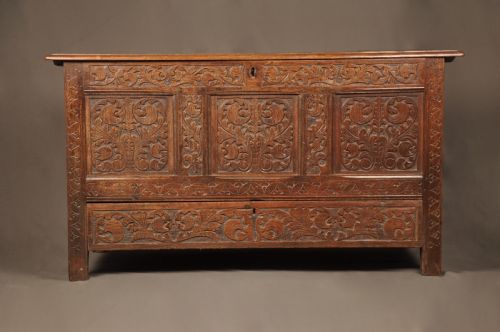
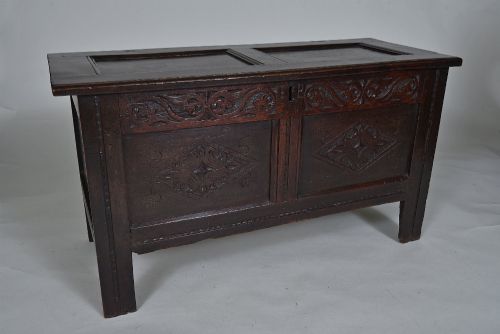
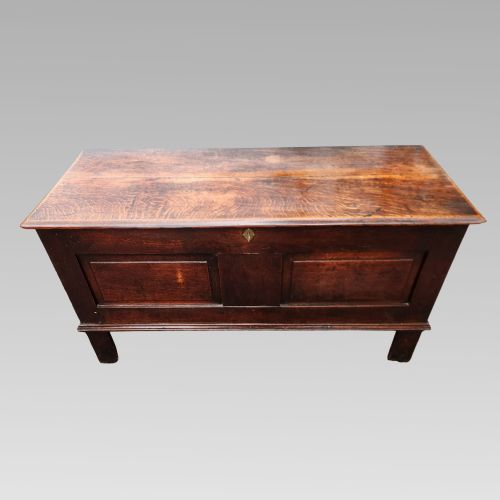
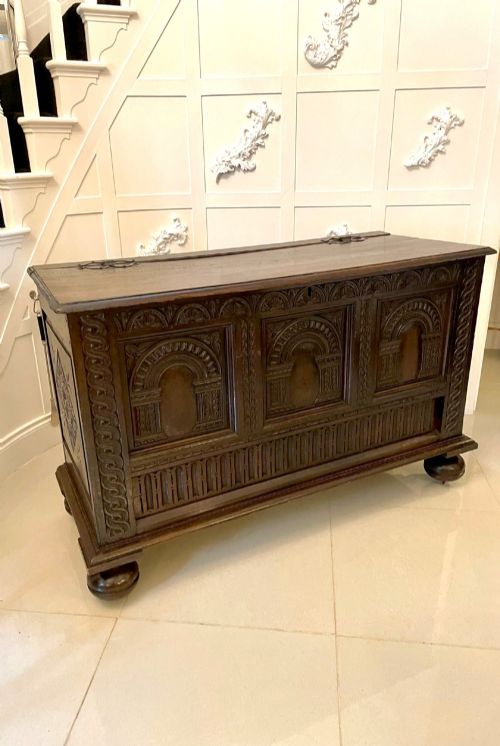
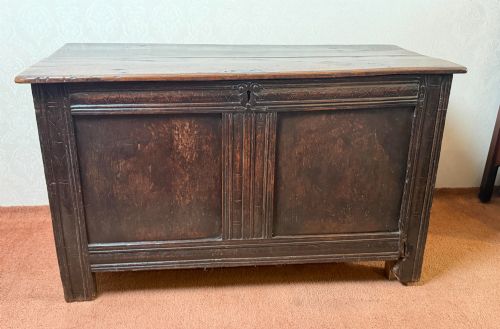
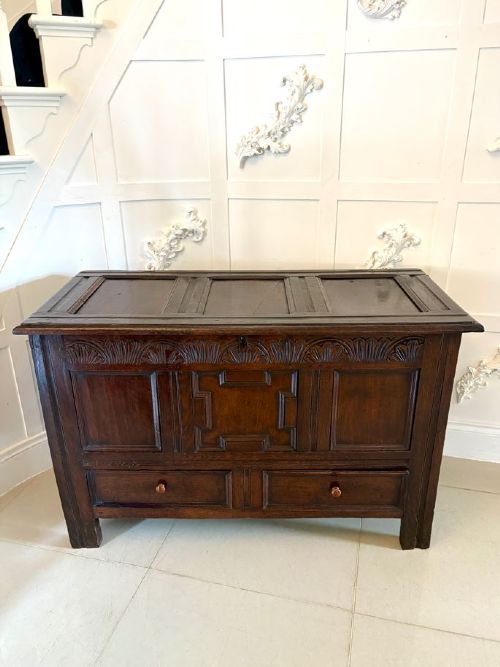
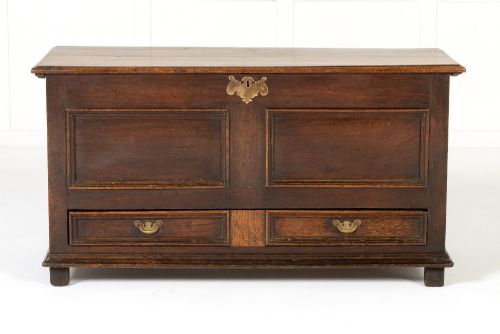
An english antique trunk encompasses sturdy storage vessels, predominantly appearing as oak coffers and mule chests from the 16th, 17th, and 18th centuries. Buyers encounter heavy timber construction designed originally for domestic storage or documents, featuring straightforward rectangular proportions.
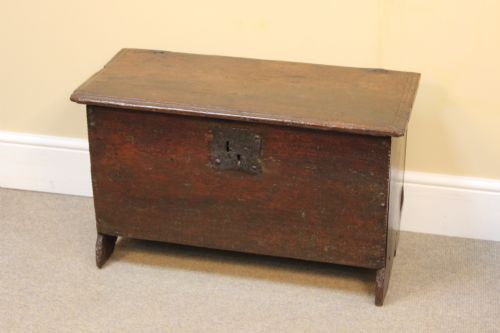
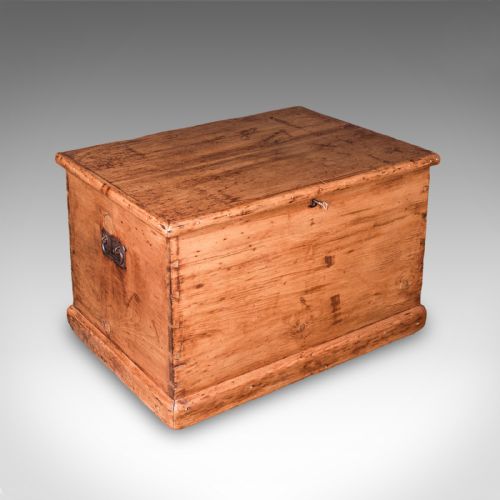
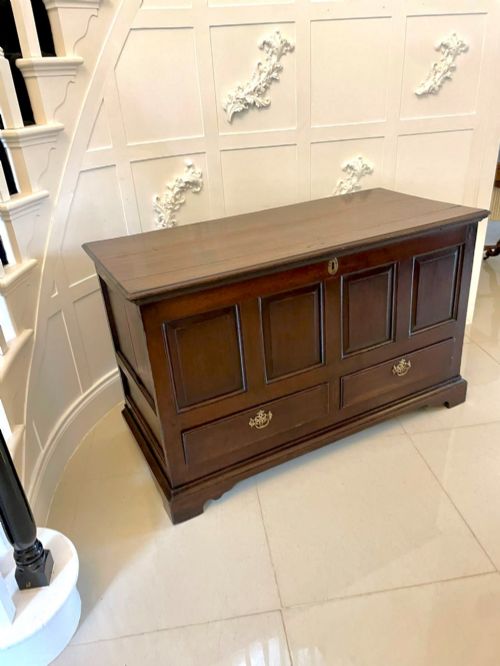
The selection frequently presents pieces styled in the Jacobean, Georgian, and English Country traditions. Formats range from simple boarded boxes to panelled coffers fitted with internal drawers characteristic of mule chests.
Alongside timber chests, related forms such as carriage chests and blanket boxes appear, retaining the utilitarian spirit of early English storage. These items serve modern interiors as functional furniture for hallways or living spaces.
Materials and Construction Methods
Makers relied principally on solid oak, utilising its strength to build heavy frames and panelled lids. Iron hinges and brass escutcheons reinforced the corners and provided secure fastening points for travel or domestic use.
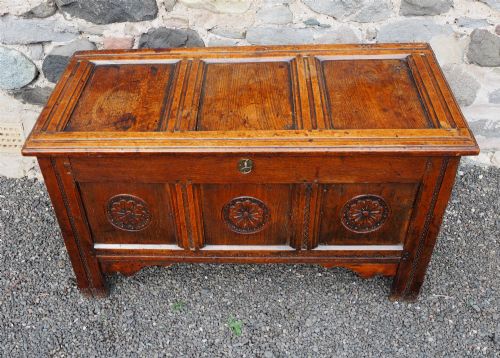
Carpenters employed traditional joinery, securing panels within grooved framing to allow timber to expand and contract naturally over time. Carving adorned the facade of finer examples, utilising chisel work to create arcaded patterns or floral motifs.
English Trunk Retail Price Guide 2026
Typical asking prices for english trunk among the pieces listed under this phrase on Sellingantiques today, from the lower quarter to the upper quarter. They describe what is for sale here now, not the wider market.
Listings feature solid oak and rosewood alongside iron and brass hardware, spanning periods from the 16th century through the Victorian era.
Distinctions in Quality
Quality rests upon the integrity of the original timber and the depth of the hand-carved detail. Superior examples display crisp joinery and minimal replacement wood, whereas lesser items suffer from extensive timber decay or poorly executed later alterations.
The crispness of the carving and the presence of original ironwork separate standard storage boxes from exceptional regional pieces. Unaltered surfaces with deep patination command greater interest among collectors of early English furniture.
Richard Corless of Stockport·Halliday and Rich Bridgwater·Enfield
The English Trunk Glossary
- Coffer
- A heavy wooden chest, typically constructed from oak, used for storing valuables or household goods. They often feature hinged lids and carved front panels.
- Mule chest
- A storage chest featuring one or more drawers built into the base beneath the main compartment. This form emerged during the late 17th and 18th centuries.
- Boarded box
- A primitive form of chest constructed from simple planks nailed or pegged together rather than framed panels. These represent some of the earliest surviving examples.
- Arcaded
- A decorative carving style mimicking a series of arches supported by columns. It appears frequently on 17th-century panels.
English Trunk: Frequently Asked Questions
What is an english antique trunk used for?
These pieces served historically for storing textiles, household provisions, and important documents securely. Households utilised them in bedchambers and halls for practical daily storage.
Today, owners place them in living rooms and entryways as coffee tables or blanket storage. Their flat lids make them suitable for use as window seats or benches.
How do I date an early oak chest?
Dating relies upon examining construction techniques, joinery marks, and the style of any carved ornamentation. Hand-riven timber and hand-wrought iron hinges indicate early manufacture.
Stylistic cues such as Elizabethan strapwork or Jacobean arcading help narrow the period of origin. Expert evaluation of tool marks provides further confirmation of age.
Are mule chests different from standard coffers?
Mule chests include one or more drawers fitted beneath the primary storage well. Standard coffers consist solely of a single top-opening compartment.
This addition of drawers marked an evolution in domestic furniture design during the late 17th century. It allowed easier access to stored clothing without opening the main lid.
How should I care for antique oak furniture?
Maintain stable indoor humidity levels to prevent the dry oak from splitting or warping over time. Keep wooden surfaces away from direct heat sources and strong sunlight.
Apply traditional beeswax periodically to nourish the grain and preserve the surface sheen. Avoid modern silicone polishes that can damage the historical finish.