

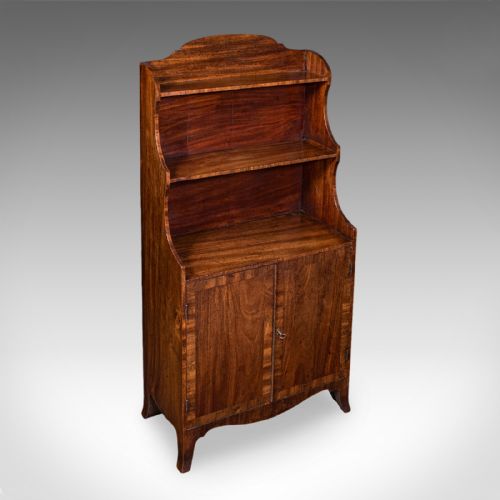
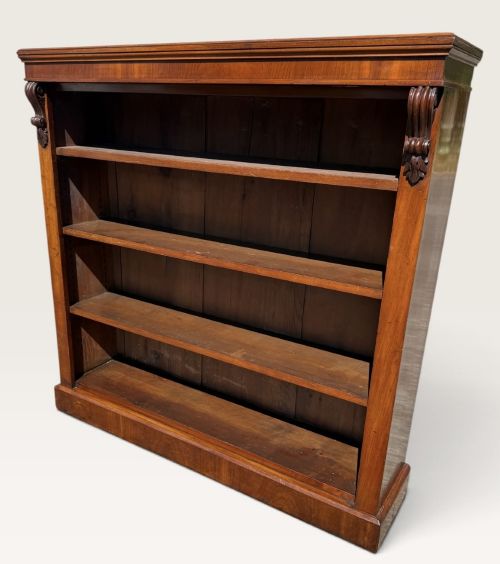


English Shelving Unit
An English antique shelving unit brings architectural warmth and practical display space to a room, spanning tiered whatnots to substantial open bookcases.
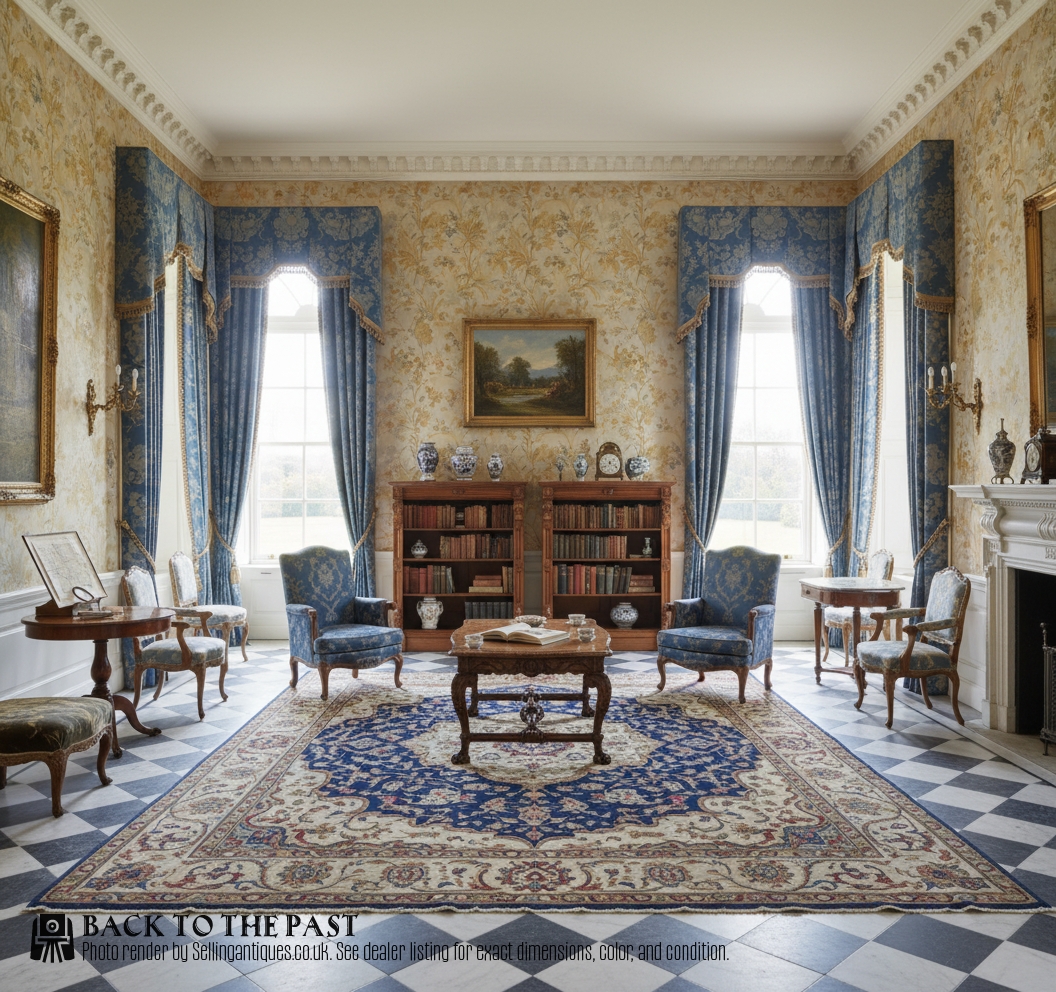
English Shelving Unit
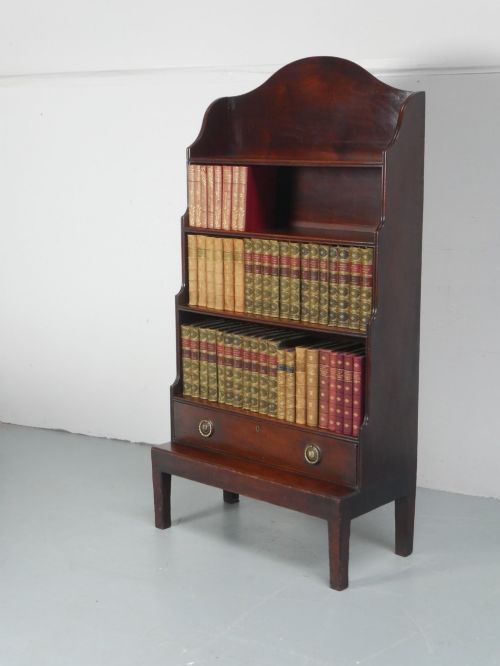
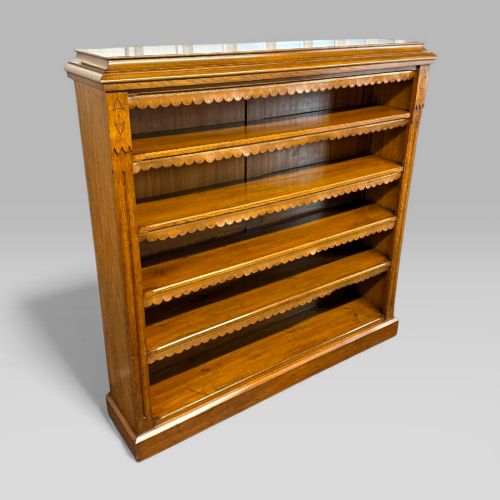
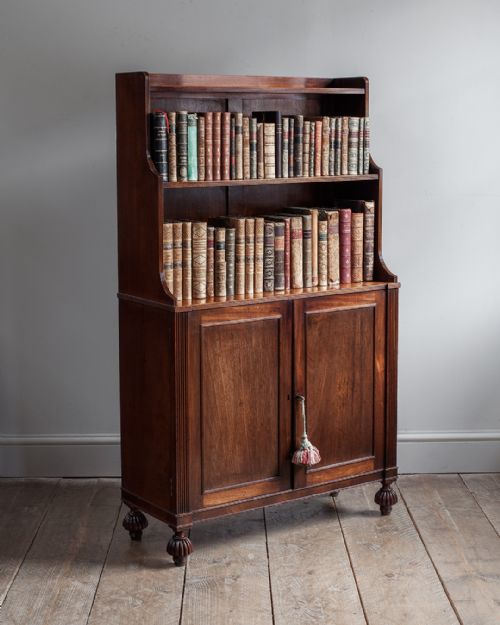
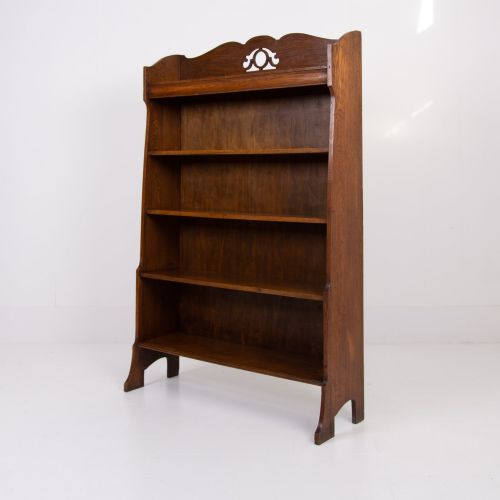
When you search for an English antique shelving unit, you encounter a diverse range of forms including open bookcases, tiered whatnots, display stands, and baker racks. These pieces originate from periods spanning the eighteenth, nineteenth, and early twentieth centuries, encompassing Georgian, Regency, Victorian, and Arts and Crafts design movements.
The selection on this page leans heavily toward nineteenth-century mahogany, walnut, and oak examples, alongside distinctive tiered whatnots and waterfall bookcases. You will find items intended for various domestic settings, from compact corner shelves to breakfront library bookcases and shop display stands.
Materials and construction
Cabinetmakers utilised dense hardwoods such as mahogany, rosewood, walnut, and oak, occasionally employing flame mahogany and birdseye maple veneers to decorative effect. Pine and other softer woods appear in painted finishes or interior framing, while brass hardware and iron scrollwork provide structural support and detailing.
Joinery methods reflect the period of manufacture, utilising traditional techniques for graduated shelves, turned supports, and cabinet doors. Makers integrated brass castors on mobile pieces like whatnots, ensuring stability across multi-tiered designs.
English Shelving Unit Retail Price Guide 2026
Typical asking prices for english shelving unit among the pieces listed under this phrase on Sellingantiques today, from the lower quarter to the upper quarter. They describe what is for sale here now, not the wider market.
Some Victorian whatnots arrived with built-in mobility via tiny brass castors, ready to roll across the carpet the moment an ornament needed a better angle.
Distinctions in manufacture
Quality in these pieces is dictated by the selection of timber and the precision of the cabinetmaker's joinery. Fine grain matching, particularly in walnut and mahogany veneers, distinguishes superior examples from standard utility items.
The crispness of carved details, the integrity of tiered shelf supports, and the retention of original brass fittings mark the distinction between everyday domestic furniture and workshop pieces of high design.
Gillows·Sir Charles Barry
The English Shelving Unit Glossary
- Whatnot
- A multi-tiered piece of freestanding furniture designed for displaying ornaments, books, or small objects. These typically feature three or more open shelves supported by turned columns.
- Waterfall bookcase
- A tiered shelving unit where each successive shelf steps back from the one below it, creating a cascading profile. These frequently date from the Regency and Victorian periods.
- Breakfront
- A piece of furniture whose central section projects forward from the flanking wings. This architectural arrangement adds depth and visual interest to large bookcases and cabinets.
- Open bookcase
- A shelving unit without doors, designed for easy access to books and decorative items. These are seen across Georgian, Victorian, and Arts and Crafts styles.
- Canterbury
- A low, open-framed stand originally utilised for holding sheet music or books, often integrated with shelving or drawer compartments below.
English Shelving Unit: Frequently Asked Questions
What is an English antique shelving unit used for?
These pieces serve as functional storage and display furniture for books, ceramics, and decorative objects. They organise collections while adding period character to a room.
Depending on the form, whether a compact whatnot or a large breakfront bookcase, they adapt easily to studies, living rooms, and hallways.
How do I identify a Regency shelving unit?
Regency pieces often incorporate classical proportions, architectural details, and exotic timbers such as rosewood or figured mahogany. Look for graduated shelves, delicate brass mounts, and formal elegance.
They frequently manifest as waterfall bookcases or tiered whatnots dating from the early nineteenth century.
Where should I place a whatnot in my home?
Whatnots excel in corners, beside seating, or against blank walls where their multi-tiered shelving can be appreciated. Their open structure makes them ideal for displaying smaller ornaments.
Because many feature finished backs or sides, they work well freestanding rather than strictly anchored against a wall.
What is the difference between an open bookcase and a cabinet?
An open bookcase lacks doors, offering immediate access to the contents and showcasing book bindings. A cabinet incorporates doors, sometimes glazed or panelled, to enclose and protect the interior.
Both forms appear across nineteenth-century English furniture, often sharing similar timber framing and plinth bases.