







English Pole Screen
An English antique pole screen offers an adjustable panel mounted on a vertical shaft, designed originally to shield a face from open hearth heat.
English Pole Screen
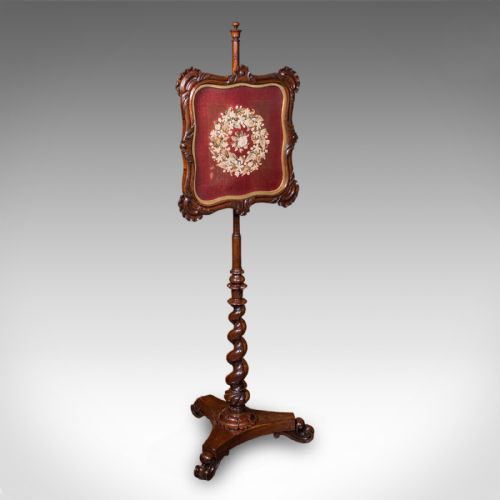
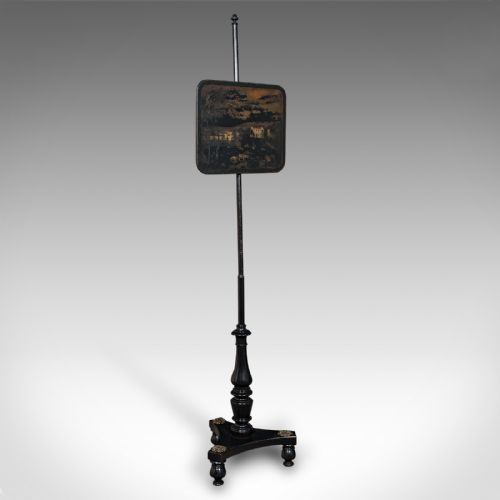
An English antique pole screen stands as a vertical furniture form featuring an adjustable shield held upon a central pillar and supported by a tripod base. These pieces appear across Georgian, Regency, William IV, and Victorian periods, often taking the role of a decorative fireside accessory.
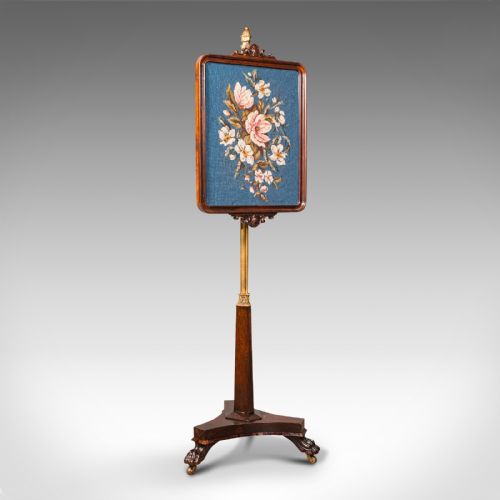
The version most commonly met on this page is the Regency or William IV mahogany or rosewood pole screen with a needlepoint panel. These examples combine tall turned standards with weighted tripod feet to hold embroidered textile inserts at various heights.
Makers utilised brass adjustments to let the shield slide up and down a wooden pole, directing the barrier against coal fire radiation. Alongside full-scale fireside screens, the evidence also records miniature novelty photo frames and pendant forms.
Gradations in Quality
Quality rests heavily on the crispness of the timber turning and the stability of the tripod base supporting the vertical shaft. Finer pieces demonstrate dense mahogany or figured rosewood with well-carved feet, whereas simpler items rely on plain turned walnut or standard mahogany.
The needlepoint or tapestry insert dictates much of the visual character, ranging from densely worked floral woolwork to simpler embroidered panels. The precision of the brass height-adjustment mechanism also separates standard production from superior workshop output.
English Pole Screen Retail Price Guide 2026
Typical asking prices for english pole screen among the pieces listed under this phrase on Sellingantiques today, from the lower quarter to the upper quarter. They describe what is for sale here now, not the wider market.
Listings feature woods spanning mahogany, rosewood, walnut, and giltwood alongside brass and glass elements.
The English Pole Screen Glossary
- Pole screen
- A vertical standing fireside furnishing with an adjustable sliding panel. It protects a seated person's face from the direct heat of an open hearth.
- Tripod base
- A three-legged support providing stability for the tall central pillar. These legs frequently terminate in scroll or pad feet.
- Needlepoint
- Stitched yarn worked through an open-weave canvas mesh to create pictorial or floral designs. This technique forms the primary screen panel in numerous examples.
- Regency
- A British design period spanning the early nineteenth century. Pieces from this era often display classical proportions and rosewood or mahogany timbers.
English Pole Screen: Frequently Asked Questions
What is an English antique pole screen used for?
These screens served beside open fireplaces to deflect intense heat away from a person's face. The sliding panel could be raised or lowered to match the user's seating height.
Today, they function primarily as decorative vertical accents in period rooms, often positioned in corners or beside seating groups.
How do you adjust the height?
A brass collar or thumb screw mechanism grips the vertical wooden pole, allowing the framed panel to slide into position. Tightening this mechanism holds the shield at the chosen height.
Care should be taken when adjusting older brass fittings to avoid straining the wood or the sliding mount.
What woods were used?
Cabinetmakers selected dense hardwoods including mahogany, rosewood, and walnut for the poles and tripod bases. Giltwood also appears on specific Regency examples.
These timbers provided the necessary weight at the base to keep the tall stand balanced.
How do I tell Regency from Victorian pieces?
Regency models tend to show cleaner classical lines, crisper timber turnings, and frequent use of rosewood. Victorian versions often incorporate heavier proportions and walnut or rosewood frames with elaborate needlepoint.
Needlepoint styles and mounting techniques also help distinguish the early nineteenth-century examples from later Victorian reproductions.