




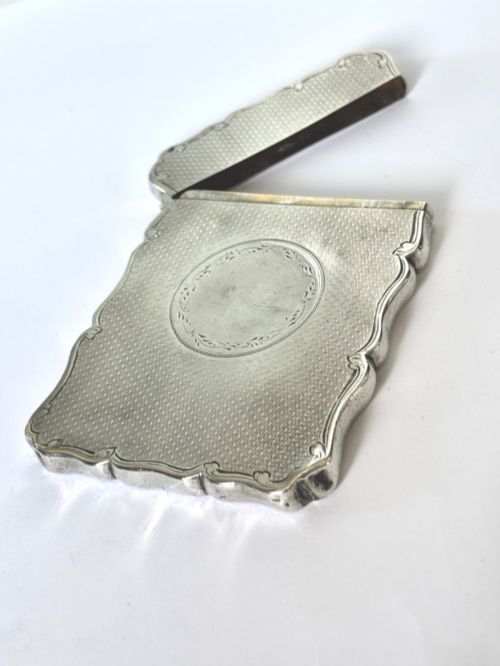
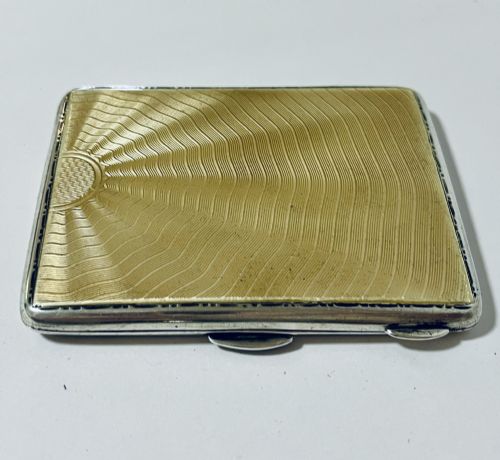


Engine Turned Case
An engine turned case is a precision-machined metal container designed to hold personal requisites, prized by collectors for its tactile geometric surface.
Engine Turned Case
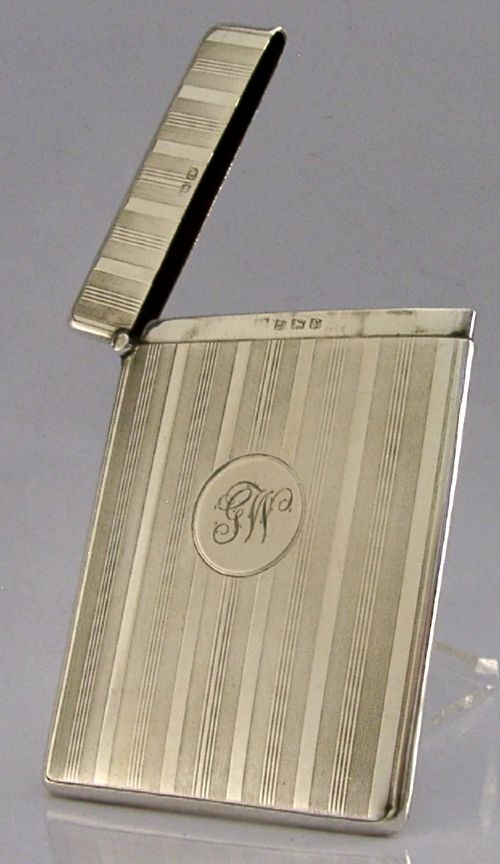
When you search for an engine turned case, you encounter functional receptacles spanning the Georgian, Victorian, Edwardian, and Art Deco eras. The selection on this page leans heavily toward twentieth-century forms, specifically pocket accessories designed for tobacco and cards.
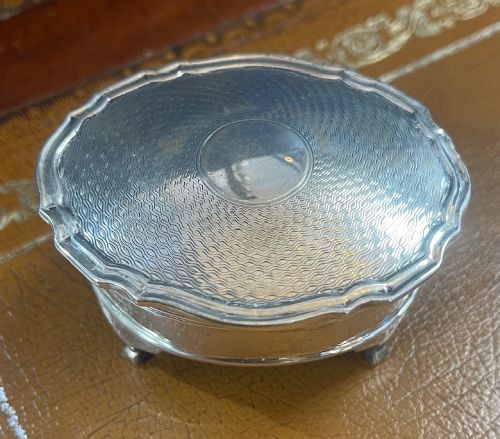
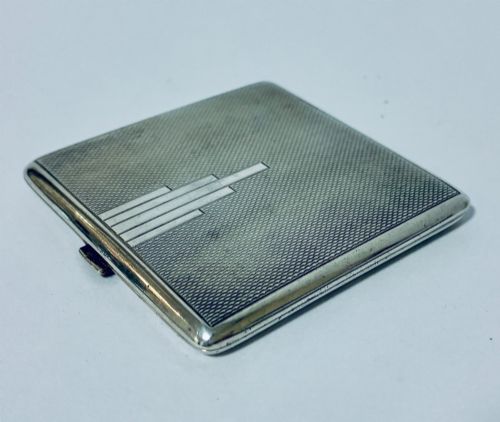
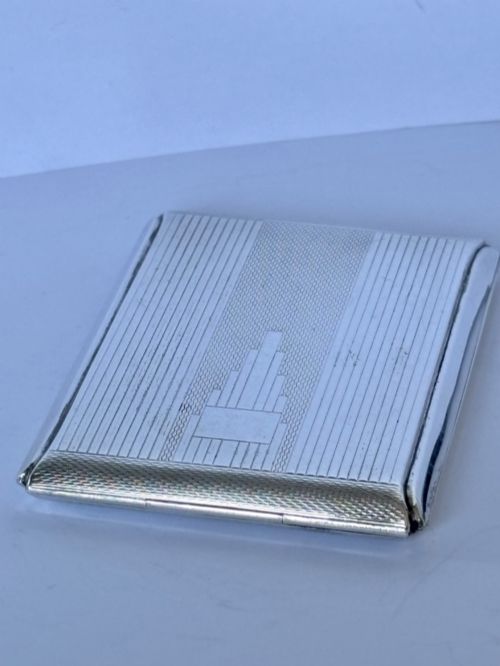
Cigarette cases, card cases, vesta cases, and compacts represent the predominant forms. Alongside these pocket items, larger desk accessories, snuff boxes, and vanity cases appear from both British and continental workshops.
The objects serve personal grooming and social ritual, combining utility with decorative metalwork. They range from slim nineteenth-century visiting card holders to geometric 1930s vanity pieces.
Materials and technique
Makers utilised sterling silver, silver gilt, and solid gold as the primary substrates for these vessels. Precious metals were chosen for their malleability and durability under mechanical engraving tools.
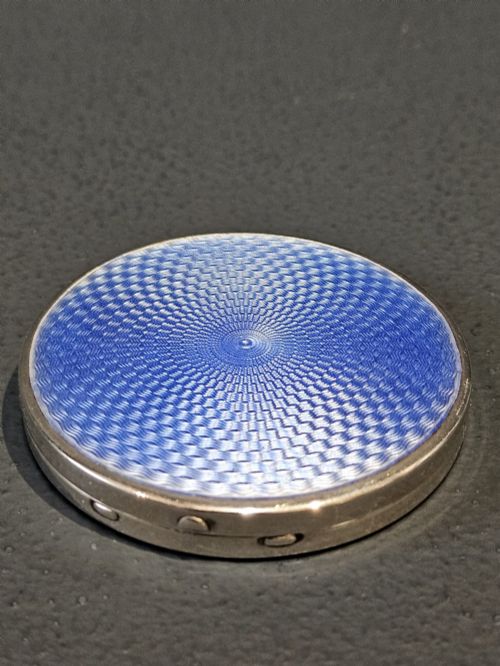
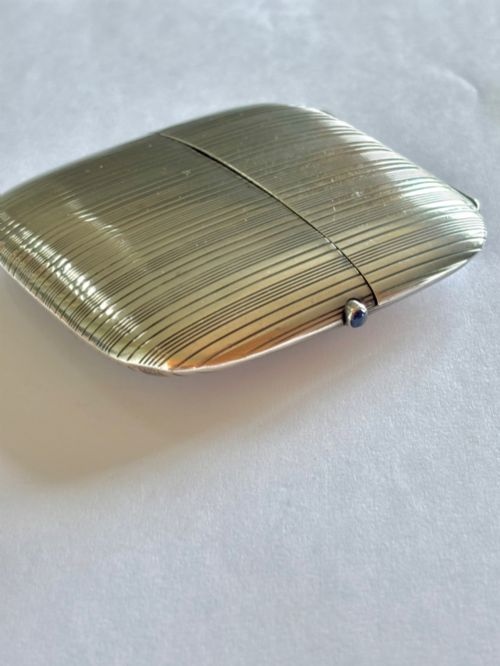
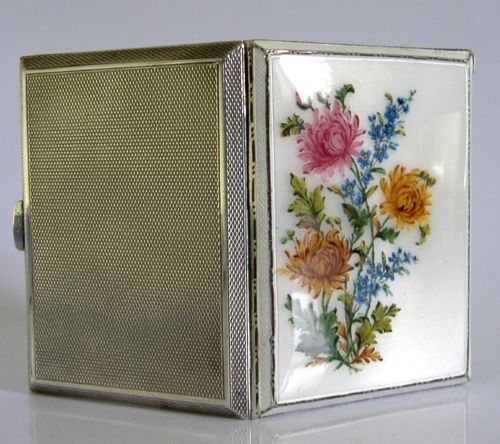
Surface ornament relied on engine turning, a technique where a lathe cuts intricate, repeating geometric patterns directly into the metal. Enamel, silk, velvet, leather, and gemstones occasionally supplement the engraved metal bodies.
Engine Turned Case Retail Price Guide 2026
Typical asking prices for engine turned case among the pieces listed under this phrase on Sellingantiques today, from the lower quarter to the upper quarter. They describe what is for sale here now, not the wider market.
Some nineteenth-century versions ingeniously combine a snuff box, a vesta, and a watch fob into a single pocket-sized contraption.
Standards of execution
Quality rests upon the crispness and complexity of the geometric engraving. Crisp, deep hatchings indicate superior tool control by the silversmith.
The integrity of hinges, clasps, and lid alignment distinguishes finer pieces from ordinary production. Internal gilding and the application of translucent enamel over engine-turned grounds also elevate a piece's status.
Aaron Lufkin Dennison·George Unite·Robert Pringle·Cartier·Nathaniel Mills·The Daniel Manufacturing Co·Alexander J Strachan·Mappin & Webb·Van Cleef & Arpels·Edward Edwards
The Engine Turned Case Glossary
- Engine turning
- A mechanical engraving method using a lathe to cut precise, intricate geometric patterns into metal surfaces. This technique creates a textured, light-catching finish.
- Guilloche
- A decorative technique where a precise mechanical pattern is etched into a metallic surface under enamel. The underlying engraving shows through translucent colour.
- Vesta case
- A small pocket box equipped with a striking surface, made to hold matches. Victorian and Edwardian examples often feature engraved geometric exteriors.
- Silver gilt
- Sterling silver that has been coated with a thin layer of gold. This treatment provides the appearance of solid gold while utilising silver as the base metal.
- Cabochon
- A gemstone shaped and polished with a smooth, rounded dome rather than faceted cuts. These stones frequently accent clasps on compacts and cigarette cases.
Engine Turned Case: Frequently Asked Questions
What fits inside an engine turned case?
These containers were originally built to hold cigarettes, visiting cards, matches, or loose tobacco. Modern owners often repurpose them for business cards, mints, or small daily carried items.
The dimensions of each piece dictate its modern capacity. Slim card cases suit modern plastic cards, while deeper boxes accommodate trinkets.
How do I clean an engine turned case?
Silver pieces require gentle treatment with a soft cloth to avoid flattening the sharp edges of the engraved pattern. Traditional liquid dips should be avoided on enamelled or gilded surfaces.
Enamelled sections respond best to mild soapy water and immediate drying. Proper storage prevents tarnish from accumulating in the fine grooves.
Are these cases made of solid silver?
The majority of the listings consist of sterling silver or silver gilt. Some continental items reach higher purities such as point nine zero zero silver, while others employ solid gold.
Hallmarks stamped into the metal confirm the exact metallic standard and assay office origin. Precious metal content varies by maker and period of manufacture.
How do I date an engine turned case?
British pieces carry hallmarks that include date letters indicating the precise year of assay. Maker's marks and style markers help narrow the production window.
Art Deco geometric layouts point to the 1920s and 1930s, whereas floral scrollwork typically signals Victorian or Edwardian craftsmanship. Structural clues and closure types further support the period.