

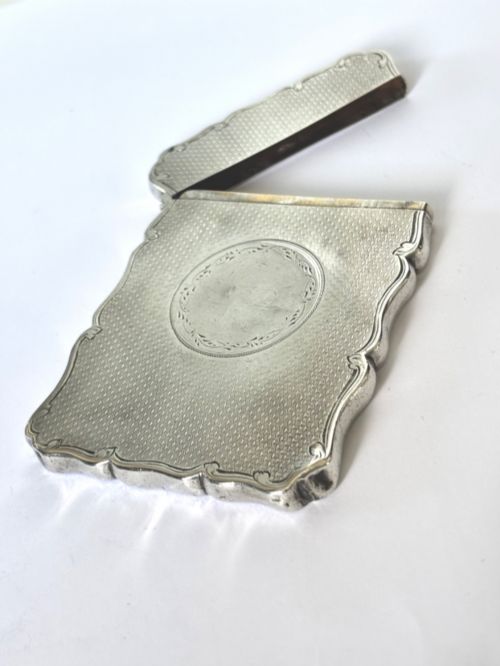


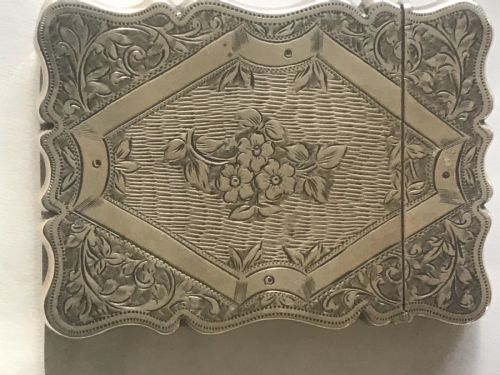


Engine Turned Card Case
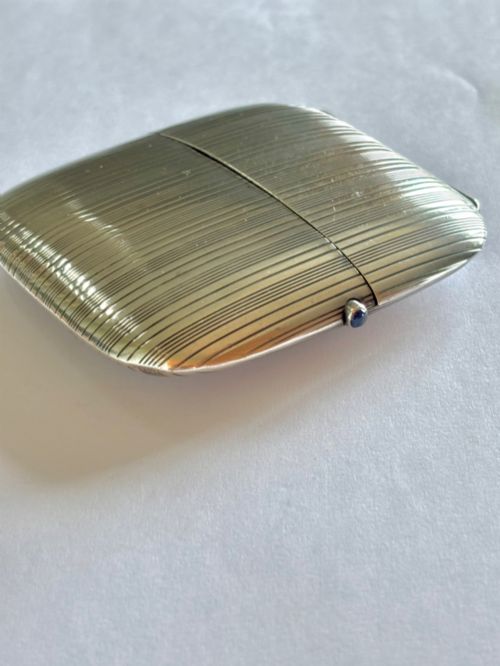
An engine turned card case is a pocket accessory with precision-machined geometric patterns on silver, offering tactile grip and period elegance.
Engine Turned Card Case
When you search for an engine turned card case, you find small portable containers designed to hold calling cards, visiting cards, or cigarettes. These accessories date from the Georgian, Victorian, Edwardian, and Art Deco periods, spanning the nineteenth and twentieth centuries.
The versions you are most likely to meet on this page take the form of sterling silver or silver card cases, cigarette cases, and boxes. They originate from British makers and workshops, frequently bearing hallmarks from Birmingham and London.
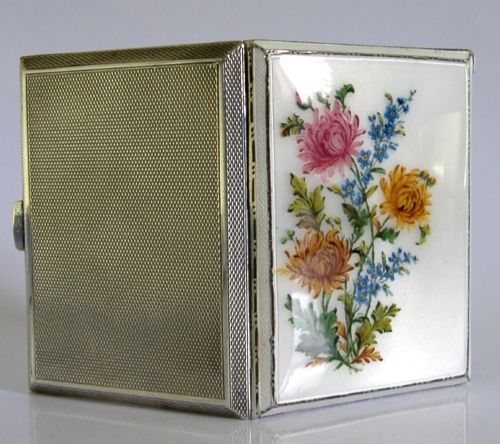
Beyond standard folding card cases and visiting card holders, the selection includes desk accessories, notelet cases, and novelty folding designs. Some examples incorporate gold mounts, silver gilt linings, or applied enamel decoration alongside the machined exterior.
How they were made
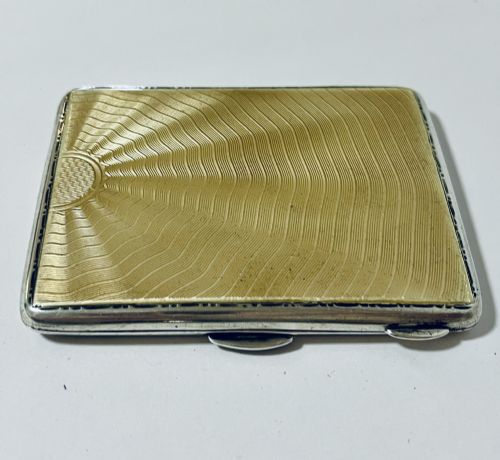
Makers produced the characteristic geometric decoration of an engine turned card case by mounting a silver blank onto a lathe, specifically a rose engine or straight-line engine. This mechanical apparatus rotated or shifted the metal against a cutting tool to scribe exact, repeating patterns across the surface.
Many pieces combine this machined exterior with interior linings of silk, velvet, or leather, while others feature gold mounts or hand-painted enamel panels. Structural elements often rely on hinges, spring clips, and rising card trays to secure the contents.
Engine Turned Card Case Retail Price Guide 2026
Typical asking prices for engine turned card case among the pieces listed under this phrase on Sellingantiques today, from the lower quarter to the upper quarter. They describe what is for sale here now, not the wider market.
Listings feature sterling silver, silver gilt, enamel, gold, leather, silk, and velvet across Georgian, Victorian, Edwardian, and Art Deco periods.
What varies in quality
The distinction between ordinary and exceptional examples rests on the crispness and depth of the machined pattern. Sharply defined geometric lines indicate a well-maintained cutting tool and a steady operator, whereas worn or shallow incisions suggest heavy polishing over time.
Material combination and internal fittings further differentiate the range. Pieces retaining original gilding, intact silk or velvet linings, and maker marks from noted silversmiths command greater interest than plain silver shells with replaced interiors.
GEORGE UNITE·Cartier·Edward Edwards
The Engine Turned Card Case Glossary
- Engine turning
- A mechanical decoration technique that uses a lathe to cut precise, geometric patterns into metal surfaces. This method produces regular, repeating motifs such as lines, chevrons, and basketweave designs.
- Sterling silver
- An alloy consisting of ninety-two point five percent silver and seven point five percent other metals, usually copper. British pieces from this category typically bear a lion passant hallmark to indicate this standard.
- Silver gilt
- Silver that has been coated with a thin layer of gold on its interior or exterior surfaces. This treatment protects the silver from tarnishing and provides a warm interior colour.
- Calling card
- A small paper card inscribed with a person's name, used for social visits during the Victorian and Edwardian periods. Cases were specifically proportioned to keep these cards flat and clean in the pocket.
- Hallmark
- An official stamp applied to precious metals by an assay office to guarantee the purity of the metal, the maker, and the year of production. British hallmarks frequently include town marks and date letters.
Engine Turned Card Case: Frequently Asked Questions
What is an engine turned card case?
An engine turned card case is a small metal container featuring a geometric pattern cut by a lathe. These accessories were carried in pockets or handbags to transport visiting cards.
They emerged in various styles across the Georgian, Victorian, Edwardian, and Art Deco periods. Most examples are fashioned from sterling silver.
How do I know the date of my case?
You can determine the date of a British silver case by examining the hallmarks stamped into the metal. These marks usually include a date letter corresponding to a specific assay office year.
Stylistic indicators such as Art Deco geometry or Victorian ornamentation also help assign a piece to its proper period.
Were these cases only used for cards?
While originally designed for calling cards, many period cases were adapted for cigarettes, cheroots, or folded notes. Makers often constructed similar housing for desk accessories and smoking equipment.
Internal spring clips and rising trays accommodated these alternative contents while maintaining a slim profile.
How should I clean silver cases with enamel?
Cleaning silver cases with enamel requires caution to avoid scratching the delicate glass surfaces. You should use a soft cloth and avoid harsh silver dips that might seep under enamel panels.
Professional care is recommended if the piece combines silver gilt, leather interiors, or hand-painted decoration.