


Enamelled Glass Perfume Bottle
An enamelled glass perfume bottle combines colourful surface decoration with functional glasswork, bringing dressing table elegance from past centuries into modern interiors.
Enamelled Glass Perfume Bottle
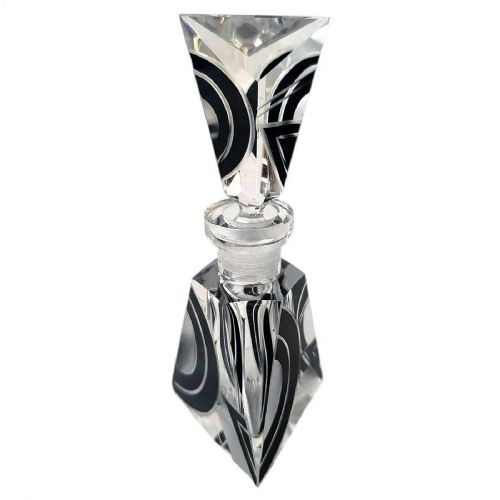
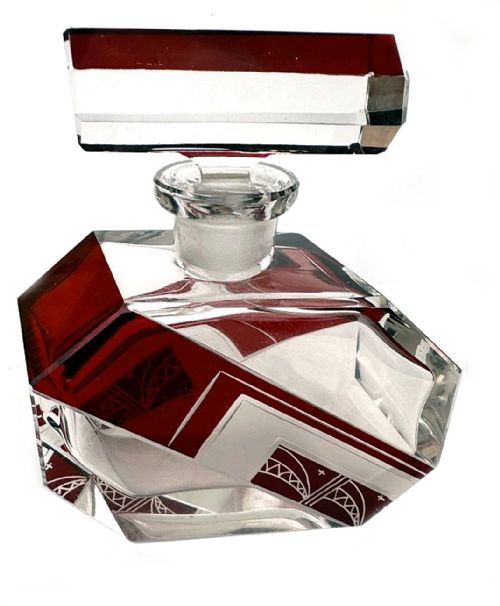
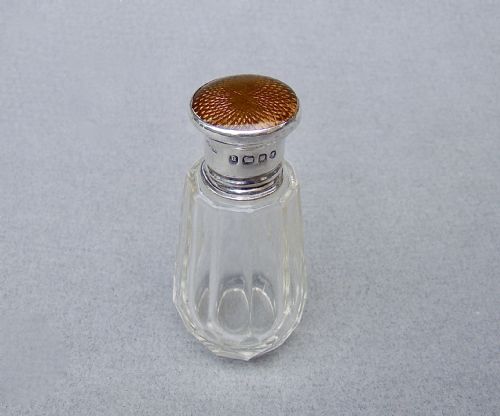
When you search for an enamelled glass perfume bottle, you encounter a range of forms spanning the Victorian era through the 1930s. The most frequent examples on this page are Art Deco pieces from the Czech Republic alongside British silver-mounted designs.
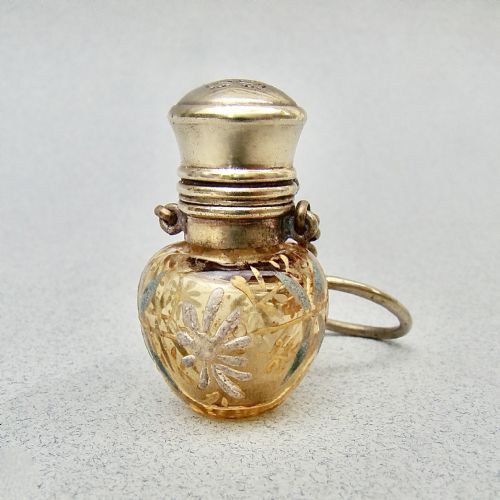
Victorian and nineteenth-century French pieces often take the form of chatelaine scent bottles intended to hang from a belt. Later twentieth-century examples lean towards geometric atomisers and matching globe sets designed for dressing tables.
Materials and construction
Makers utilised clear, coloured, satin, and cut glass as the primary body, applying enamel paints directly to the exterior surface. Many specimens incorporate sterling silver mounts, gold leaf accents, or chrome hardware fitted to the glass neck.
Techniques range from hand-painted floral motifs to complex guilloche enamel worked over metallic bases. Czech and British workshops employed geometric cutting alongside applied enamel panels to achieve distinct visual depth.
Materials appearing across current selections include sterling silver, cut glass, crystal, gold leaf, and fabric.
Quality differences
The standard of an enamelled glass perfume bottle rests on the crispness of the glass cutting and the precision of the enamel work. Finer examples display hand-mixed pigments with clean borders and substantial metal mounts bearing clear hallmarks.
Lighter production pieces often show simpler moulded glass bodies with applied decals rather than hand-painted enamel. The weight of the glass and the integration between the metal collar and the glass vessel separate standard items from superior workshop output.
Karl Palda·Henry Perkins·René Lalique·Mappin and Webb
The Enamelled Glass Perfume Bottle Glossary
- Guilloche enamel
- A decorative technique where a precise geometric pattern is engraved beneath a translucent enamel layer. This creates shimmering reflective waves across silver bottle caps.
- Chatelaine scent bottle
- A small container equipped with a chain or hook designed to hang from a waist fitting. Victorian ladies wore these for quick access to smelling salts.
- Satin glass
- Glass treated with hydrofluoric acid vapour to produce a soft, matte texture resembling satin. It provides a tactile contrast to glossy enamel painted details.
- Atomiser
- A perfume bottle fitted with a spray mechanism and bulb. Art Deco iterations often use chrome hardware alongside geometric cut glass.
Enamelled Glass Perfume Bottle: Frequently Asked Questions
How do I date an enamelled glass perfume bottle?
Dating relies on stylistic markers such as geometric Art Deco lines from the 1930s or ornate Victorian chatelaine hardware from the nineteenth century. Hallmarks on silver mounts provide precise assay years for British pieces.
Material colours and manufacturing techniques also help narrow the decade. For instance, satin glass and Mary Gregory styles point squarely to Victorian production.
Were these bottles meant for travel?
Many Victorian and Edwardian scent bottles feature secure screw or hinged caps designed to prevent leakage inside reticules or luggage. Chatelaine variants were explicitly made for portability during daily outings.
Later dressing table atomisers were heavier and intended for static display rather than travel. Their mechanisms prioritized fine mist delivery over spill-proof sealing.
How should I clean an antique scent bottle?
Gentle dusting with a dry microfiber cloth preserves fragile exterior enamel and metallic finishes. Avoid submerging antique bottles in water, particularly those with paper labels or delicate guilloche work.
Interior cleaning requires small amounts of warm water without harsh detergents. Protecting the vintage glass and silver mounts prevents accidental wear to the original surface.
What is the difference between a scent bottle and an atomiser?
A scent bottle relies on a simple stopper or screw cap to dispense liquid perfume directly onto the skin. An atomiser uses a pump mechanism and internal tube to disperse the fragrance as a fine mist.
Atomisers became widespread during the Art Deco period alongside geometric cut glass bodies. Traditional stoppered bottles dominated earlier Victorian and Edwardian manufacturing.