


Chatelaine Perfume Flask
These chatelaine perfume flasks are miniature wearable vessels designed to hang at the waist, combining practical scent storage with decorative metalwork.
Chatelaine Perfume Flask
A chatelaine perfume flask is a portable scent bottle created to suspend from a belt or chatelaine hook during the nineteenth century and the early twentieth century. Buyers seeking this phrase encounter small, ornate vessels shaped as traditional cylinders, novelty violins, or flattened penny forms designed for easy carriage.
The most common examples on this page hail from the Victorian era and nineteenth-century France, featuring sterling silver, continental silver, or gilded metal mountings. These pieces bridge the gap between functional personal accessories and decorative arts, often incorporating integrated chains or suspension loops.
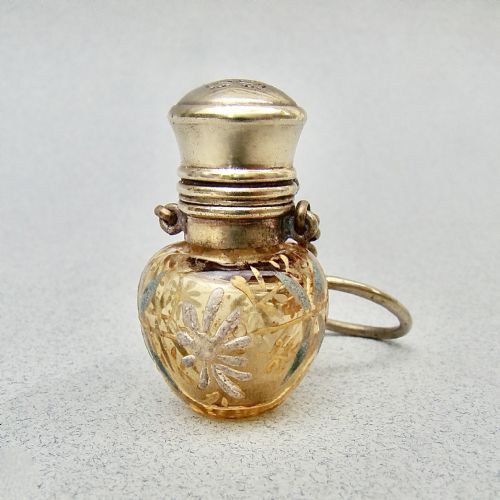
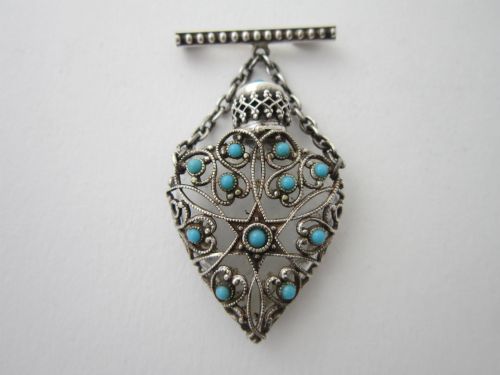
Makers utilised distinctive glass bodies such as opaline, cranberry, satin, and triple-overlay glass to catch the light at the waist. Alongside glass, metalwork dominates the form, ranging from plain sterling silver bearing hallmarks to elaborate enamel and turquoise embellishments.
Materials and construction methods
The bodies of these flasks rely on blown or moulded glass combined with metal mounts formed through casting and stamping techniques. Silversmiths and metalworkers secured hinged caps and collars directly to the glass necks, often adding suspension rings for attachment to a chatelaine hook.
Surface ornamentation involved coloured glass techniques such as triple-overlay and acid-finishing for satin textures, alongside hand-applied enamel work. Metal components received decorative chasing, repoussé relief work depicting cherubs or angels, and occasional inset turquoise stones.
Some nineteenth-century makers fashioned silver perfume flasks into miniature violins, turning a pocket scent bottle into a tiny musical instrument.
Distinctions in quality
Quality in these flasks rests on the complexity of the glass manufacture and the crispness of the metal mounts. Multi-layered overlay glass and detailed enamel work require greater skill than plain glass bodies, just as deeply chased silver relief outclasses thin stamped metal.
The integrity of the hinged cap and the tightness of the closure determine the mechanical success of the piece. Superior examples retain their original gilding, clear hallmarks, and matching stoppers without replacement parts or structural compromise to the glass.
S. Morden and co·Moser
The Chatelaine Perfume Flask Glossary
- Chatelaine
- A decorative belt hook or clasp worn from the waist to suspend utilitarian items such as scissors, keys, and perfume flasks. This traditional accessory was widely used during the Victorian period.
- Opaline glass
- An opaque or translucent glass developed in soft pastel shades, frequently utilised for nineteenth-century scent bottles. It provides a smooth, porcelain-like ground for metal mounts.
- Repoussé
- A metalworking technique where the smith hammers the design from the reverse side to form a raised relief on the front. This method creates the dimensional cherub and floral motifs found on silver mounts.
- Triple overlay
- A glass-blowing method involving three distinct layers of coloured or clear glass fused together before being cut back. This technique exposes contrasting colours in geometric or floral patterns.
- Hallmark
- An official stamp applied by an assay office to indicate the metal purity and origin of silver items. British pieces often display date letters and maker marks.
Chatelaine Perfume Flask: Frequently Asked Questions
What is a chatelaine perfume flask?
A chatelaine perfume flask is a small, portable scent bottle equipped with a ring or chain for hanging from a belt chatelaine. These vessels allowed nineteenth-century wearers to carry personal fragrance throughout the day.
They combine glass bodies with protective metal cages, caps, and suspension loops. The form merges jewellery with functional personal care items.
How were these scent bottles worn?
Victorian women suspended these flasks from a chatelaine, which was a hooked belt accessory that held various daily tools. The short chains kept the bottle accessible at the waist while preventing loss.
Many examples feature integrated loops or ring mounts specifically designed to receive a small suspension hook or split ring.
What materials are used in these flasks?
The bodies are typically formed from coloured, opaline, or layered glass, while the mounts utilise sterling silver, continental silver, or ormolu. Some pieces incorporate enamel decoration and turquoise cabochons.
Metal components provide structural strength around the neck and base while protecting the fragile glass beneath.
How do I date a nineteenth-century flask?
Dating relies on metal hallmarks, specific glass production styles, and stylistic markers associated with Victorian and continental manufacturing periods. British silver often carries assay office marks and date letters that pinpoint the exact year.
French pieces from the same era generally depend on stylistic execution, maker marks, and retailer signatures rather than official town marks.