




Enamelled Glass Bottle
An enamelled glass bottle brings together vibrant surface decoration and functional glassware, offering collectors a striking piece of historical craftsmanship.
Enamelled Glass Bottle
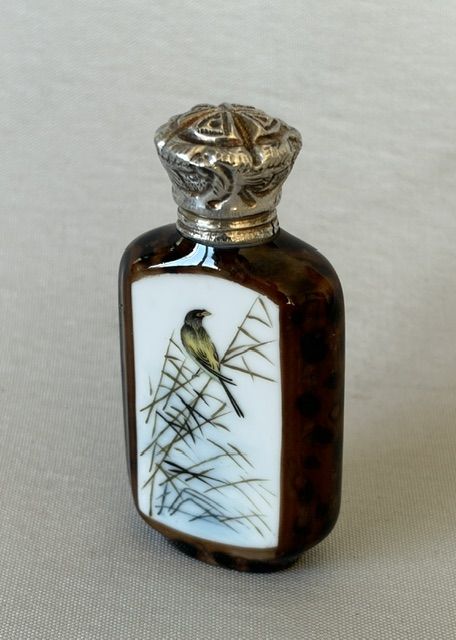
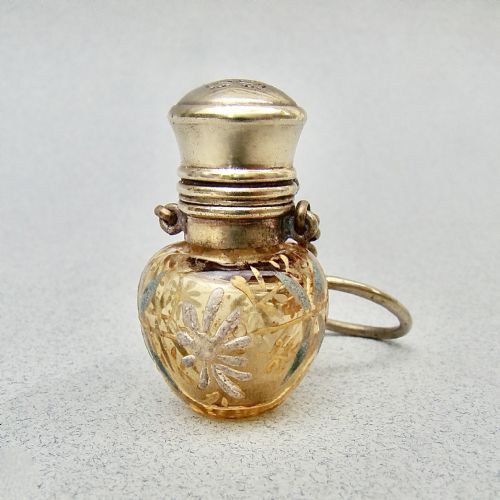
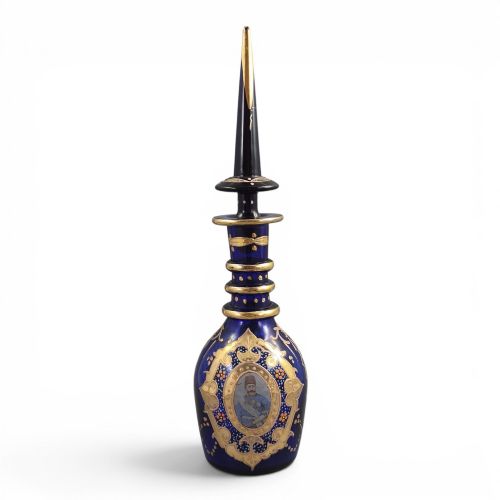
When searching for an enamelled glass bottle, buyers encounter a diverse range of vessels designed for dressing tables, bars and personal use. These items span portable scent bottles and chatelaine pieces to larger whisky decanters and flasks.
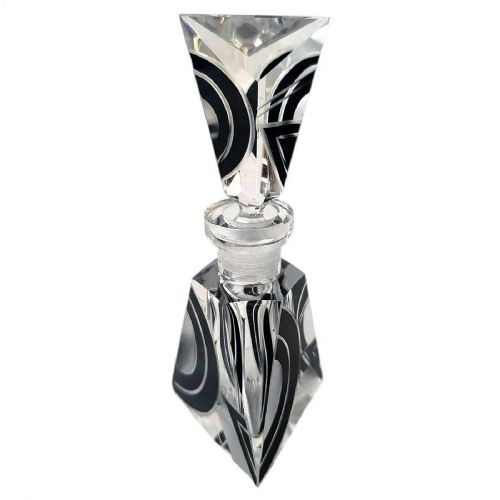
The selections on this page draw heavily from Victorian and Edwardian dressing accessories alongside 1930s Art Deco designs. Pieces originate from various European centres, including British workshops, French makers and Bohemian glasshouses.
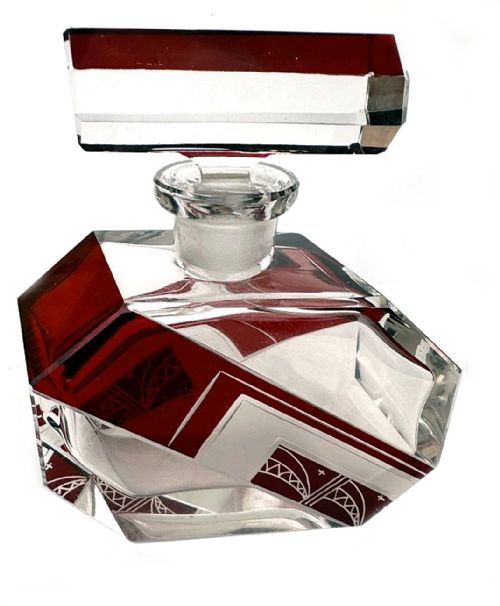
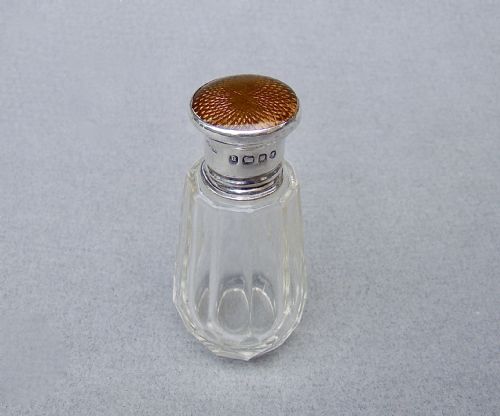
Forms vary from geometric Art Deco perfume atomizers to nineteenth-century Mary Gregory vessels featuring characteristic white enamel silhouette figures. Miniature scent bottles mounted in silver sit alongside substantial coloured glass decanters.
How They Were Made
The foundation of these pieces relies on glassblowing, pressing or cutting, utilising clear, coloured, opaline or milk glass. Artisans applied vitreous enamel paints directly to the glass surface, often fixing the pigments through firing.
Enamelled Glass Bottle Retail Price Guide 2026
Typical asking prices for enamelled glass bottle among the pieces listed under this phrase on Sellingantiques today, from the lower quarter to the upper quarter. They describe what is for sale here now, not the wider market.
Listings feature glass bottles and decanters spanning the 18th Century through to the 1930s, incorporating cut glass, crystal and sterling silver.
What Varies in Quality
Quality rests in the precision of the glass cutting, the clarity of the coloured ground and the intricacy of the hand-painted enamel details. Superior examples exhibit well-balanced proportions and crisp execution in both the glass body and any metal mounts.
The integration between the glass vessel and fitted silver or ormolu elements marks the distinction between standard production and finer workshop output. Maker attribution and hallmarked precious metal mounts further elevate the standing of individual pieces.
Karl Palda·Henry Perkins·James Fenton·Charles May·René Lalique·Mappin and Webb
The Enamelled Glass Bottle Glossary
- Guilloché enamel
- A decorative technique where a metal surface is mechanically engraved with intricate geometric patterns under translucent enamel. This method was widely utilised on silver-mounted dressing table items during the Edwardian and Art Deco periods.
- Mary Gregory glass
- Victorian glassware decorated with white enamel silhouettes typically depicting children in natural settings. The style draws its name from an association with an American glass decorator, though most recorded pieces originate from Bohemia.
- Chatelaine scent bottle
- A small portable perfume vessel equipped with a chain or hook to suspend from a woman's belt chatelaine. These items were popular accessories during the nineteenth century.
- Opaline glass
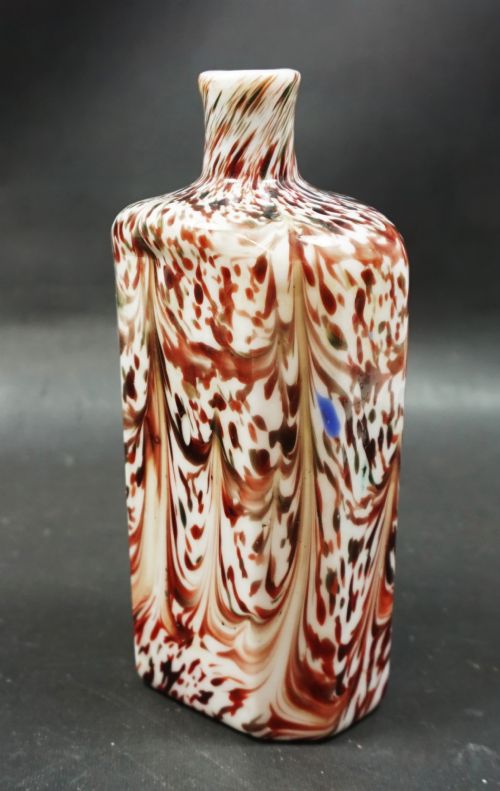
- An opaque or semi-translucent glass developed in various pastel shades, frequently used during the nineteenth century for decorative vases and scent containers. It provides a smooth ground for polychrome enamel painting.
- Decanter
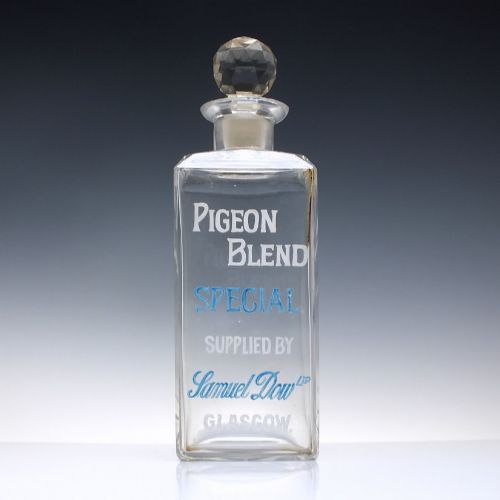
- A stoppered glass vessel used for holding and serving spirits or wine. Examples found on this page range from nineteenth-century Scottish whisky releases to continental enamelled flasks.
Enamelled Glass Bottle: Frequently Asked Questions
How do I date an antique glass bottle?
Dating relies on stylistic markers, manufacturing techniques, and any accompanying metal mounts or hallmarks. Victorian pieces often feature floral or silhouette enamel work combined with British silver assay marks that record exact years.
Art Deco examples from the 1930s typically display geometric forms, clean lines, and Czech or British production traits. Comparing the colour palette and glass-cutting style against known period pieces helps narrow the decade.
Were these bottles used for perfume?
Many smaller examples functioned as scent or perfume bottles, designed to hold volatile fragrances safely on a dressing table or carry them on a chatelaine. Fitted stoppers and inner glass daubers prevented evaporation.
Larger vessels served as decanters or flasks for spirits and cordials, featuring durable glass bodies and secure stoppers rather than delicate fragrance closures.
How do I care for antique glass?
Care involves gentle handling and avoiding immersion in water, particularly for pieces with delicate exterior enamel or metal mounts. Dusting with a soft, dry cloth preserves the decorated surface.
Displaying pieces away from direct sunlight protects coloured glass and enamel pigments from fading over time, while secure placement prevents accidental knocks to protruding stoppers.