

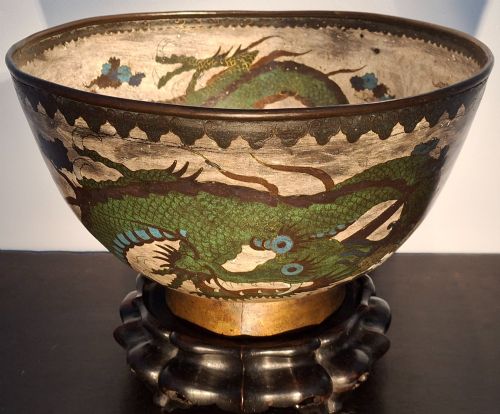
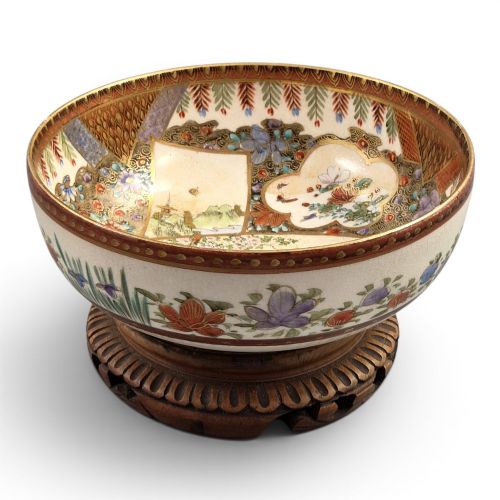


Enamelled Display Bowl
An enamelled display bowl brings together rich metallic tones and intricate painted or wired details to anchor a room.
Enamelled Display Bowl
An enamelled display bowl encompasses a diverse range of decorative vessels designed primarily for visual impact rather than dining. The listings focus heavily on Japanese cloisonne enamel chargers and bowls alongside Chinese porcelain famille rose punch bowls and European crystal.
Most examples date from the nineteenth century, including pieces from the Meiji and Edo periods, featuring motifs such as dragons, shrimp, and floral patterns. Buyers will also encounter earthenware, brass, copper, and porcelain forms spanning multiple centuries.
How they were made
Cloisonne pieces utilise thin metal wires soldered to a copper or brass base to create cellular compartments that are filled with coloured enamel pastes and fired. Porcelain and earthenware examples rely on hand-painted mineral pigments fused to the ceramic body through high-temperature kilns.
Gold leaf and gilt enamels frequently accent the primary designs, adding depth and contrast to the finished surface. Glassworks apply metallic enamel decoration directly to crystal vessels before a secondary firing fixes the pigment.
Enamelled Display Bowl Retail Price Guide 2026
Typical asking prices for enamelled display bowl among the pieces listed under this phrase on Sellingantiques today, from the lower quarter to the upper quarter. They describe what is for sale here now, not the wider market.
The selection includes Japanese Arita and Satsuma wares alongside Chinese famille rose punch bowls and European crystal.
What varies in quality
The precision of the wirework and the complexity of the enamelling separate standard decorative pieces from exceptional works. Finer examples display meticulous detail in motifs such as dragons and floral arrangements without pitting or clouding in the glass and enamel fields.
Signatures by recognised makers or workshops elevate certain items, reflecting superior craftsmanship and control during the firing process. The structural integrity of the base metal or ceramic body also dictates the overall standard of the vessel.
Kozan·St Louis glassworks·Samson Of Paris
The Enamelled Display Bowl Glossary
- Cloisonne enamel
- A technique where metal wires form compartments on a base to hold coloured glass paste. The piece is then fired and polished smooth.
- Famille rose
- A palette of opaque rose-pink enamel introduced to Chinese porcelain during the Qing dynasty. It allowed for subtle gradations of tone in floral and figural scenes.
- Imari porcelain
- Japanese export porcelain decorated in underglaze blue, iron red, and gold. These wares were produced primarily in Arita for European and domestic markets.
- Charger
- A large ornamental plate intended for display on a sideboard or wall rather than for serving food. They often feature elaborate central motifs.
- Satsuma ware
- Japanese earthenware with a ivory-coloured, crackled glaze. It is typically decorated with polychrome enamels and extensive gilt detailing.
Enamelled Display Bowl: Frequently Asked Questions
How do I clean an enamelled display bowl?
Dust the surface gently with a soft, dry cloth to prevent accumulation in recessed areas or around wire compartments.
Avoid liquid cleaners, abrasive cloths, or immersion in water, as moisture can damage older metal bases and vulnerable enamel surfaces.
Can I use these bowls for serving food?
Most antique enamelled display bowls are intended strictly for decorative presentation rather than culinary use.
Historical pigments and metal components may not meet modern food safety standards and can be easily damaged by utensils or acidic contents.
Where should I place a large charger?
Large chargers are suited for display on dedicated stands upon mantels, sideboards, or deep shelves where their full surface can be seen.
Ensure the display location avoids direct sunlight and dramatic temperature fluctuations to protect the enamel and underlying materials.
How do I identify the period of a bowl?
Examine the materials, base construction, and decorative style against documented examples from specific eras like the Meiji period or Qing dynasty.
Maker signatures, applied stamps, and manufacturing techniques such as wire thickness offer further clues to the date of origin.