





Enamelled Art Glass
Enamelled art glass pieces combine glass forms with colourful vitreous surface decoration spanning late nineteenth-century styles to mid-twentieth-century designs.
Enamelled Art Glass
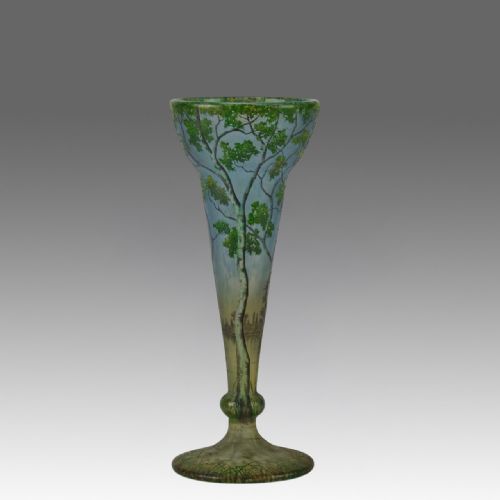
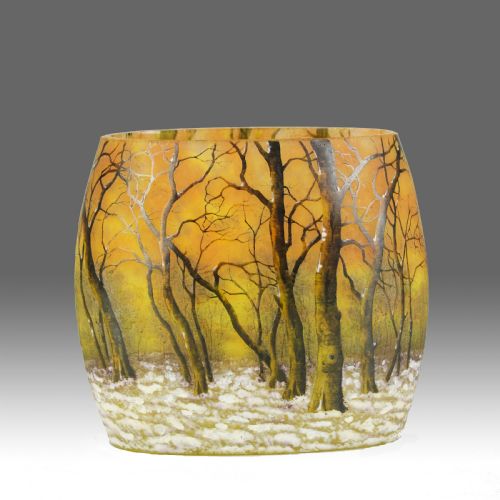
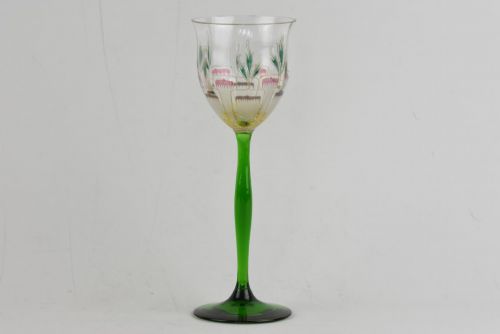
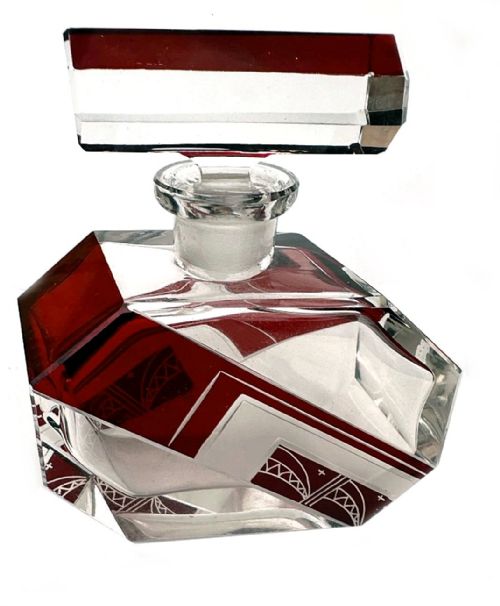
When you search for enamelled art glass, you encounter decorative objects that unite coloured or clear glass vessels with detailed painted, fired, or applied enamel decoration. The selections span from Victorian floral jars and nineteenth-century cabinet vases to geometric Art Deco perfume bottles and dressing table accessories.
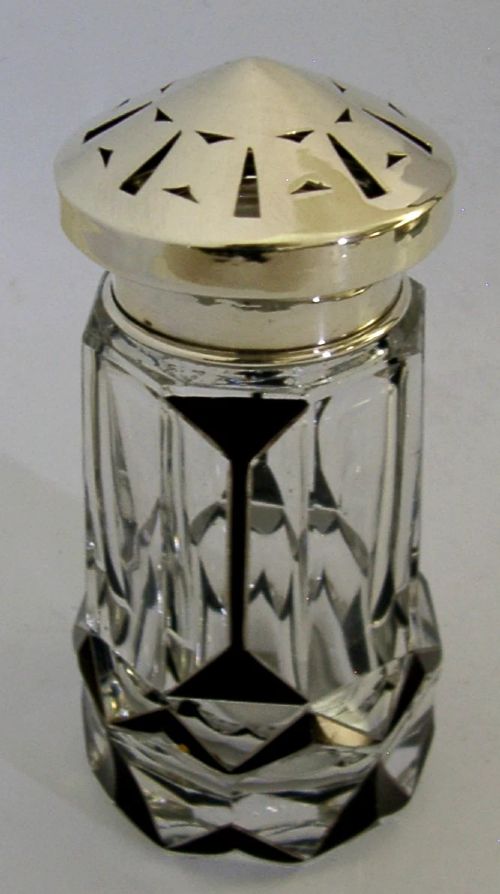
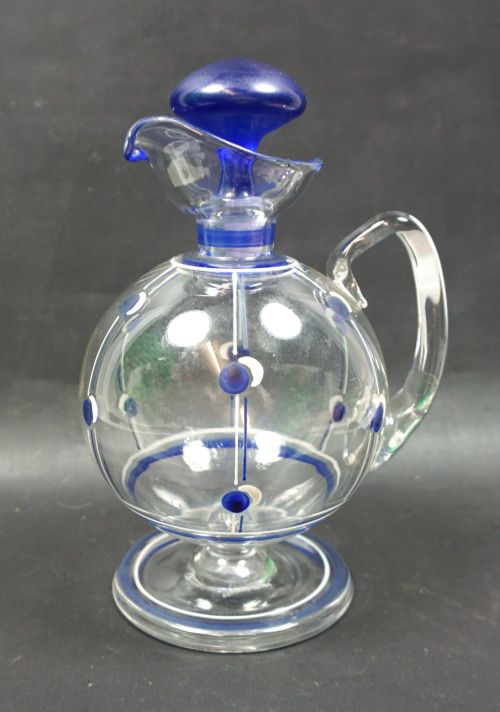
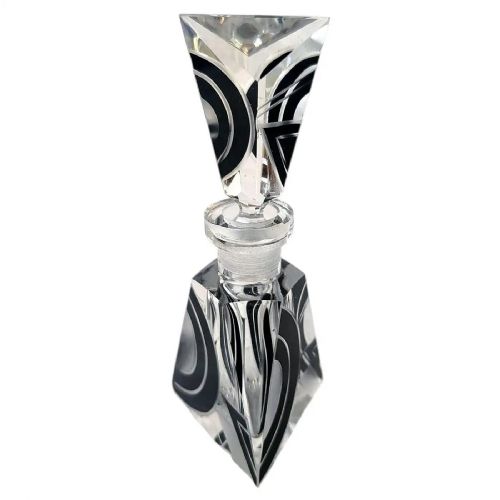
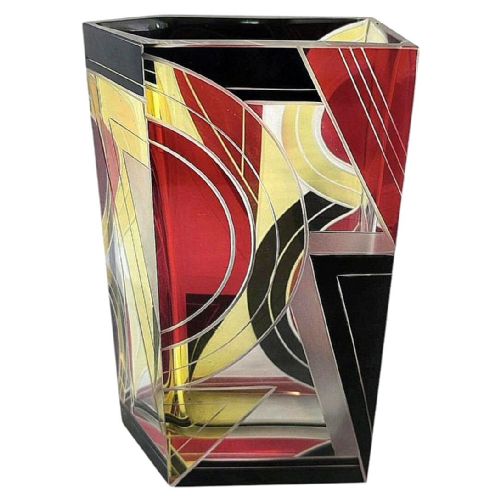
The objects you are most likely to meet on this page include tall glass vases, scent bottles, decanter sets, and dresser jars originating from British, French, Czech, and German makers. These items range from delicate Victorian green glass vessels to robust twentieth-century cut crystal items mounted with sterling silver and guilloche enamel tops.
How they were made
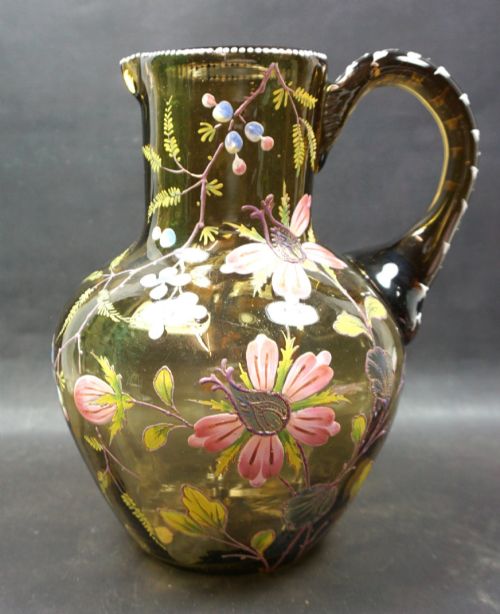
The makers formed these objects using glassblowing, cameo carving, and mould-pressing techniques, shaping clear, coloured, cameo, or cut glass blanks into vases, bottles, and tableware. Artisans then applied vitreous enamel by hand, often incorporating gold leaf, etching, or gilding to build up complex botanical or geometric motifs before firing the pieces in a kiln to fuse the colours permanently to the glass surface.
Many of the twentieth-century pieces incorporate sterling silver, chromium, or 18-carat yellow gold mounts, alongside guilloche enamel components. These metal fittings were shaped and hallmarked in silver workshops, then paired with glass bodies using secure collars, screw threads, or hinged lids.
Enamelled Art Glass Retail Price Guide 2026
Typical asking prices for enamelled art glass among the pieces listed under this phrase on Sellingantiques today, from the lower quarter to the upper quarter. They describe what is for sale here now, not the wider market.
Several scent bottles carry the exact personal dabs of long-gone powder, preserving a faint trace of bygone dressing table routines.
What varies in quality
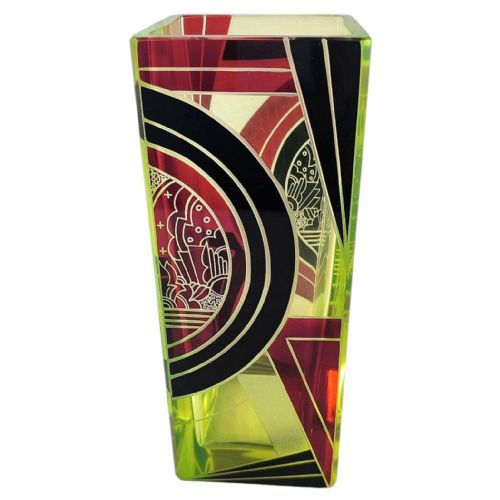
Quality in these pieces rests upon the precision of the glass cutting and the refinement of the enamel work. Finer examples display crisp geometric etching, perfectly registered guilloche patterns under translucent enamel, and hand-painted scenes with subtle tonal shading rather than flat, heavy application.
The integration between materials also dictates the standard of a piece. Superior items feature securely fitted sterling silver or gold mounts with clear assay marks, flawless crystal or cased glass blanks, and enamel surfaces free from firing blemishes or extensive rubbing.
Daum Frères·Karl Palda·Thomas Webb·Henry Clifford Davis·Theresienthal
The Enamelled Art Glass Glossary
- Guilloche Enamel
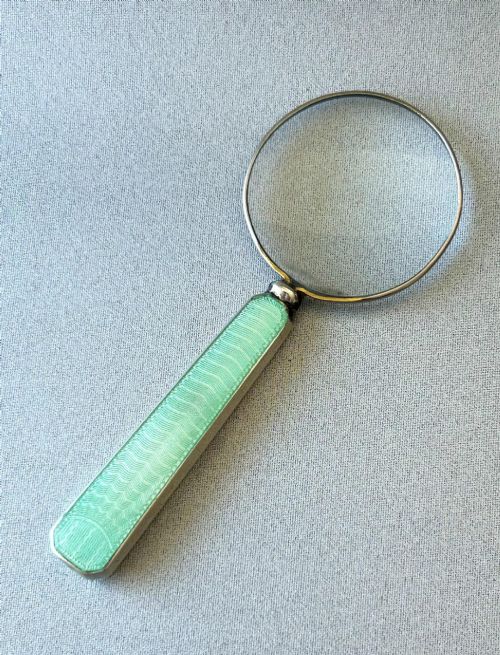
- A decorative technique where translucent enamel is layered over engine-turned metalwork. The mechanical engraving beneath creates repeating geometric patterns that show through the glossy coloured glass surface.
- Cameo Glass
- A vessel formed of two or more distinct layers of coloured glass fused together. Artisans carve away the outer layer to leave raised opaque designs against a contrasting background.
- Plique-a-Jour
- An enamelling technique resembling miniature stained glass without a solid backing. The enamel fired within open metal cells lets light pass directly through the translucent colours.
- Mary Gregory
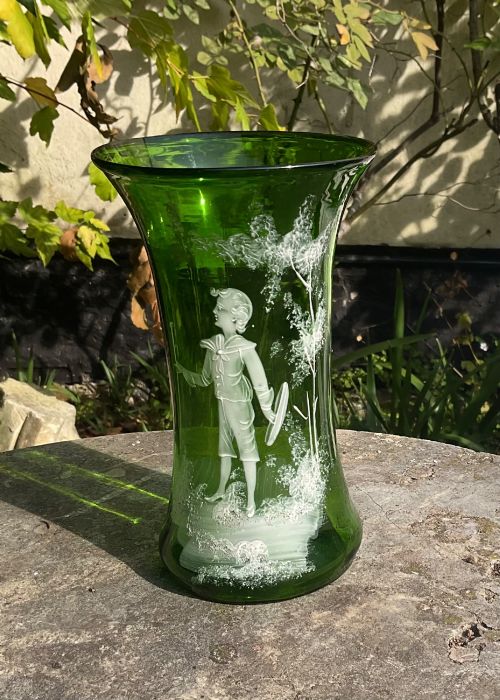
- A style of decorative glass featuring white or tinted silhouette painting, typically depicting Victorian children in pastoral settings. The technique gained widespread popularity during the late nineteenth century.
Enamelled Art Glass: Frequently Asked Questions
What is enamelled art glass?
Enamelled art glass comprises decorative glass objects decorated with fired vitreous enamel designs. These range from Victorian painted vessels to twentieth-century geometric perfume bottles and tablewares.
The category encompasses both standalone glass vases and mounted pieces featuring silver or gold components. Artisans utilised diverse glass types including cameo glass, cut crystal, and coloured glass blanks.
How do I date these glass pieces?
Dating relies on stylistic markers, manufacturing techniques, and metal hallmarks where present. Victorian pieces often feature naturalistic floral painting on tinted glass, whereas 1930s items lean towards clean geometric lines and machine-turned metal mounts.
Assay office marks and maker stamps on silver or gold collars provide precise manufacture years for dresser jars and scent bottles. Stylistic movements like Art Nouveau and Art Deco offer reliable windows for unmarked items.
How should I display them?
Display these items in spaces with adequate natural light to highlight the translucent properties of the enamel and glass. Placing them near windows or on lit shelving allows light to pass through coloured crystal and guilloche panels.
Keep pieces away from direct, intense sunlight to protect delicate enamel pigments over time. Grouping smaller perfume bottles or dressing table jars together creates a strong visual focus.