


Enameled Dial Mantel Clock
An enameled dial mantel clock brings the precision of nineteenth-century French and Victorian engineering directly into the domestic interior.
Enameled Dial Mantel Clock
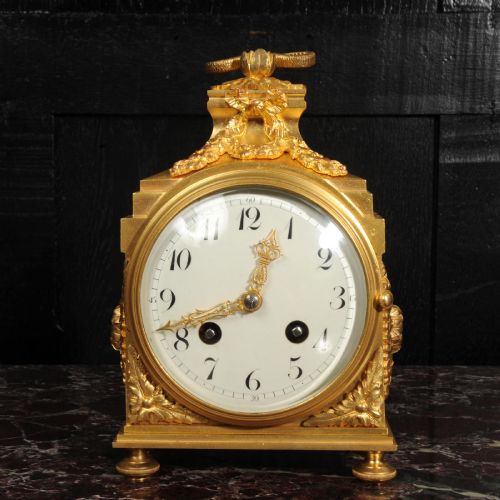
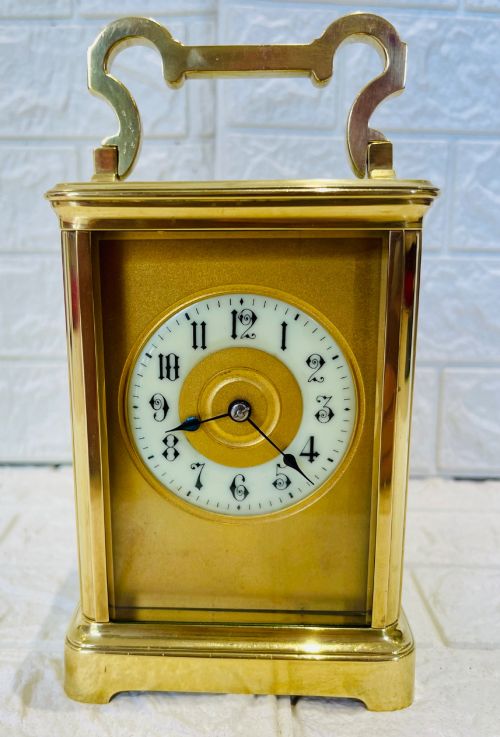
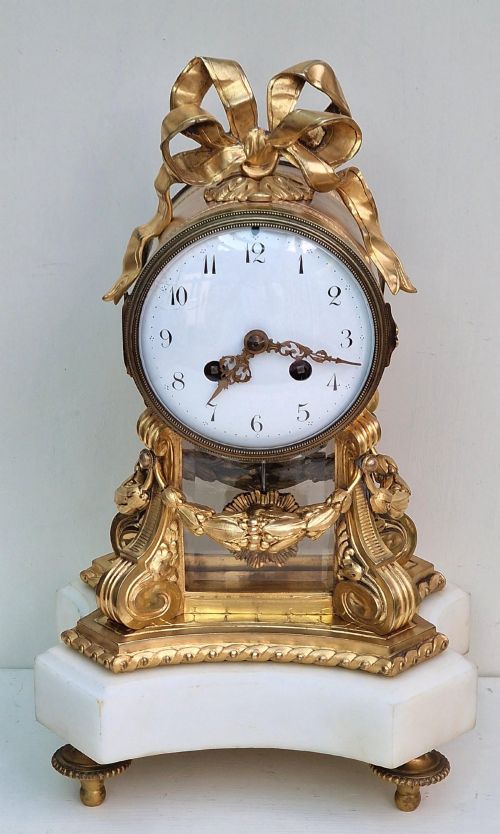
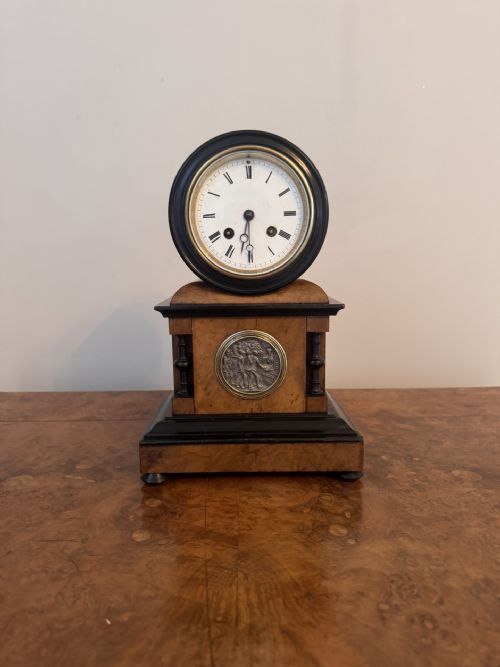
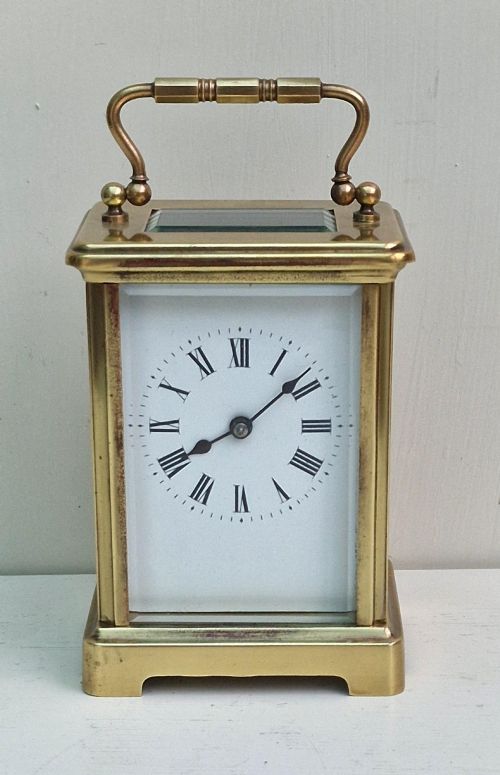
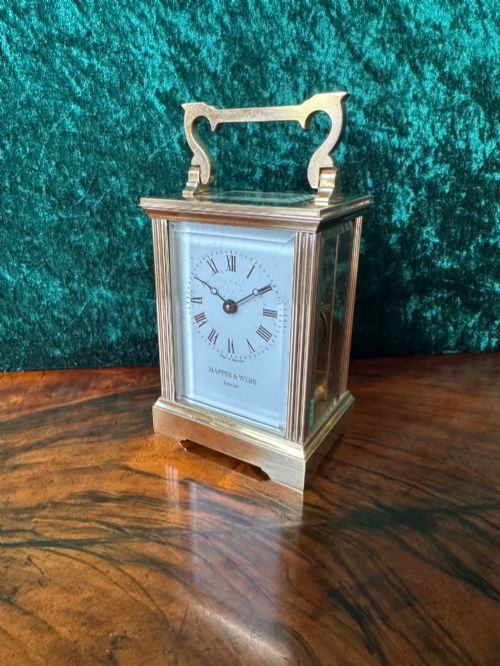
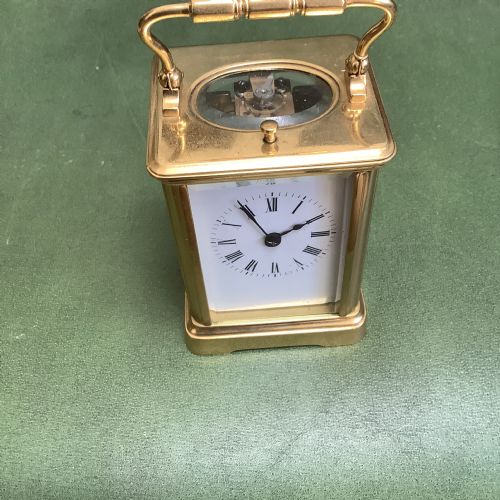
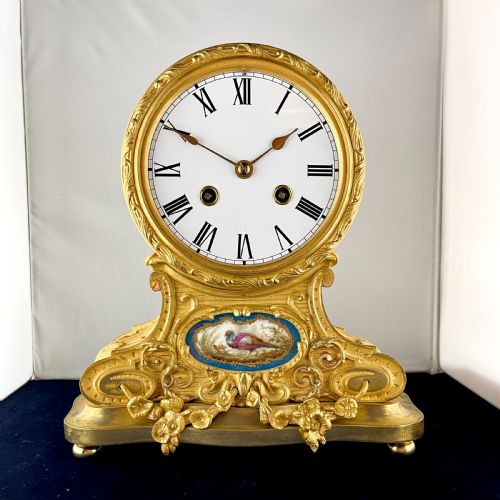
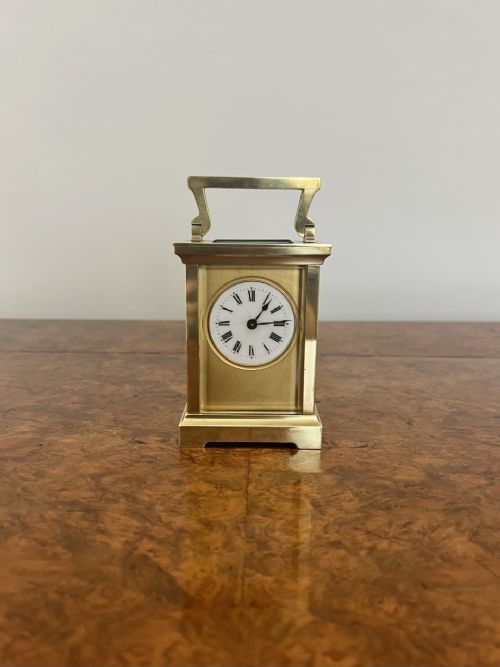
An enameled dial mantel clock combines a heavy brass, gilt bronze, or marble housing with a clear, fired ceramic face designed for precise timekeeping. When searching for an enameled dial mantel clock, buyers encounter both substantial Victorian chamber clocks and refined French carriage designs dating from the eighteen-eighties to the early twentieth century.
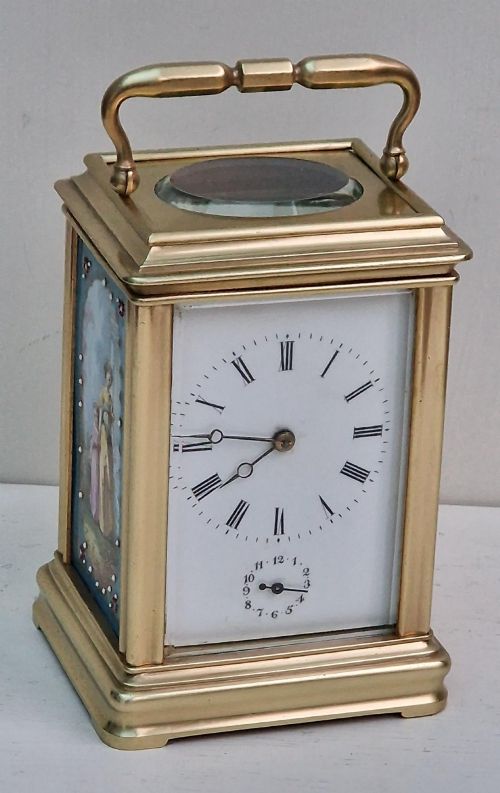
The assortment on this page spans traditional mantel forms and portable carriage clocks housed in gorge or doucine cases. Makers frequently incorporated strike trains, repeaters, or porcelain panels alongside the signature enameled face to elevate the decorative presence of the piece.
Materials and construction
Craftsmen built these movements in brass and steel, housing them within cases formed from cast brass, gilt bronze, ormolu, and white marble. The signature dials utilise vitreous enamel fused onto a copper or iron base at high temperatures, producing a crisp, clean surface that resists tarnishing over decades.
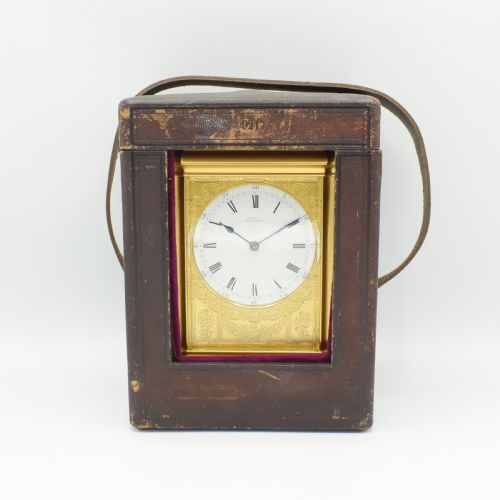
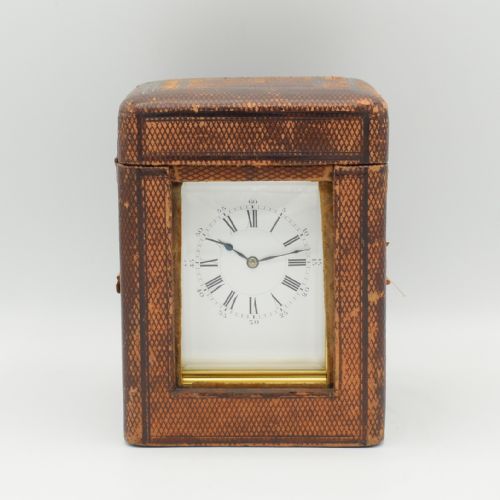
Exterior cases often receive intricate hand engraving across the brass surfaces or incorporation of bevelled glass panels to display the internal gear train. Travel cases in leather frequently accompanied the portable carriage clock variants to protect the delicate mechanism during transit.
Listings feature enameled dial mantel clocks spanning the Victorian era through nineteen-50, utilising brass, gilt bronze, marble, and glass.
Judging the execution
Quality rests in the crispness of the case casting, the depth of the gilding, and the complexity of the internal movement. Plain brass timepieces sit at the accessible end, while grand sonnerie, repeating complications, and fully engraved gilt brass cases represent the highest tier of production.
The clarity and condition of the enameled dial dictate visual appeal, alongside whether the clock retains its original platform escapement and matching travel case. Superior examples demonstrate fluid mechanical interaction across strike trains and crisp lettering on the dial face.
Henri Jacot·Mappin and Web·Drocourt Paris·T. Martin and Co·Margaine
The Enameled Dial Mantel Clock Glossary
- Pendule d'Officier
- A French officer clock model typically equipped with a striking movement and a robust travel handle. These portable timepieces originated for military use before entering domestic parlance.
- Grand Sonnerie
- A complex striking mechanism that sounds both the hours and the quarters automatically on passing. Such movements require high mechanical skill to execute reliably.
- Platform escapement
- The self-contained regulating assembly fitted to carriage and table clocks instead of a traditional pendulum. This innovation allows portable clocks to keep accurate time while moving.
Enameled Dial Mantel Clock: Frequently Asked Questions
How do I wind an enameled dial mantel clock?
Most mechanical pieces require a dedicated winding key inserted into the arbours on the dial face or back plate. Turn the key gently until resistance signals the mainspring is fully tensioned.
Avoid over-winding to protect the vintage steel springs from snapping. Consulting the specific train layout ensures you tension the time and strike sides correctly.
What is a repeating carriage clock?
A repeating movement sounds the last elapsed hour and quarter-hour when the user presses a button on the top of the case. This function allowed owners to check the time in the dark without lighting a candle.
Such complications require intricate rack and snail systems hidden behind the back plate. They represent a higher grade of nineteenth-century watchmaking skill.
How do I date an enameled dial mantel clock?
Dating relies on examining the case style, movement serial numbers, and signature stamps on the back plate. Victorian and French pieces from the eighteen-eighties to nineteen-10 frequently exhibit distinct case mouldings and escapement types.
Maker marks and registration numbers offer further clues to the exact decade of manufacture. Comparing the escapement style from early platform designs to later lever types narrows the window.