




Enamel Lid Box
When you search for an enamel lid box, you discover decorative containers combining vitreous glass pigments with metal, glass, or ceramic bases.
Enamel Lid Box
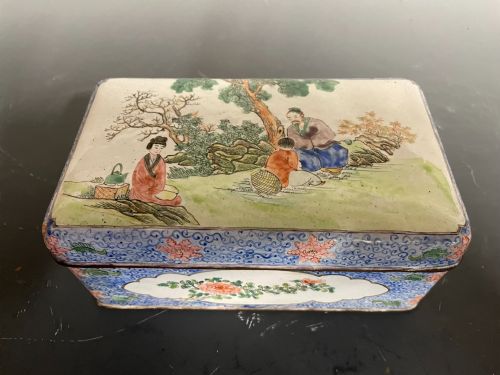
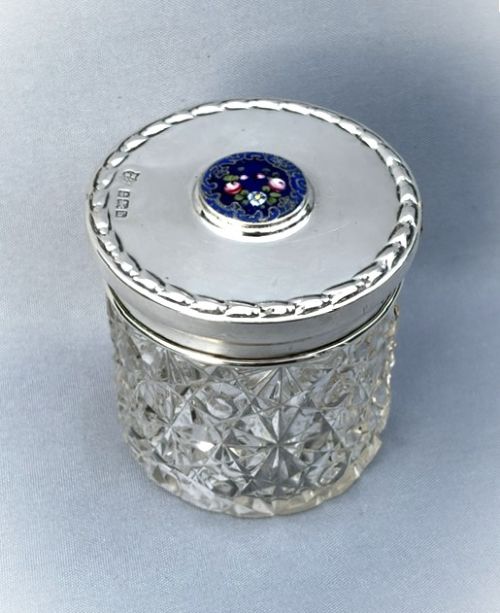
An enamel lid box serves as a small decorative vessel designed for vanity tables, dressers, or pockets, intended to hold trinkets, powder, pills, or snuff. The pieces gathered under this phrase span from eighteenth-century Georgian patch boxes and snuff box lids originating in Staffordshire to twentieth-century sterling silver and guilloche enamel dressing table jars.
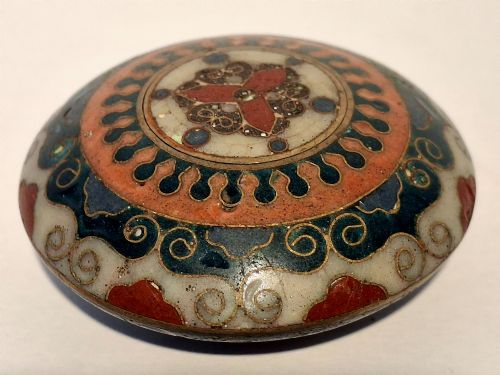
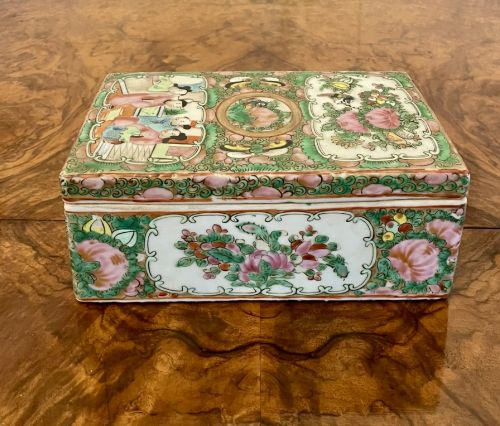
The dominant forms meeting this search include Edwardian and Art Deco glass or porcelain pots fitted with solid silver rims and coloured enamel lids, alongside Japanese Meiji period cloisonne vessels and French porcelain boxes. Buyers encounter items ranging from miniature pill boxes to substantial dressing table jars produced across Europe and Asia.
Makers and workshops across England, France, Austria, and Japan adapted these lidded containers to changing domestic fashions from the Georgian era through the mid-twentieth century. Each specimen demonstrates how utilitarian storage items transformed into miniature canvases for decorative enamel work.
Materials and construction
Vitreous enamel forms the central decorative element across these pieces, created by fusing powdered glass to a metal, porcelain, or glass substrate under high heat. Metal mounts and bases commonly utilise sterling silver, solid brass, copper, pewter, or gilt bronze, whilst body sections frequently incorporate cut glass, moulded crystal, or opaque porcelain.
Techniques varied widely according to period and origin, encompassing traditional cloisonne wire inlay, hand-painted Staffordshire surfaces, and intricate machine-turned guilloche patterns beneath translucent coloured enamels. Silver components often bear assay office hallmarks indicating city of origin and date of manufacture.
Enamel Lid Box Retail Price Guide 2026
Typical asking prices for enamel lid box among the pieces listed under this phrase on Sellingantiques today, from the lower quarter to the upper quarter. They describe what is for sale here now, not the wider market.
Geographic origins represented across the inventory include English, French, Austrian, Italian, Chinese, and Japanese workshops.
Markers of quality
Quality in an enamel lid box depends heavily on the precision of the metalwork, the clarity and depth of the vitreous enamel, and the preservation of any hand-painted or engine-turned detail. Superior examples display flawless fusion between glass and metal without bubbling or cracking, alongside heavy gauge silver mountings or finely chased bronze and brass frames.
Goldsmith's and Silversmith's Co.·Steinhart and Co·Martin Hall and Co·David Anderson
The Enamel Lid Box Glossary
- Guilloche
- A decorative engraving technique where a mechanical lathe cuts a precise, intricate repeating pattern into a metal surface beneath translucent enamel.
- Cloisonne
- An ancient metalworking technique employing thin metal wires soldered to a base to form compartments filled with enamel paste before firing.
- Patch box
- A small eighteenth-century container originally used to hold small fabric beauty patches worn on the face to conceal blemishes.
- Gilt
- A thin layer of gold applied to the surface of silver, bronze, or other metals to provide a rich golden finish and prevent tarnishing.
- Vitreous enamel
- Glass powder fused to a metal or ceramic substrate at high temperatures, creating a durable, glossy coloured surface.
Enamel Lid Box: Frequently Asked Questions
What were enamel lid boxes used for?
These containers served practical domestic purposes on dressing tables and desks, holding items such as powder, pins, small cosmetics, and medicinal pills.
Wealthier owners utilised smaller patch and snuff boxes to carry personal items discreetly within pockets during social outings.
How do I date an antique enamel box?
Dating relies heavily upon metal hallmarks, specific stylistic indicators such as Art Deco geometric lines or Georgian hand-painted motifs, and the construction methods used for the base.
Examining the type of metal mountings and the style of the enamel work provides further chronological clues for pieces lacking clear stamps.
How should I clean my enamel box?
Careful maintenance involves dusting glass and enamel surfaces gently with a soft, dry cloth to prevent scratching the delicate vitreous glass layer.
Silver or metal components require appropriate metal cleaner applied cautiously to avoid direct contact with the vulnerable enamel panels.
Are these boxes fragile?
Vitreous enamel shares properties with glass and can chip or crack if subjected to sharp impacts or sudden extreme temperature changes.
Protecting the pieces involves keeping them on stable surfaces away from shelf edges where accidental drops might occur.