


Enamel Glass Decanter
When you search for an enamel glass decanter, you are looking at vessels that combine painted pigment with blown forms.
Enamel Glass Decanter
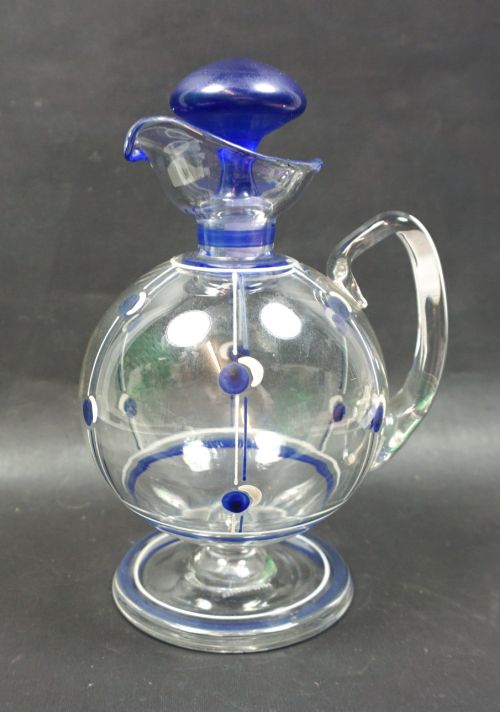
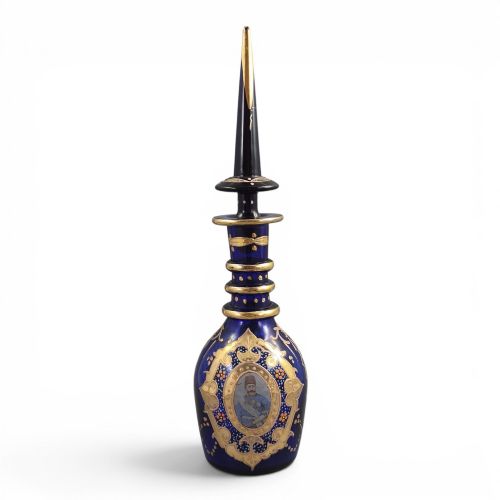
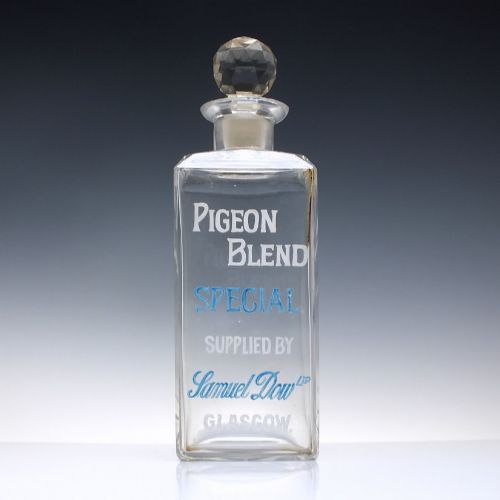
An enamel glass decanter is a vessel designed to hold spirits, wine, or liqueurs, decorated with fused glass pigments.
These pieces range from eighteenth-century Bohemian bottles to geometric twentieth-century Czech sets.
Victorian examples frequently display white painted figures among foliage, while Art Deco pieces favour stark lines and primary colours.
Materials and construction
Makers utilised clear or coloured glass, including cranberry, cobalt, and opaline, formed by blowing into moulds or free-blowing.
Decoration relied on opaque enamel paints applied by hand, sometimes accented with gold leaf or mounted in sterling silver and chrome.
Certain twentieth-century sets wear hand-painted cocktail roosters to signal the spirit within.
Assessing craftsmanship
Quality rests upon the precision of the hand-painted enamel and the clarity of the underlying lead crystal or glass.
Complete sets featuring matching glasses and original stoppers command greater attention than isolated bottles.
Karl Palda·Archibald Knox for Liberty·Salviati·Daum
The Enamel Glass Decanter Glossary
- Enamel
- Opaque glass or mineral pigment fused to the surface of a vessel through firing. It provides vibrant colour and raised texture.
- Opaline glass
- An opaque or translucent pale glass popular in nineteenth-century production. It often served as a contrasting background for delicate enamel painting.
- Lead crystal
- Glass containing metal oxide that increases weight and refractive index. This material permits deep cutting and clear ringing tones.
- Stopper
- The ground-glass plug designed to seal the neck of the vessel. Original matching stoppers are integral to the piece.
Enamel Glass Decanter: Frequently Asked Questions
How do I clean an antique enamel decanter?
Wash the interior gently with warm water and mild soap, avoiding harsh abrasives that might damage the surface.
Keep moisture away from the exterior painted decoration to preserve the fused pigments.
Are these decanters safe for daily use?
Many historical vessels contain lead or fragile enamel pigments that can degrade with acidic contents.
Display them as decorative objects or restrict usage to dry storage rather than regular beverage service.
How can I tell Victorian pieces from Art Deco examples?
Victorian items often display naturalistic motifs, gilt accents, and rich colours like cranberry or Bristol blue.
Art Deco works favour geometric patterns, contrasting black and blue lines, and streamlined Czech crystal forms.
What is the Mary Gregory style?
This descriptor refers to glassware featuring white enamel silhouettes of children or birds amidst foliage.
Most examples date from the Victorian era on coloured glass bodies.