



Bohemian Enamel Glass
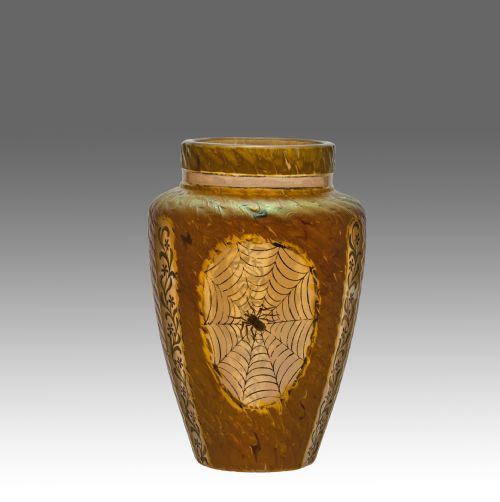
When you search for bohemian enamel glass, you encounter rich decorative vessels spanning from Victorian production to Art Deco geometries.
Bohemian Enamel Glass
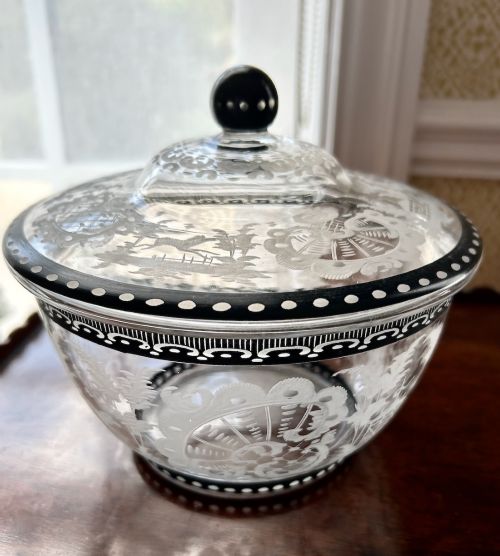
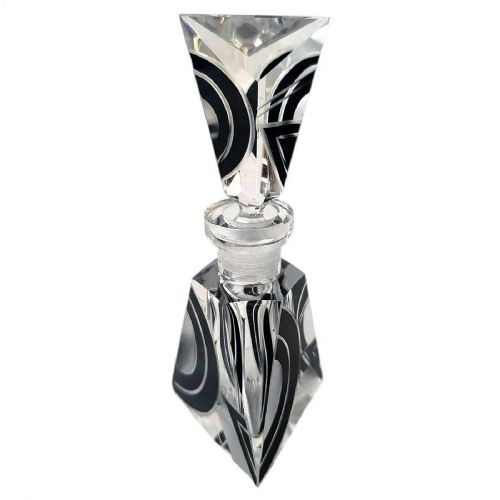
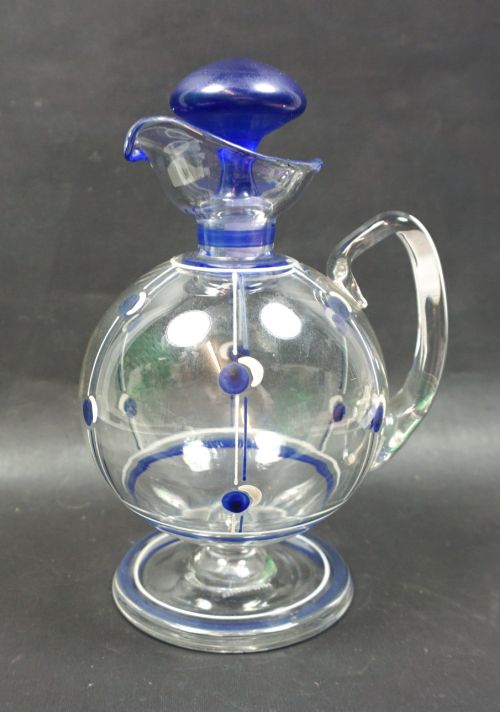
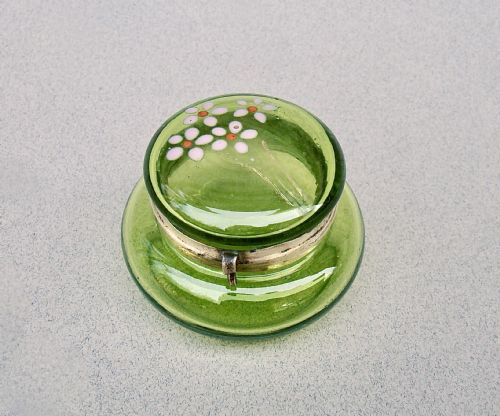
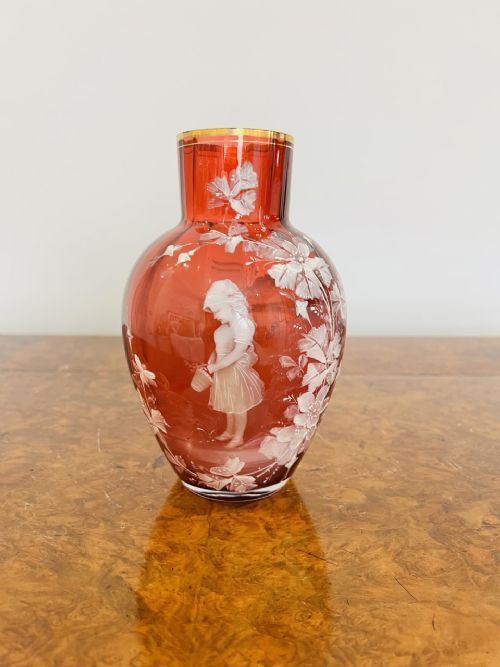
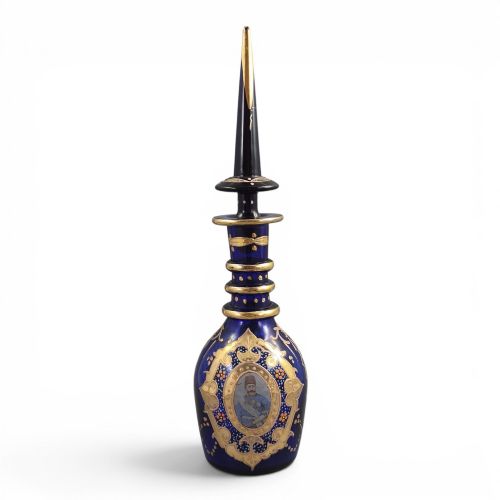
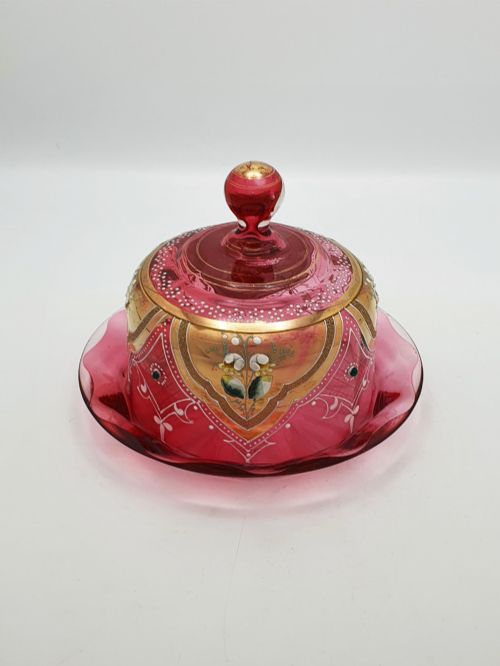
When searching for bohemian enamel glass, buyers examine decorative vessels created across the nineteenth and twentieth centuries, encompassing Victorian, Art Nouveau, and Art Deco movements. The most frequent encounters on this page include vases, perfume bottles, decanter sets, and mantel lustres utilising coloured grounds such as cranberry, cobalt, and green.
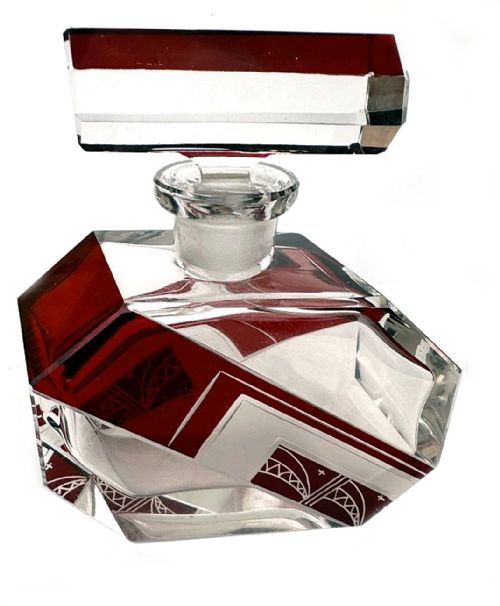
The assortment spans traditional nineteenth-century floral and figural painting to geometric Czechoslovakian designs from the nineteen-thirties. Pieces range from large cabinet vases and table services to small scent bottles and trinket boxes, often displaying opaque, jewelled, or gilded accents.
Origins stretch from Bohemian workshops to wider continental production, including export items tailored for specific international markets such as the Persian Qajar era. Buyers select these objects for their strong colour saturation, surface detail, and historical variety.
How they were made
Maker operations relied on hand-blown glass, crystal, and opaline substrates, shaped into vases, jugs, and decanters before receiving surface decoration. Artisans applied coloured layers through casing and overlay techniques, producing contrasting ground colours like ruby red, forest green, and royal blue.
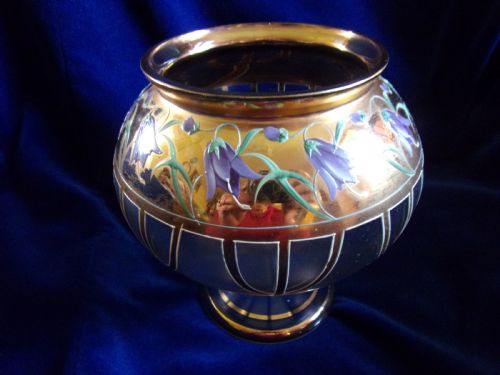
Surface ornamentation combined hand-painted enamel with applied gold leaf and gilding, frequently fixing pigments through kiln firing. Workshops utilised cutting, etching, and engraving to shape geometric facets or frame pictorial scenes before final enamel work.
Several decanters wear their hearts on their sleeves, enamelled with entire decks of playing cards ready for an impromptu game.
What varies in quality
Quality differences stem from the precision of the glass cutting and the fineness of the enamel brushwork. Superior items display crisp geometric facets, well-defined polychrome detailing, and substantial metal or crystal weight.
The execution of the gilding and the complexity of the motifs separate standard production from exceptional studio outputs. Items featuring layered overlays, intricate armorials, or signed artistic attribution command greater regard among collectors.
Karl Palda·Kralik Glass·Frits Hechert·Moser·Salviati·Harrach·Meyr's Neffe
The Bohemian Enamel Glass Glossary
- Cranberry glass
- A transparent pinkish-red glass produced by adding gold chloride to the molten batch. It appears frequently in Victorian tablewares and scent bottles.
- Mantel lustre
- A decorative glass vase hung with prismatic crystal drops designed for display on a fireplace mantel. These pieces often feature hand-painted enamel flowers or gilt accents.
- Mary Gregory glass
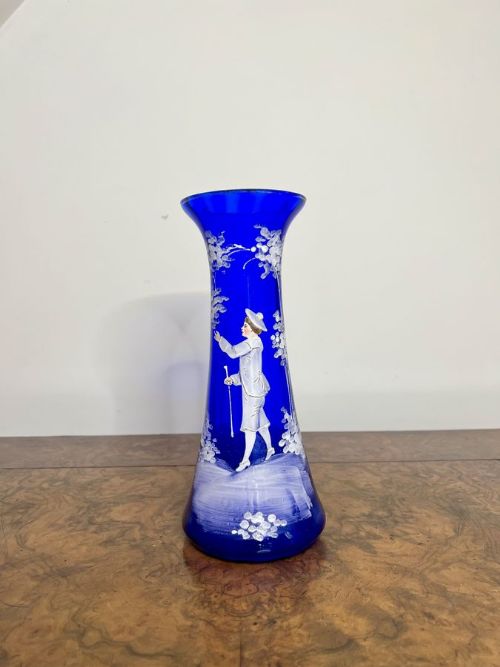
- A style of Victorian glassware decorated with white enamel silhouettes depicting children playing in woodland settings. The figures are typically outlined in black or brown enamel.
- Opaline glass
- An opaque or translucent pale glass developed during the nineteenth century to imitate porcelain. It provides a smooth solid background for polychrome enamel painting.
- Historismus
- A nineteenth-century revival style drawing inspiration from Renaissance, Gothic, and Baroque art. Pieces often display heraldic motifs, coats of arms, and heavy armorial enamelling.
Bohemian Enamel Glass: Frequently Asked Questions
How do I identify bohemian enamel glass?
Examine the glass body for colour saturation, such as cranberry, cobalt, or green grounds, combined with hand-painted vitreous enamel decoration. Look for characteristic period traits like Victorian floral motifs or Art Deco geometric cutting.
Check for maker signatures, pontil marks on the base, and the integration of gold leaf or gilding. Continental and Central European pieces often exhibit distinctive regional manufacturing styles from the nineteenth and twentieth centuries.
What periods do these pieces cover?
The selection spans from late eighteenth-century opaline items through the Victorian era and Art Nouveau periods, extending into Art Deco designs of the nineteen-thirties. Each era brings distinct manufacturing techniques and aesthetic priorities.
Nineteenth-century examples frequently feature romantic subjects, armorial bearings, or heavy gilding, while later twentieth-century works favour streamlined forms and modernist geometric patterns.
How were mantel lustres used?
Mantel lustres served as decorative garnitures placed upon fireplace mantels in nineteenth-century drawing rooms. Their hanging crystal drops caught and reflected the flickering light of candles or gas lamps.
Beyond domestic display, they often formed matching pairs that framed clocks or other ornamental mantelpiece objects, combining utility with vibrant coloured glass aesthetics.
How should I care for enamelled glass?
Clean these items gently by hand using lukewarm water and mild soap, avoiding harsh chemical detergents that can degrade fragile enamel or gilding. Dry them immediately with a soft lint-free cloth.
Keep pieces away from direct sunlight to preserve the vibrancy of coloured glass grounds like cranberry and cobalt, and handle them carefully by the body rather than delicate applied rims or handles.