
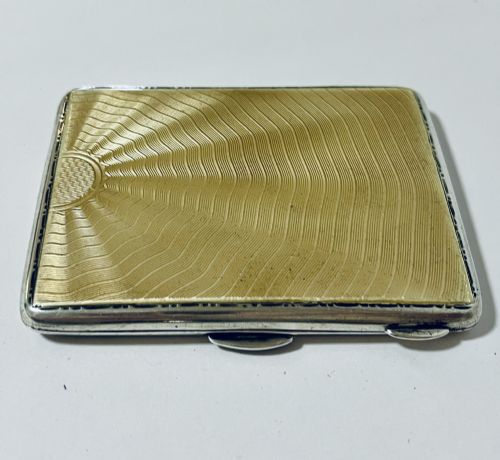

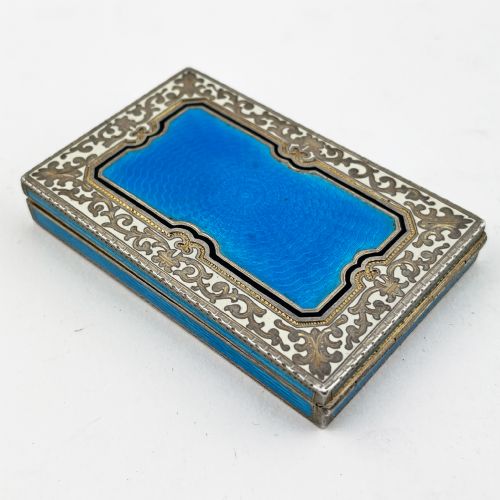


Enamel Card Case
An enamel card case brings together precious metal and colourful vitreous work, offering a tactile pocket companion from the nineteenth and twentieth centuries.
Enamel Card Case
An enamel card case serves as a compact container designed for calling cards, business cards, or cheroot cases, appearing alongside related forms such as cigarette cases and menu holders.
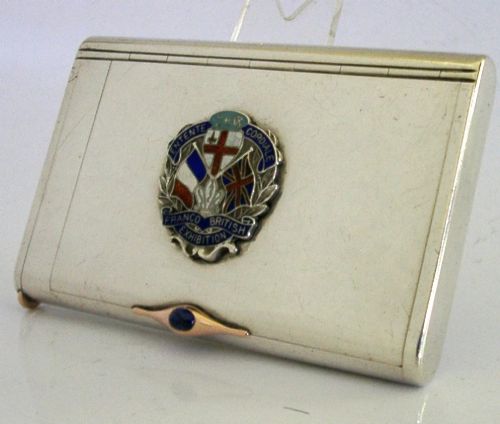
The pieces on this page span from the nineteenth century through the Edwardian era, the nineteen-twenties, and nineteen-thirties up to nineteen-forty, encompassing styles from Art Deco to Arts and Crafts.
Buyers frequently encounter Continental, British, and international examples that combine silver or gold frameworks with hand-painted, engine-turned, or cloisonne surfaces.
Quality Variations
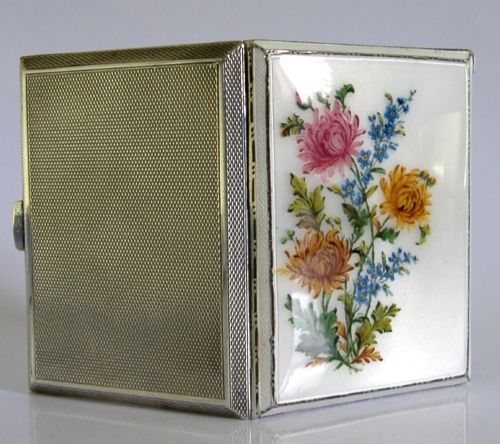
The fineness of the enamel work dictates much of the distinction, separating simple monochrome surfaces from complex engine-turned guilloche patterns or detailed hand-painted scenes.
The structural integration of precious metals, whether heavy sterling silver or silver-gilt, and the preservation of interior silk or velvet linings influence the overall standard of a piece.
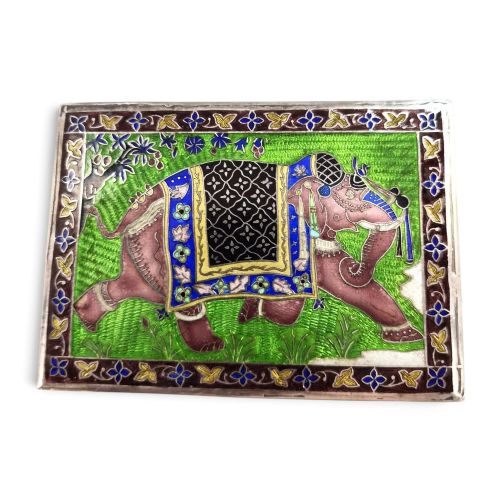
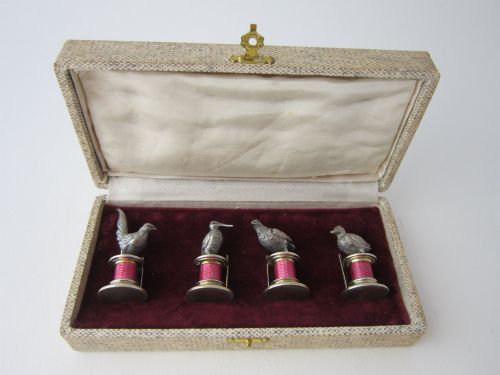
Elephants and wild game occasionally march across the silver surfaces, proving that Victorian and twentieth-century card cases had a wild side.
LIBERTY & CO·Sampson Mordan
The Enamel Card Case Glossary
- Guilloche Enamel
- A decorative technique where mechanical engraving is covered with transparent enamel. This allows patterns underneath to show through the coloured glass surface.
- Cloisonne
- A method of decorating metalwork objects with coloured material held in place by thin metal strips. These wires form partitions that contain the different enamel pastes before firing.
- Vesta Case
- A small box designed to hold matches and keep them dry. Many examples double as card or cheroot cases in the historical record.
- Silver-Gilt
- Silver that has been coated with a thin layer of gold. This treatment provides the warm appearance of solid gold while utilising a silver base.
- Filigree
- Ornamental work of fine wire formed into delicate tracery. It frequently appears soldered onto silver frames in Spanish and Chinese export pieces.
Enamel Card Case: Frequently Asked Questions
What fits inside an enamel card case?
These small containers were originally sized for calling cards or visiting cards exchanged during social calls. Many historical examples also accommodate cheroots or cigarettes due to similar dimensions.
Buyers today often use them to carry modern business cards or credit cards. The internal depth determines whether a slender stack fits comfortably without catching on the clasp.
How do I date an enamel card case?
Dating relies heavily on hallmarks stamped into the silver or gold frames, alongside stylistic indicators such as geometric Art Deco lines or floral Arts and Crafts motifs. Maker marks and registration numbers further narrow down the decade of production.
The historical record for these items spans the nineteenth century through the nineteen-forties. Comparing the clasp style and enamel technique with known period pieces provides additional chronological context.
How should I clean an enamel card case?
Enamel requires gentle care to avoid scratching the vitreous glass surface or damaging delicate interior linings made of silk, satin, or velvet. Soft dry cloths are generally sufficient for removing surface dust from the exterior.
Silver cleaning products should be kept away from the enamel sections to prevent chemical staining. Professional advice is recommended if the piece requires more intensive restoration of its metal components.
What is guilloche enamel?
Guilloche is a decorative technique involving mechanical engraving on a metal substrate, usually silver or gold. A translucent layer of coloured enamel is then applied over the patterned metal.
This process creates a distinctive geometric sheen that catches the light differently as the piece moves. It appears frequently in Edwardian and Art Deco accessories.