






Enamel Art Box
When you search for an enamel art box, you find small containers decorated with vitrified glass fused to metal, spanning utility and ornament.
Enamel Art Box
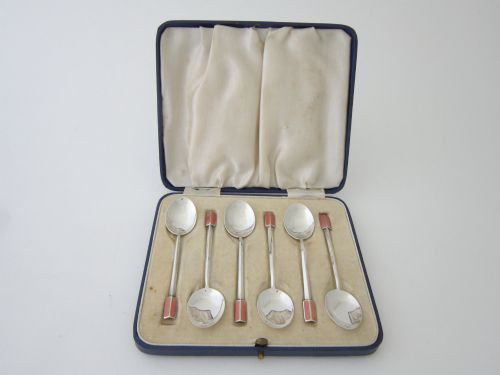
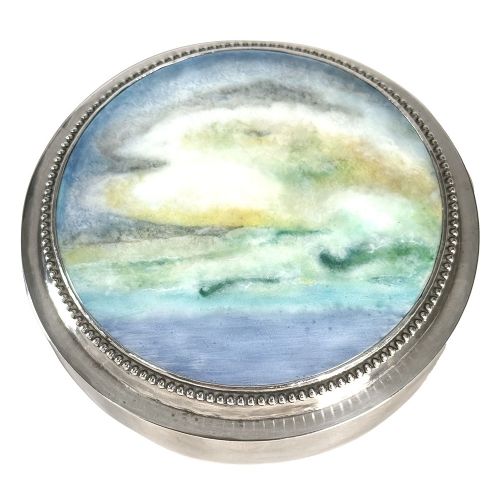
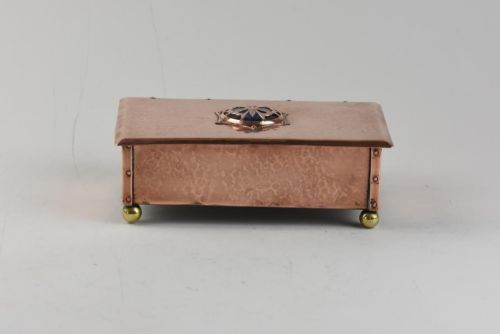
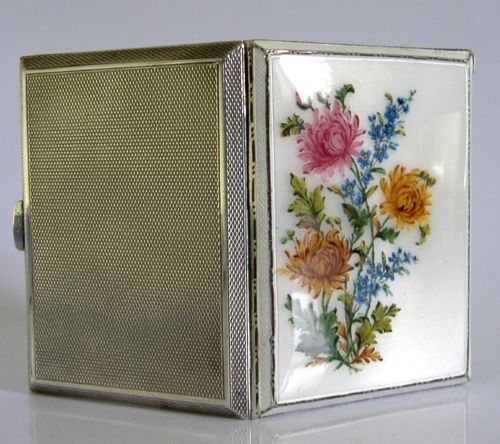
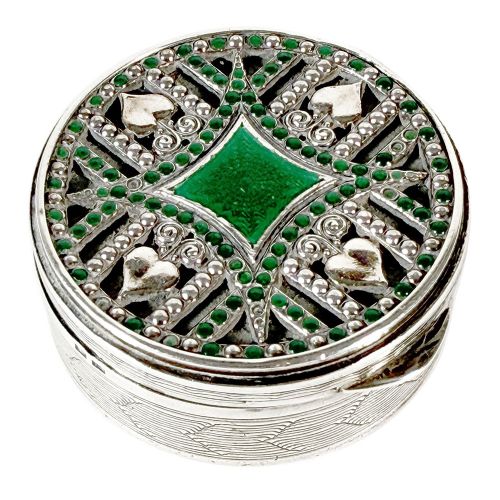
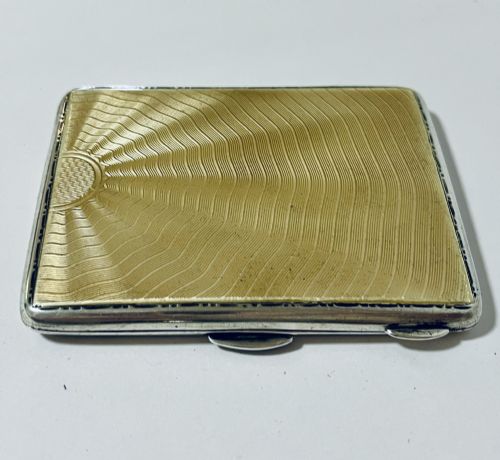
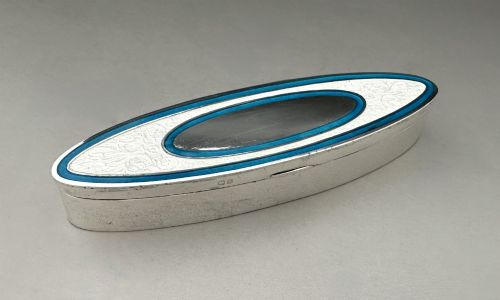
An enamel art box encompasses a wide array of small containers designed for the dressing table or pocket, including powder compacts, vanity jars, trinket boxes, and cigarette cases. These items emerge from various periods from the late nineteenth century through to the mid-twentieth century, with a strong representation of Art Deco geometric designs and Arts and Crafts hand-worked pieces.
The objects frequently combine sterling silver, copper, or gilt metal with coloured glass enamel, often taking the form of hinged boxes or lidded jars intended to hold cosmetics, tobacco, or small valuables. Alongside British Birmingham silver work, buyers encounter Continental pieces, Japanese Meiji cloisonné, and Scandinavian designs.
The form stretches from simple pill boxes to elaborate dressing table sets and poker game boxes, reflecting the social habits of the Edwardian and interwar eras. Each piece serves a domestic function while displaying decorative metalwork and fused glass panels.
How they were made
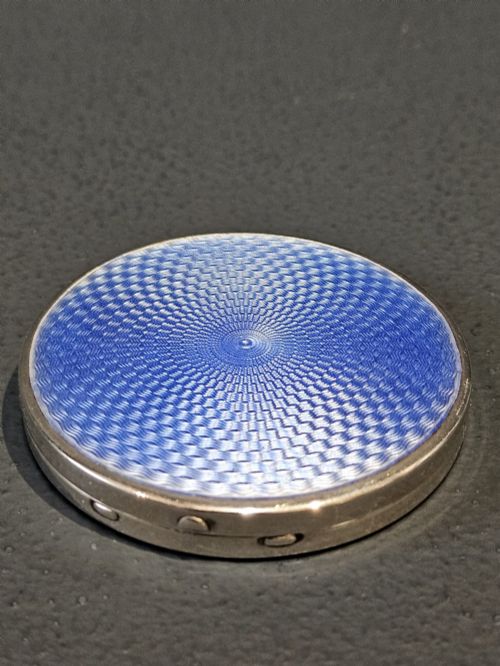
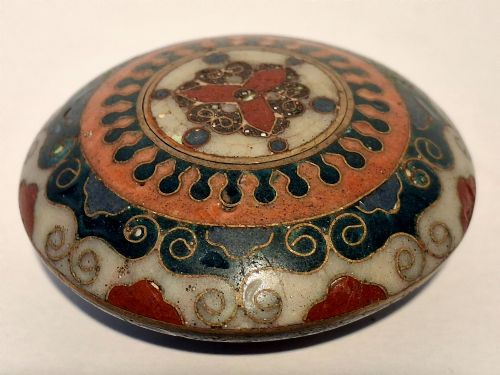
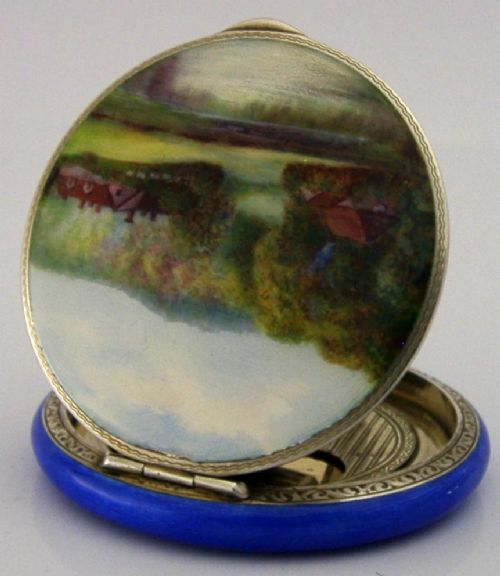
Makers fused powdered glass to metal bases such as sterling silver, copper, brass, and gilt metal through high-temperature kilning. Techniques varied from cloisonne work with wire cells to translucent guilloche engine-turning beneath coloured enamel, and hand-painted floral or figural plaques.
Structural mounts involved beaten, riveted, or cast silver and base metals, often marked by assay offices in Birmingham and London. Glass jars were integrated with fitted silver collars, while compacts utilised internal mirrors, suede linings, and chrome or mesh frames.
Enamel Art Box Retail Price Guide 2026
Typical asking prices for enamel art box among the pieces listed under this phrase on Sellingantiques today, from the lower quarter to the upper quarter. They describe what is for sale here now, not the wider market.
Listings feature sterling silver, copper, and brass paired with guilloche and cloisonne enamel across the Art Deco, Arts and Crafts, and Art Nouveau periods.
What varies in quality
Quality rests in the crispness of the engine-turned guilloche patterns beneath the translucent enamel and the precision of the metal mounts. Hand-painted miniature plaques and complex cloisonné wirework command higher regard than plain poured surfaces.
Maker attribution elevates a piece, with recognised names from Liberty, the Guild of Handicrafts, and silversmiths like Henry Clifford Davis or George Adam Scheid showing superior execution in their hinges, clasps, and overall proportions.
Guild of Handicrafts·Henry Clifford Davis·George Adam Scheid·Henry Matthews·David Andersen
The Enamel Art Box Glossary
- Guilloche
- A decorative mechanical technique where a precise geometric pattern is engraved into metal before translucent enamel is applied over the top. This allows light to reflect through the coloured glass.
- Cloisonne
- An ancient enamelling method where thin metal wires are soldered to a metal base to create compartments, which are then filled with coloured glass paste and fired. The resulting design resembles a grid of coloured cells.
- Cabochon
- A gemstone or enamel piece shaped and polished with a rounded, convex top rather than faceted edges. These often form the central decorative boss on Arts and Crafts metalwork.
- Compact
- A small portable container fitted with a mirror, traditionally used by women for holding face powder or rouge. They frequently feature elaborate enamel lids and internal sifters.
- Pelt
- A term occasionally linked to metal vessels, though here metal purity is denoted by sterling silver or gilt metal standards. Sterling indicates a specific alloy standard of silver content.
Enamel Art Box: Frequently Asked Questions
What is an enamel art box used for?
These containers served practical daily roles on dressing tables and in pockets, holding cosmetics, loose powder, pills, stamps, or cigarettes.
Over time, their utility shifted toward ornamental display, though many retain their functional mirrors, compartments, and hinged lids.
How do I identify Art Deco enamel pieces?
Art Deco examples typically display strict geometric patterns, symmetrical engine-turning, and bold colour palettes like strong blues or blacks set against chrome and sterling silver.
They frequently date from the nineteen-twenties and nineteen-thirties, aligning with the rise of modern powder compacts and vanity cases.
What is the difference between cloisonne and guilloche?
Cloisonne relies on soldered wires forming raised walls to separate different colours of fired enamel paste, creating distinct outlined motifs.
Guilloche involves machine-engraving a repeating pattern directly into a metal disc, then coating it with a transparent enamel glaze that catches the light.
How should I clean silver and enamel boxes?
Silver mounts require gentle polishing with a dedicated cloth, taking care to avoid abrasive pastes touching the delicate glass enamel surfaces.
Enamel should be wiped gently with a soft, damp cloth to preserve the vitrified glass finish and prevent moisture from seeping into old joints.