


Empire Style Lighting Fixture
An empire style lighting fixture brings grand neoclassical proportions and gleaming metalwork into a room, offering both dramatic overhead presence and refined wall illumination.
Empire Style Lighting Fixture
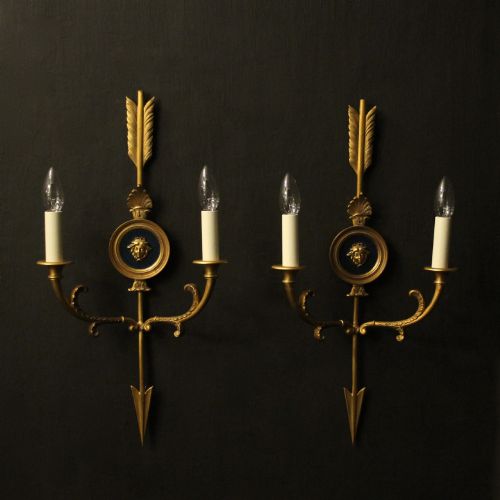
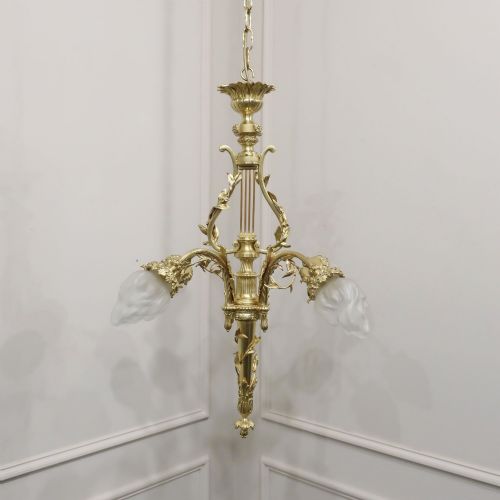
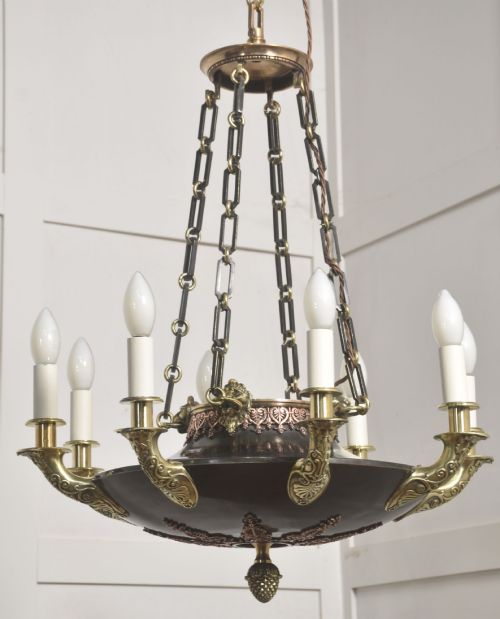
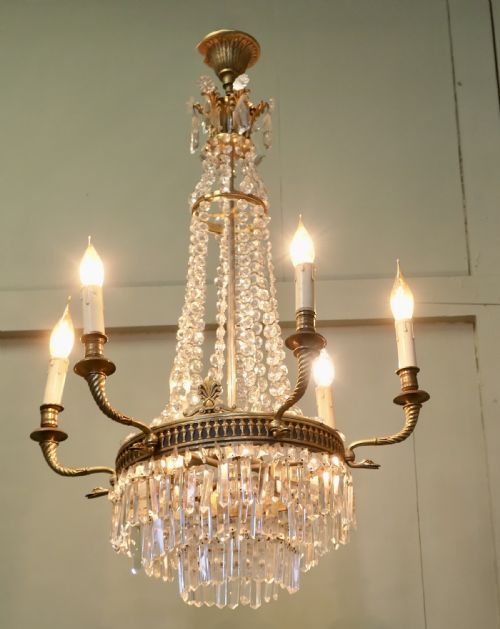
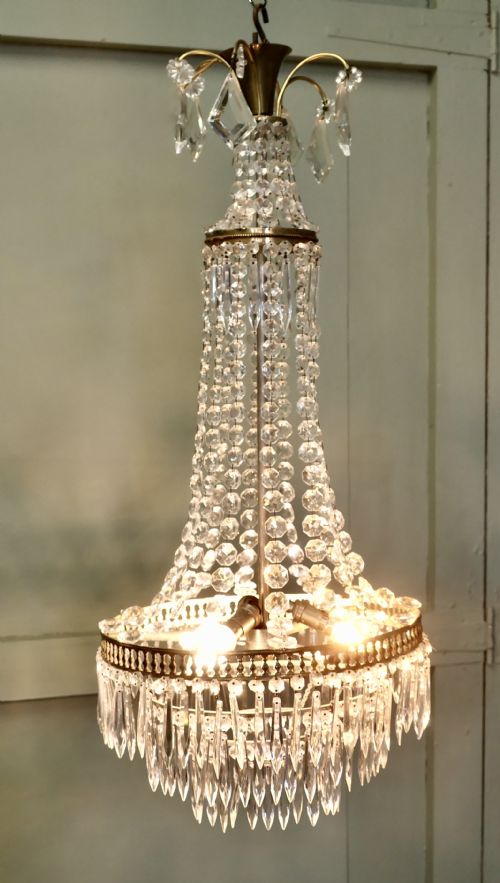
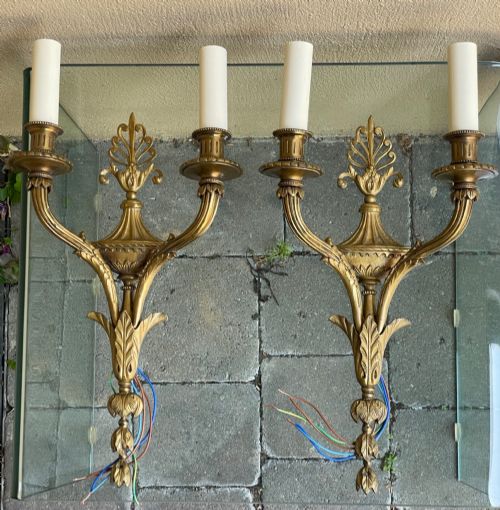
An empire style lighting fixture embodies the formal symmetry and classical motifs of the neoclassical and Regency periods, drawing inspiration from ancient design. When you search for an empire style lighting fixture, you encounter grand chandeliers, pendant lighting, and wall sconces designed to dominate a space with architectural dignity.
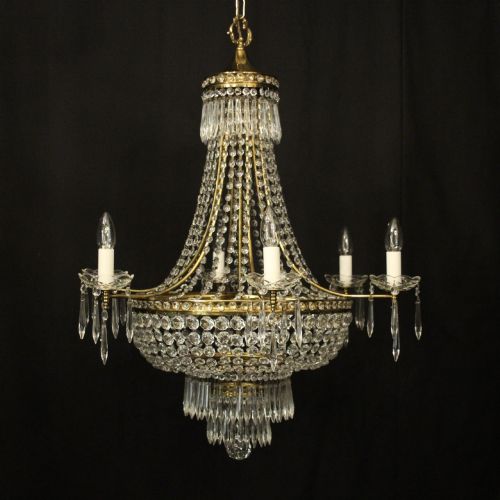
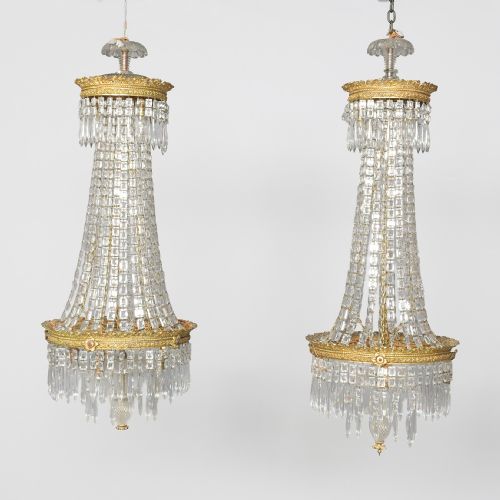
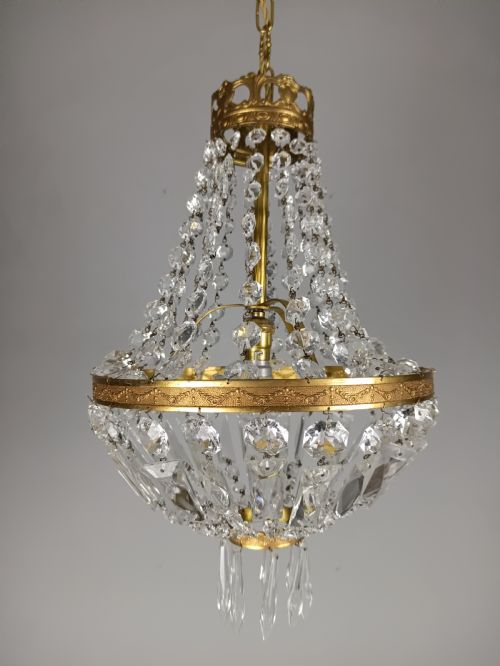
The pieces listed on this page span from the eighteenth century through the early twentieth century, including revivals from the 1890s, 1900s, 1910s, 1920s, and 1930s. French manufacture predominates, often taking the form of elaborate tent and waterfall arrangements or structured brass and crystal baskets.
Buyers meet forms ranging from single-light basket fixtures to sixteen-light chandeliers alongside paired wall lights and bouillotte fixtures. The survival of these works demonstrates a continuous demand for classical illumination across multiple decades of interior design.
Materials and Construction
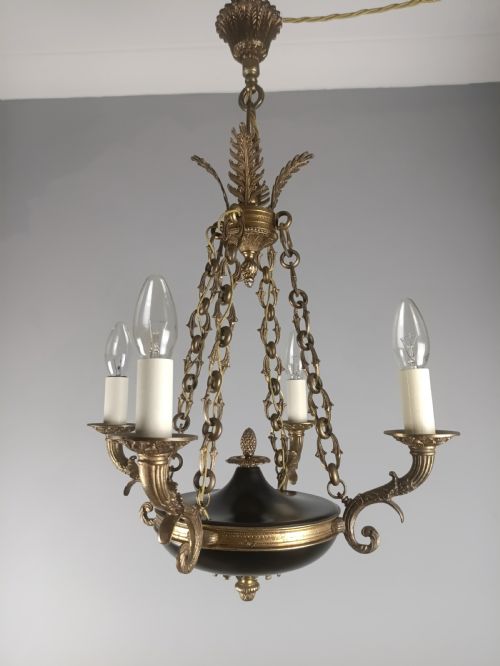
Craftsmen built these fixtures using robust metal frameworks cast in bronze, gilt bronze, gilded brass, copper, and giltwood. These heavy metal structures supported the weight of numerous glass and crystal components while providing secure housing for internal wiring or candleholders.
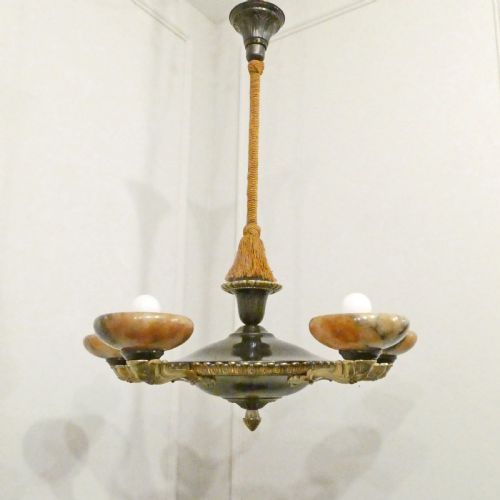
Transparency and sparkle came from extensive use of cut glass, crystal, and occasionally alabaster elements arranged in drops, beads, and waterfall configurations. Metal components frequently received a layer of fire gilt or bronze patination to enhance their decorative appeal and resist tarnishing.
Listings feature items spanning from the eighteenth century to the 1930s, utilising brass, crystal, bronze, and gilt-finished metals.
Assessing Quality and Execution
The standard of metal casting determines much of the distinction between individual pieces, with sharply chiselled gilt bronze displaying crisp classical ornamentation superior to softer, simpler brass stampings. Heavier gauge metalwork and substantial mounts indicate a higher grade of manufacture from the outset.
The clarity and cutting of the crystal drops, together with the completeness of tent and waterfall cascades, set finer fixtures apart from simpler designs. Original patination and uniform gilding across all structural elements further separate superior examples from later or heavily restored pieces.
The Empire Style Lighting Fixture Glossary
- Tent and waterfall
- A chandelier configuration featuring an upper conical section of strings of crystal beads dropping into a wider cascading fringe below.
- Gilt bronze
- Bronze metal treated with a thin layer of gold or gold amalgam, providing a bright and durable metallic finish.
- Wall sconce
- A lighting fixture fixed to a wall rather than suspended from a ceiling, often holding multiple candle arms.
- Toleware
- Painted sheet metal objects, frequently utilised for shades and decorative backplates on historical wall lighting.
- Bouillotte light
- An adjustable desk or wall lamp featuring a central column and a characteristic shade, originally designed for card games.
Empire Style Lighting Fixture: Frequently Asked Questions
How do I clean a crystal chandelier?
Maintenance requires gentle wiping of individual crystal drops using a mild cleaning solution applied with a soft cloth while the fixture remains supported.
Harsh chemical sprays should be avoided to protect both the delicate metal plating and the original wiring components.
Are these fixtures wired for modern electricity?
Many historical pieces arrive with modern electrical conversions fitted to accommodate standard bulbs safely within their original candle sleeves.
Checking the internal wiring with a qualified electrician ensures compliance with current domestic safety standards before installation.
What is the difference between Empire and Regency styles?
Empire design originates from the French Napoleonic era, emphasising martial symbols and heavy classical symmetry.
Regency style represents the British parallel from the early nineteenth century, sharing classical roots but often incorporating lighter proportions and distinct regional cabinetmaking traditions.
How do I hang a heavy bronze chandelier?
Suspension of heavy bronze and crystal fixtures demands secure anchorage directly into ceiling joists or structural timber using rated steel fixings.
Professional installation is essential to bear the total weight safely and prevent structural failure in older ceilings.