

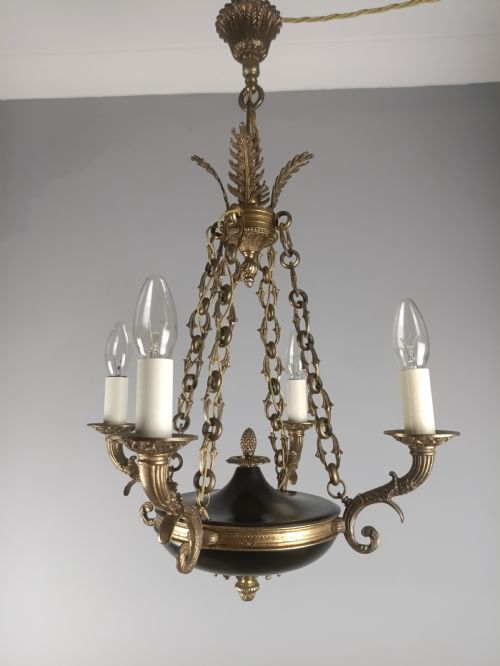
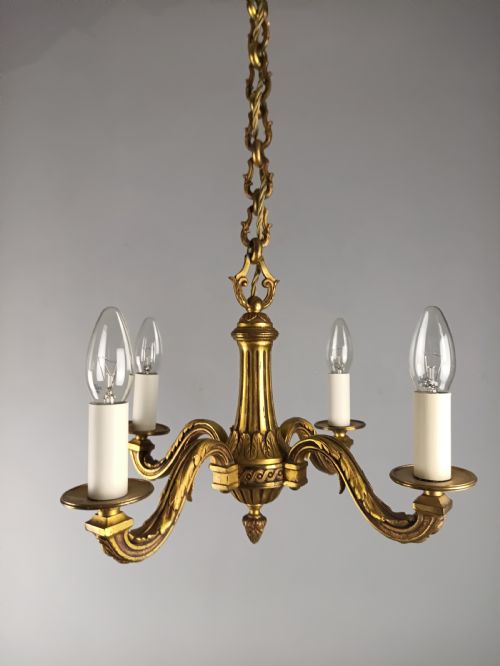


Classical French Brass Chandelier
A classical french brass chandelier brings unmistakable architectural grandeur to a high ceiling, casting warm light through gilt bronze and crystal.
Classical French Brass Chandelier
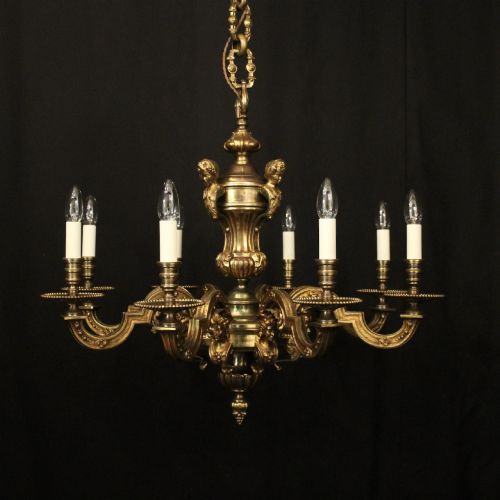
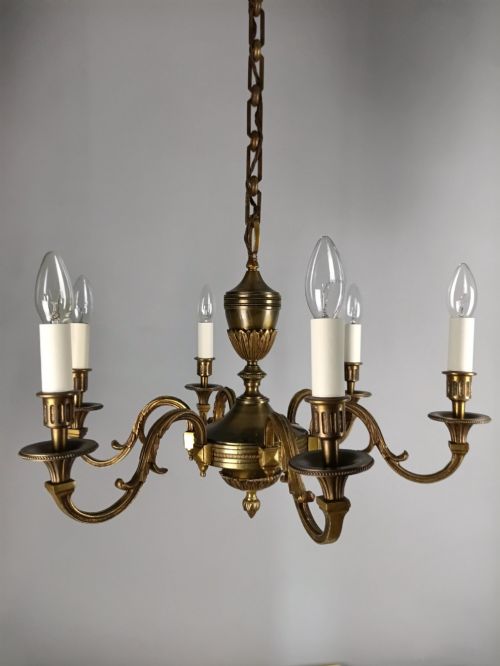
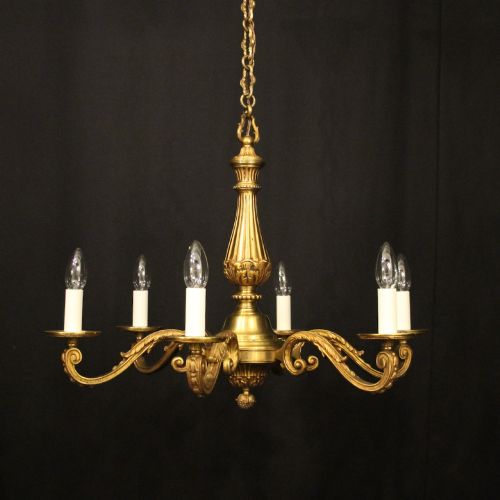
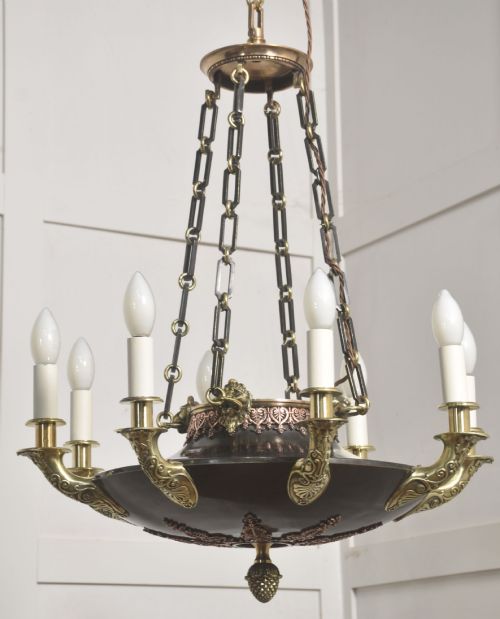
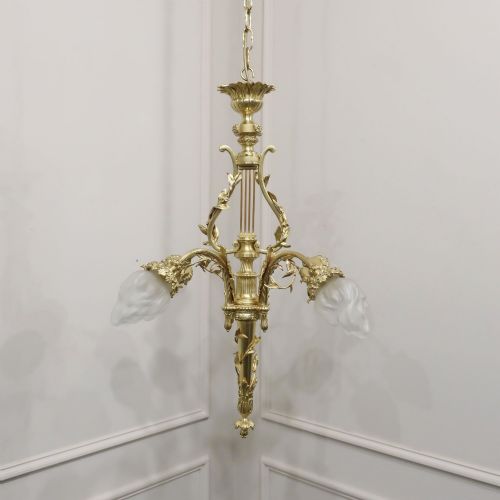
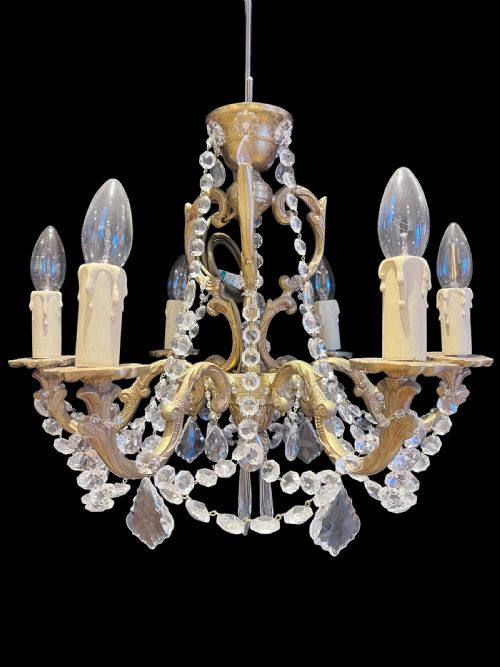
A classical french brass chandelier is a statement ceiling light drawing on historical design vocabularies like Neoclassical, Empire, and Rococo. These pieces frequently appear in multi-light configurations, ranging from compact four-light fixtures to large twelve-branch statements.
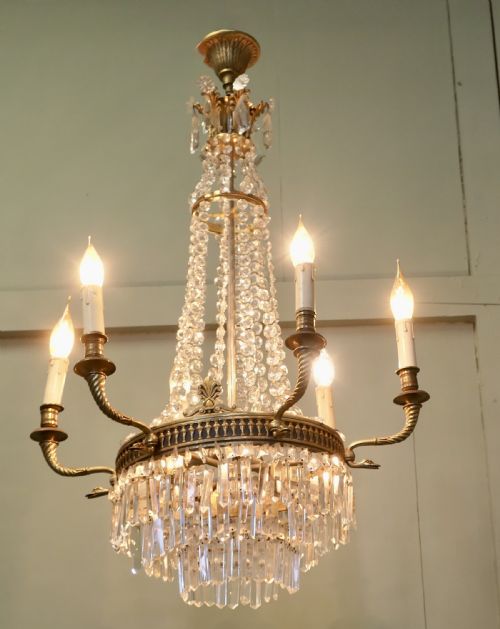
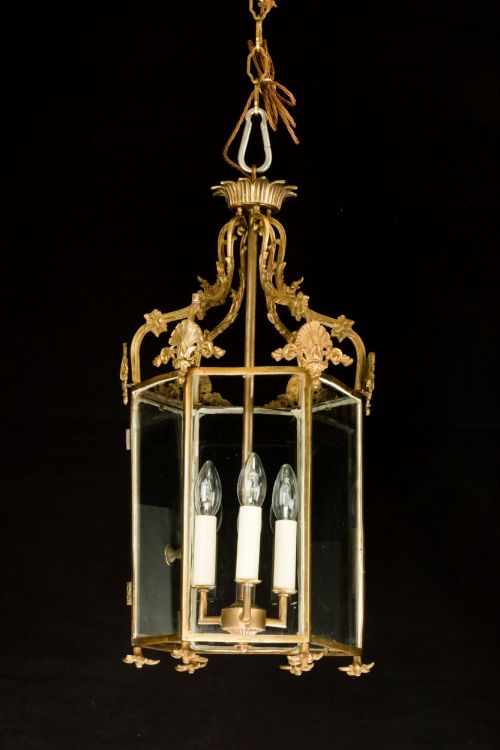
The versions most commonly met on this page span the nineteenth and early twentieth centuries, including pieces from the 1860s through the 1930s. They take the form of multi-tiered chandeliers, tent and waterfall designs, and convex hall lanterns.
Makers and designers channelled French chateau aesthetics into these works, utilising polished brass, patinated bronze, and gilded metal alongside cut glass. Buyers encounter paired items as well as singular centrepieces suited to principal reception rooms.
Materials and construction methods
Foundry workers cast structural frames in brass, bronze, and ormolu, applying mercury gilding or silver plating to achieve lustrous metallic finishes. These heavy metal components provide the structural backbone necessary to support numerous candle arms and heavy glass elements.
Glaziers and lapidaries cut crystal drops, beads, and central vases to refract light from multiple bulb points across the room. Metal wire pins secure these crystal elements to the frame, allowing subtle movement and maximum brilliance.
Classical French Brass Chandelier Retail Price Guide 2026
Typical asking prices for classical french brass chandelier among the pieces listed under this phrase on Sellingantiques today, from the lower quarter to the upper quarter. They describe what is for sale here now, not the wider market.
Several matched pairs allow buyers to double their illumination strategy across adjoining reception rooms.
Distinguishing quality in period lighting
The refinement of the cast ornamentation dictates the upper tier of quality, where chased details on the bronze remain crisp and deep. Lower tiers often rely on softer castings with simplified foliage and less articulated relief work.
The integration of crystal elements also separates standard fixtures from exceptional examples, particularly where faceted drops match the specific period style rather than acting as later replacements. Weight distribution and the heft of the solid brass or bronze armature underpin the structural longevity of the piece.
The Classical French Brass Chandelier Glossary
- Ormolu
- A gilded bronze technique utilising finely ground gold mercury amalgam applied to a bronze base. This historic process yields a warm, matte golden finish characteristic of fine antique metalwork.
- Tent and waterfall
- A chandelier configuration featuring strings of crystal beads draped in a conical tent shape above a cascading waterfall of further crystal strands. This design maximises refraction from internal light sources.
- Patinated bronze
- A darkened chemical treatment applied to the bronze surface to create brown, green, or near-black tones. It offers a contrasting visual weight against polished brass and bright crystal.
- Lyre chandelier
- A lighting form shaped like the ancient musical instrument, often utilised in Neoclassical designs. The central frame mimics the symmetric curved arms and strings of the classical lyre.
Classical French Brass Chandelier: Frequently Asked Questions
How do I hang a heavy antique chandelier safely?
Suspending these fixtures requires securing the hanging weight directly into a ceiling joist or structural beam using an appropriate rated steel ceiling hook. The internal wiring must also be checked by a qualified electrician to ensure it handles modern voltage safely.
Because many nineteenth-century pieces possess substantial heft from solid bronze and crystal components, professional installation prevents any strain on old plaster ceilings.
What is the difference between Empire and Neoclassical styles?
Empire style lighting draws heavily on Napoleonic military motifs, Roman imperial symbols, and heavy classical symmetry. It often incorporates patinated bronze paired with bright ormolu mounts.
Neoclassical lighting tends to feel lighter and more restrained, referencing ancient Greek architecture through motifs like urns, acanthus leaves, and the musical lyre.
How should I clean crystal drops on an antique fixture?
Cleaning delicate crystal requires a mild solution of warm water and a gentle dish soap, applied by hand using a soft cloth while the crystals remain on the frame or after careful removal. Avoid harsh commercial chemical sprays that can strip historic lacquers or damage the metalwork.
Dry each piece thoroughly with a lint-free cloth to restore maximum sparkle before turning the power back on.
Are these chandeliers wired for modern electricity?
Most antique fixtures found on the market have been adapted for contemporary electrical standards, though rewiring dates can vary. Buyers should inspect the internal lamp holders and cables to determine if an update by a professional restorer is necessary.
Using low-heat LED candle bulbs helps protect fragile nineteenth-century sockets and prevents excessive thermal stress on aged wiring.