


Empire Style Crystal Chandelier
An empire style crystal chandelier brings neoclassical grandeur and brilliant refractive light to a room through cascading tiers of glass.
Empire Style Crystal Chandelier
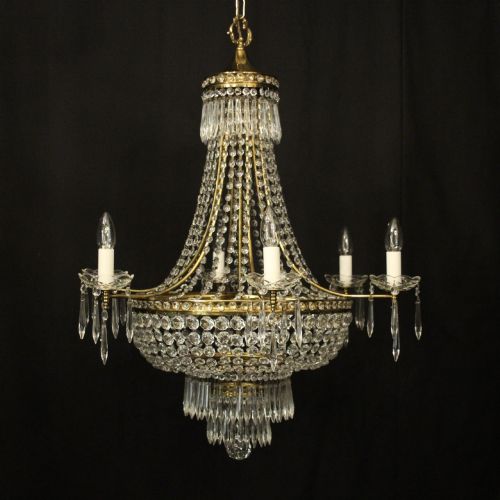
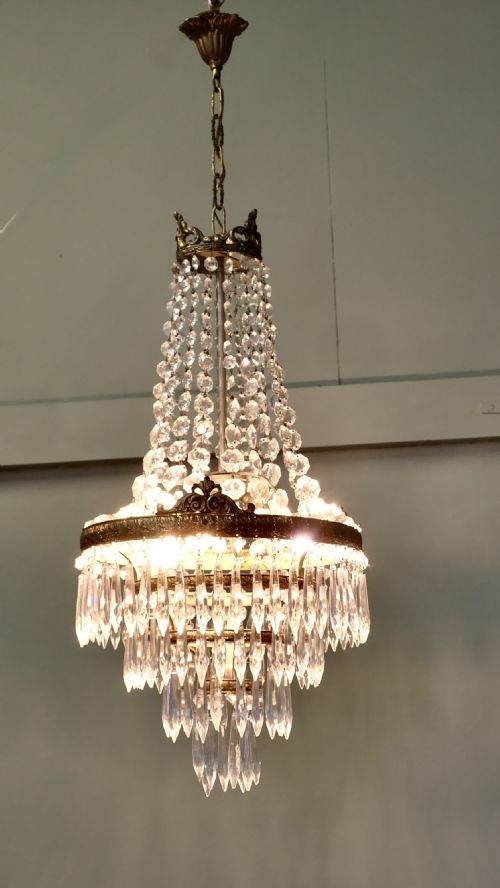
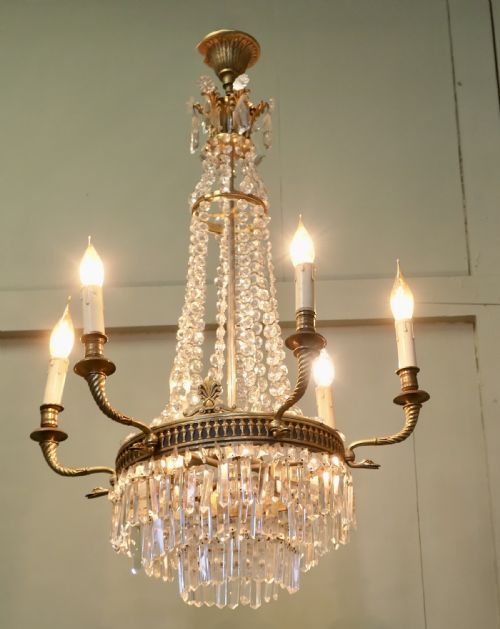
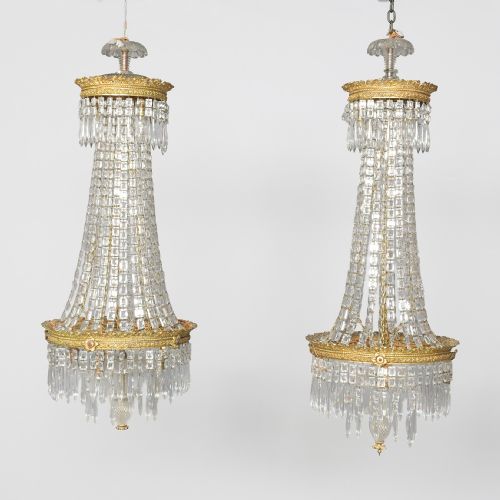
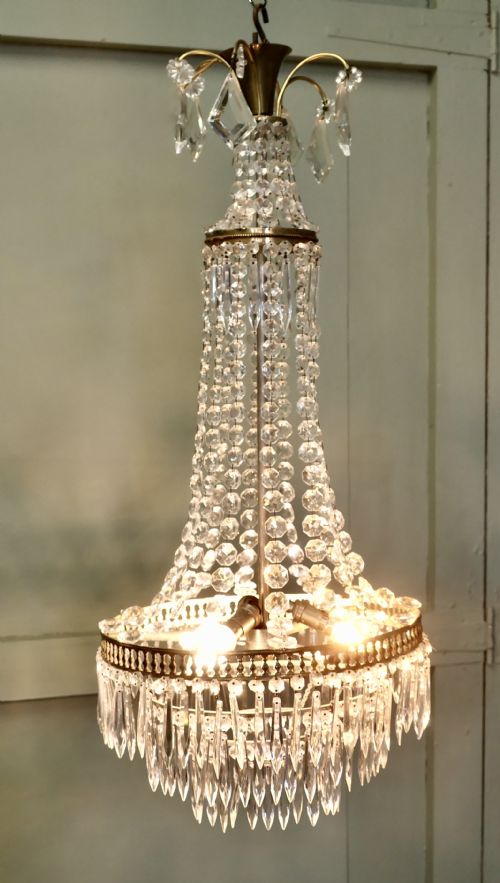
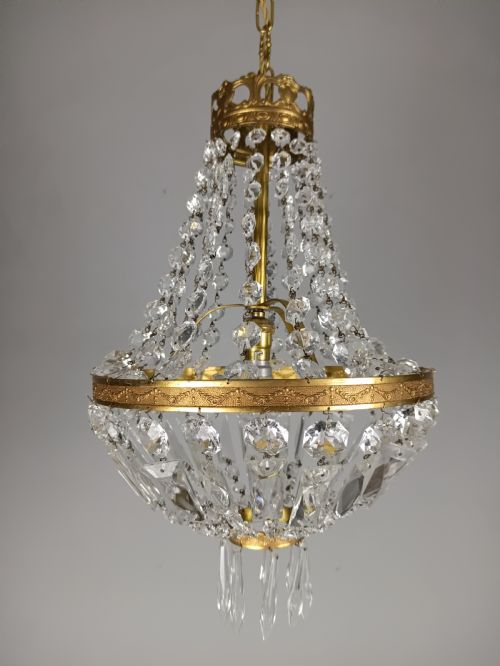
An empire style crystal chandelier is a grand overhead light fitting defined by classical proportions, often taking the form of a tent and waterfall, a basket, or a bag configuration. These fixtures draw upon French Empire, Regency, and neoclassical design vocabularies, featuring symmetrical arrangements designed to illuminate large reception rooms.
The pieces available here span from the eighteenth century through the nineteenth and twentieth centuries, including Edwardian and Art Deco interpretations. Buyers will frequently encounter early twentieth-century French examples alongside late nineteenth-century specimens utilising traditional configurations.
Beyond standard ceiling lights, the category extends to wall lights and converted table chandeliers, offering diverse ways to incorporate cut glass and bronze work into domestic interiors. The primary focus remains on multi-light suspended fixtures that utilise extensive glass drops and beadwork.
Materials and Construction
Makers constructed the primary framework from cast brass, gilded bronze, and occasionally standard brass, providing a sturdy metallic armature to support heavy glass elements. This metalwork was frequently gilded or polished to enhance the reflective quality of the surrounding illumination.
The suspended elements consist of crystal, cut glass, cut crystal, and plain glass formed into beads, prisms, drops, and bag panels. Artisans wired these individual glass components together with fine metal pins to create the characteristic cascading tents, waterfalls, and baskets.
Object forms documented in the inventory include ceiling chandeliers, wall lights, pendant lights, and converted table lamps.
Assessing Quality and Execution
The distinction between standard and superior examples lies in the depth and sharpness of the glass cutting, alongside the weight and detail of the cast bronze or brass mounts. Finer pieces display crisp facets on the crystal prisms that refract light cleanly, whereas lesser specimens utilise simpler moulded glass with softer edges.
Structural harmony also dictates quality, seen in the density of the beadwork and the precise alignment of the tent and waterfall tiers. Heavier metal framing and sophisticated multi-light configurations generally signal higher execution standards from period workshops.
Osler·Wedgwood
The Empire Style Crystal Chandelier Glossary
- Tent and waterfall
- A classic configuration where an upper conical section of glass beads descends into a wider, cascading lower tier of prisms. This arrangement maximises the refractive surface area of the fixture.
- Basket chandelier
- A design where the lower portion of the light forms a shallow or deep bowl composed of closely strung crystal beads and drops. It creates a dense, enclosed pool of glass beneath the light source.
- Bag chandelier
- A variant featuring a tapering, bag-like net of crystal beads hanging beneath the frame. This form became particularly popular during the nineteenth and early twentieth centuries.
- Gilded bronze
- Metalwork treated with a gold-coloured finish or gold leaf applied to a bronze base, providing a durable and luxurious mount for crystal components. It is frequently found on higher-tier French pieces.
- Prism
- A cut piece of glass designed to refract light into spectral colours. These hang from the main frame to increase the visual brilliance of the chandelier.
Empire Style Crystal Chandelier: Frequently Asked Questions
How do I hang a heavy chandelier safely?
These fixtures require direct suspension from a structural ceiling joist using a rated hook and appropriate fixings. The substantial weight of the brass and crystal demands professional installation to ensure complete security.
Electrical wiring should also be evaluated by a qualified electrician to support the number of light bulbs specified by the individual fixture's branch configuration.
How do I clean an antique crystal chandelier?
Regular maintenance involves gentle dusting with a soft brush or mitt while the fixture is unlit and cool. For a deeper clean, specialised glass cleaning solutions can be applied by hand to individual prisms and drops.
It is generally advisable to leave the glass components attached to the frame during cleaning unless thorough restoration of the wiring or metalwork is required.
What is the difference between tent and basket styles?
A tent style chandelier suspends glass strands outward from a central crown toward a lower ring, creating a layered, conical silhouette. This design emphasises vertical height and cascading movement.
In contrast, a basket style gathers the glass beneath the light source into a rounded or flattened bowl shape, offering a more contained and luminous profile.
Can I adjust the drop height of these fixtures?
The hanging height is typically determined by the original chain or suspension rod supplied with the piece. Shortening or lengthening the chain requires careful handling of both the physical links and the internal electrical cable.
Buyers should consult a professional restorer to modify suspension heights safely without compromising the structural integrity of the antique metalwork.