

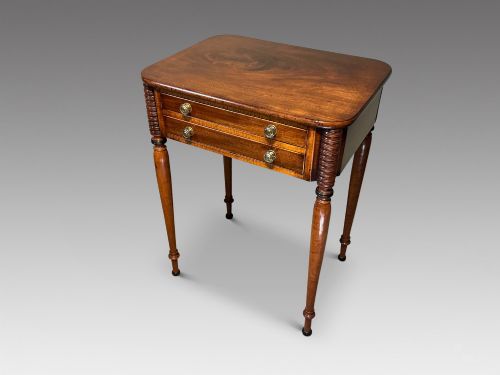


Empire Style Accent Table
These empire style accent table pieces bring classical proportion and bold metal mounts to a room.
Empire Style Accent Table
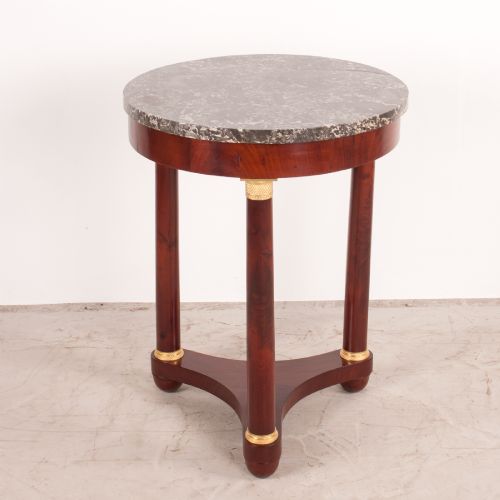
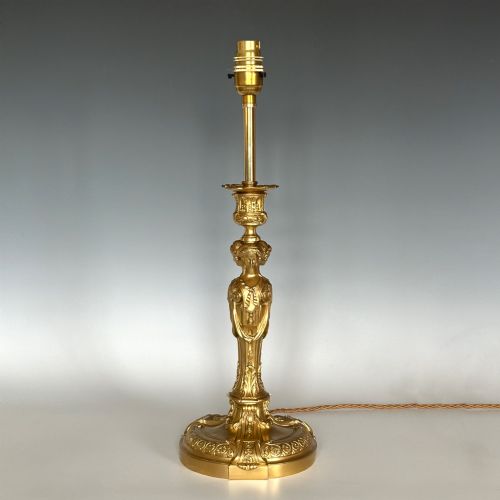
The selection ranges from tripod side tables with inset marble tops to occasional stands supported by carved swans, columns or gilded mounts. Buyers also find related lighting pieces and smaller lamp tables reflecting the same neoclassical vocabulary.
How they were made
Makers utilised dense timbers such as mahogany and walnut for the primary structure, often incorporating canework or maple details. Tops frequently featured polished black or white marble inset directly into the wooden frame.
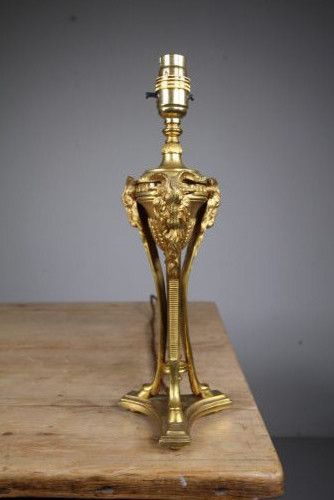
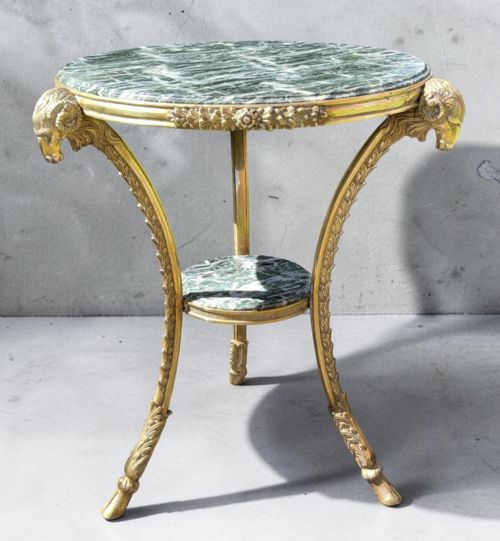
Cast brass, ormolu, and gilt bronze mounts provided the characteristic classical ornamentation, secured to columns, aprons, and feet. Giltwood and parcel-gilt finishes completed the decorative scheme on select pieces.
Materials recorded across the selection include mahogany, marble, brass, ormolu, gilt bronze, and walnut.
What varies in quality
The standard of metalwork dictates much of the distinction between pieces, particularly the crispness of chasing on ormolu and brass mounts. Sharp detail in rams heads, classical masks, and paw feet indicates superior workshop production.
Timber selection and the integration of marble tops also separate finer examples from standard production. A well-fitted marble slab and stable, richly grained mahogany reflect greater care in the initial construction.
The Empire Style Accent Table Glossary
- Guéridon
- A small circular table on a central pillar or tripod base. Originating in seventeenth-century France, these tables became a staple of nineteenth-century interior design.
- Ormolu
- Gilt bronze ornament applied to furniture and lighting. The technique involves a mercury amalgam applied to bronze, heated to leave a durable gold layer.
- Neoclassical
- A style reviving classical Greek and Roman motifs. It prioritises symmetry, straight lines, and architectural details such as columns and friezes.
- Parcel-gilt
- Partially gilded woodwork where gold leaf highlights specific carved elements. This technique contrasts the natural timber or painted surface with bright metal.
Empire Style Accent Table: Frequently Asked Questions
What is an empire style accent table?
An empire style accent table is a small nineteenth-century or revival-period piece inspired by classical antiquity and French design. These tables typically feature circular tops, prominent column supports, and cast metal mounts.
They serve practical purposes as side stands, centre tables, or lamp supports while adding strong architectural character to a room.
Where do these tables originate?
The majority of these pieces originate from French workshops following the design vocabulary of the First French Empire. English Regency versions and later nineteenth-century revivals also appear frequently.
Craftsmen across Europe adapted these classical motifs, incorporating local timbers and traditional casting methods.
How do I style a guéridon?
A guéridon works effectively as a central display surface in a hallway or as a functional side table beside seating. The circular top accommodates a table lamp, bronze figure, or stack of books.
Because these tables often feature detailed mounts or marble tops, positioning them where light catches the metalwork enhances their visual impact.
How do I identify the period?
Dating relies on examining construction methods, timber movement, and the quality of metal castings. Nineteenth-century pieces display hand-cut joinery and heavy patination on the wood.
Revival pieces from later decades often imitate earlier styles using machine-tooled screws or lighter brass fittings rather than genuine fire-gilded ormolu.