






Empire Picture Frame
An empire picture frame brings neoclassical weight to a wall, offering rich bronze and giltwood housings that elevate portraits and prints.
Empire Picture Frame
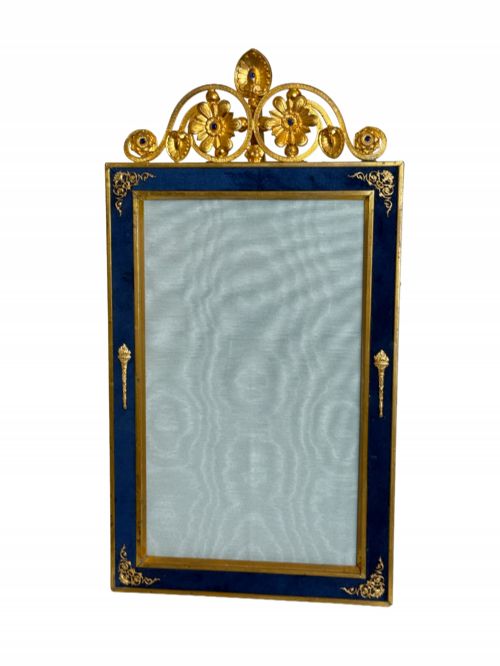
An empire picture frame provides a distinct neoclassical border for artwork, drawing on French design traditions from the nineteenth century. These housings often frame miniature paintings, photographs, prints, or tapestries.
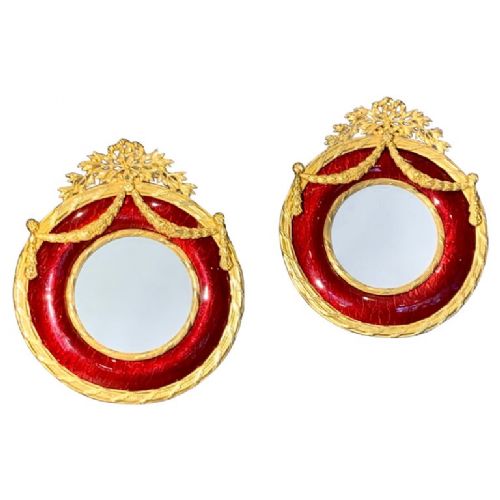
Buyers meet variations spanning the nineteenth century, including Victorian interpretations and revival pieces. Common forms encompass large wall frames, table photograph frames, and matched pairs.
The aesthetic leans heavily on Napoleonic motifs and classical symmetry. Pieces frequently incorporate brass, gilt bronze, and ebonised wood to create striking visual contrast.
Materials and construction
Maker techniques rely on cast bronze and giltwood, often finished with applied ormolu details. Ebonised wood provides dark structural borders that make the metallic mounts stand out.
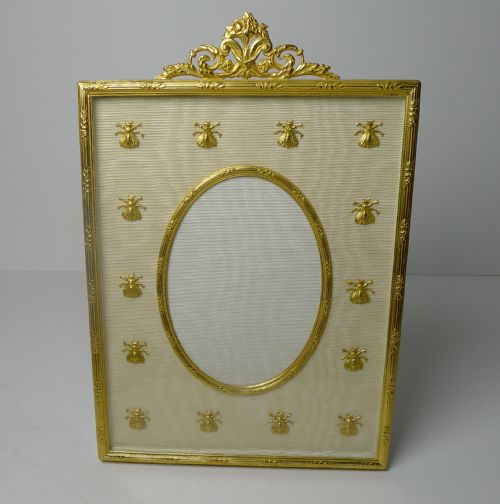
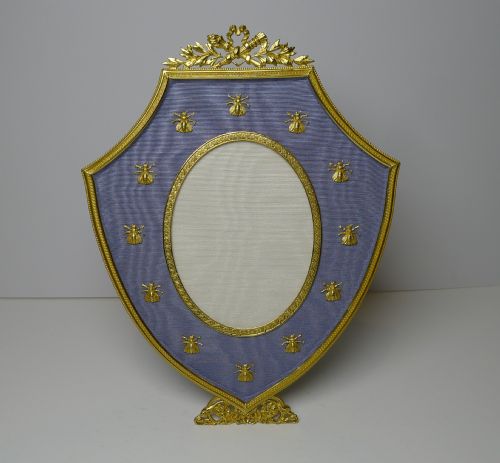
Decorative elements involve intricate casting, such as Napoleonic bees, alongside textile components like silk and embroidery. Glass protects the interior artwork, while paper backings and linings complete the assembly.
Empire Picture Frame Retail Price Guide 2026
Typical asking prices for empire picture frame among the pieces listed under this phrase on Sellingantiques today, from the lower quarter to the upper quarter. They describe what is for sale here now, not the wider market.
Listings feature nineteenth-century pieces utilising gilt bronze, ebonised wood, and glass.
Judging the quality
Quality depends upon the crispness of the bronze casting and the depth of the gilding. Superior examples display sharp detail in ornamental motifs like bees and classical trim.
The integrity of the structural wood and the weight of the metal components distinguish finer frames from simpler production. Original glass and undisturbed backings elevate a piece's standing.
Boin Taburet
The Empire Picture Frame Glossary
- Ormolu
- Gilded bronze, applied as a decorative mount to wooden or metallic structures. This technique creates a rich, golden surface finish.
- Ebonised wood
- Timber treated to resemble ebony, providing a deep black contrast. It is frequently paired with bright gilt bronze mounts.
- Giltwood
- Wood coated with a thin layer of gold leaf or gesso. This finish gives frames a bright, reflective appearance.
- Napoleon III
- A nineteenth-century French design period known for reviving earlier monarchical styles. It encompasses ornate bronze and enamel work.
Empire Picture Frame: Frequently Asked Questions
What periods do these frames represent?
The selection spans the nineteenth century, including Victorian and later revival eras. Pieces often date from around eighteen hundred through to the early nineteen hundreds.
Design influences draw heavily on French Empire and Napoleon III aesthetics. These dates reflect the enduring popularity of neoclassical motifs.
How were these frames used?
They housed miniature paintings, photographs, and printed works of art. Many were designed for walls, while others served as desktop photograph frames.
Some accommodated textiles such as tapestries and embroidery. Their heavy ornamentation made them central decorative items in period interiors.
Are pairs common in this style?
Matched pairs appear alongside single large frames and sets of prints. Pairs typically share identical bronze mounts and dimensions.
Such items were originally intended for balanced placement on drawing room walls. They offer a unified look for displaying corresponding artwork.