

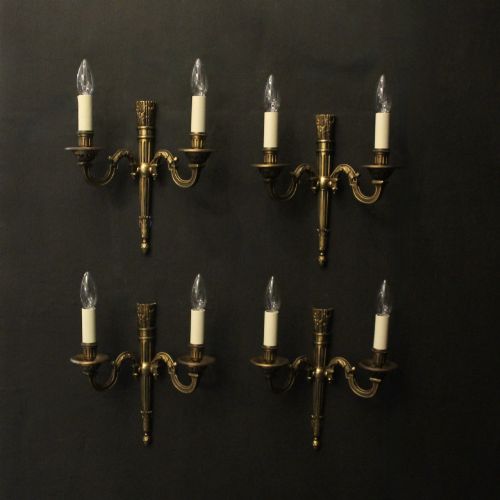
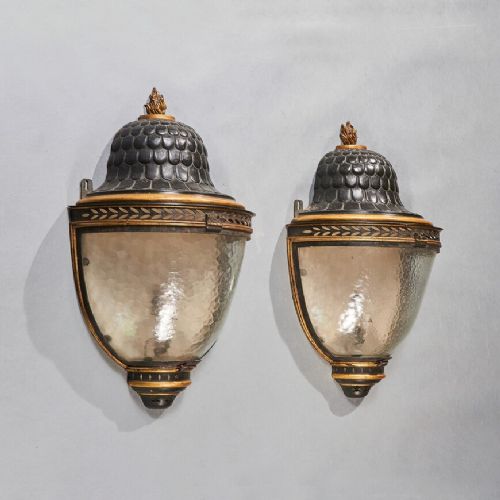
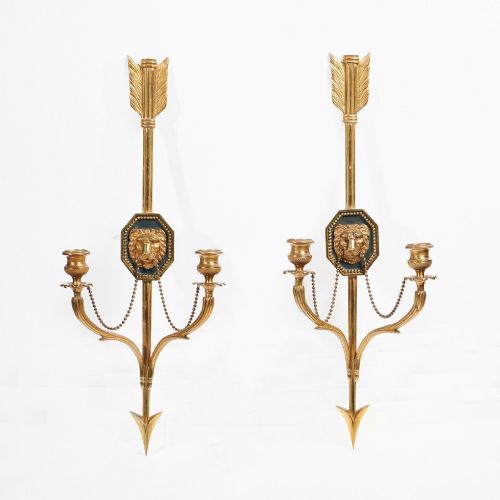
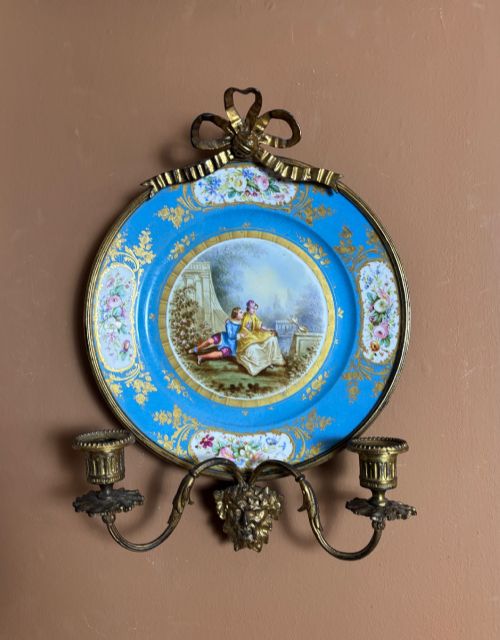


Empire Gilt Sconces
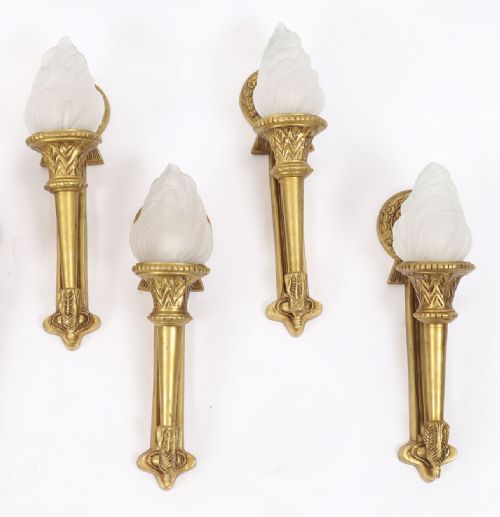
Empire gilt sconces deliver heavy neoclassical presence to an interior through cast metal and disciplined symmetry.
Empire Gilt Sconces
Empire gilt sconces are wall-mounted lighting fixtures designed to project candlelight or electrified illumination across a room. The items gathered here encompass wall lights, girandoles, and appliques originating chiefly from the nineteenth century alongside later twentieth-century iterations.
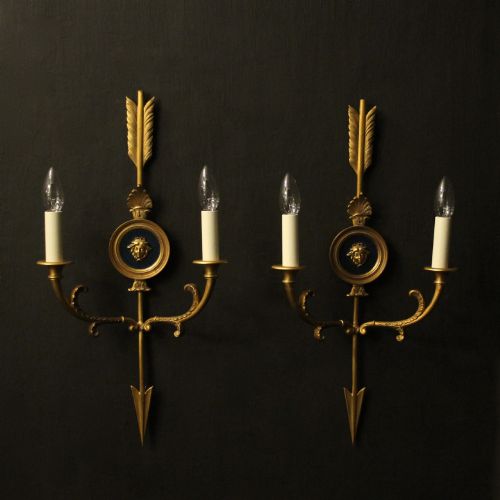
Makers working within French Empire, Neoclassical, and Regency idioms produced these pieces to dominate a wall space with architectural rigour. Buyers encounter pairs and larger sets featuring multiple branches, often combining wall plates with protruding arms configured for candles.
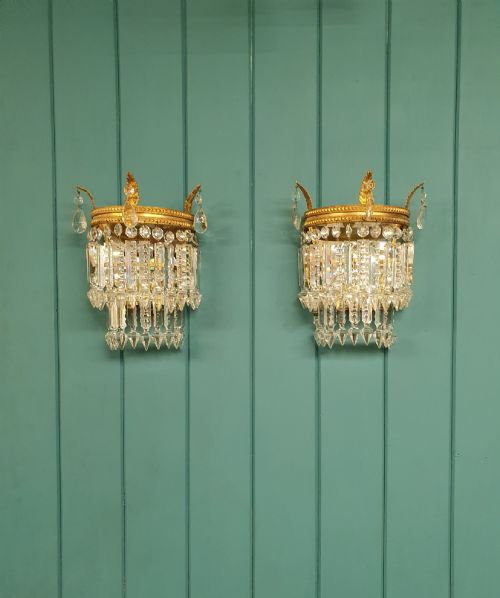
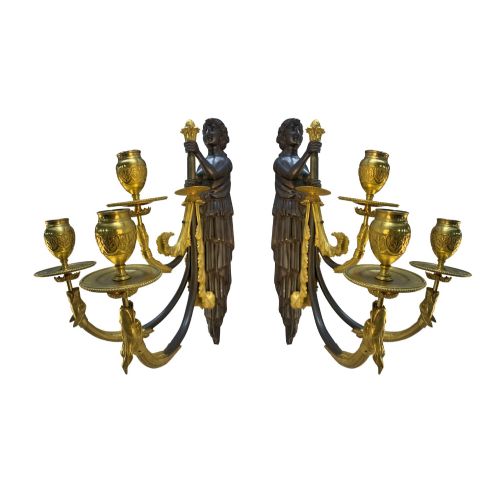
The prevailing forms rely on classical motifs including torches, caryatids, and putti rendered in durable metals. Examples span from austere brass brackets to elaborate gilt bronze assemblies paired with crystal drops or marble bases.
Materials and construction
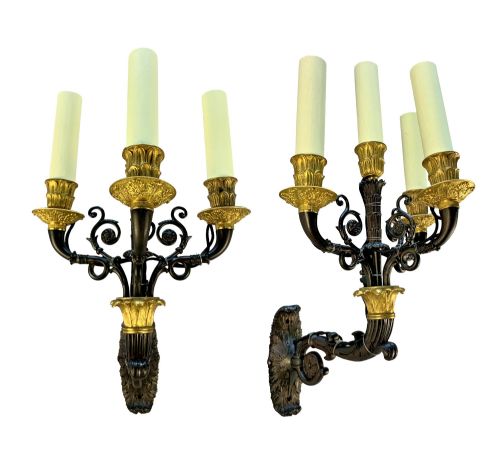
Foundries manufactured these fixtures by casting bronze, brass, and ormolu into rigid classical shapes before applying mercury gilding or surface lacquer. Artisans frequently contrasted bright gilt metal surfaces against dark patinated bronze elements or ebonised wood to accentuate the relief.
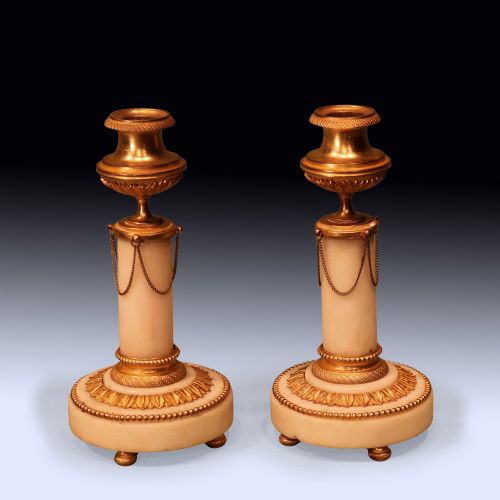
Secondary materials such as cut glass crystal drops, marble plinths, and porcelain components were integrated into the metal frames to catch and refract the light. Wall lanterns and sconces often relied on hand-hammered tole peinte or carved giltwood where metal casting was unsuited to the design.
Empire Gilt Sconces Retail Price Guide 2026
Typical asking prices for empire gilt sconces among the pieces listed under this phrase on Sellingantiques today, from the lower quarter to the upper quarter. They describe what is for sale here now, not the wider market.
Listings demonstrate a strong preference for French workshop production, spanning nineteenth-century Regency, Empire, and Neoclassical design vocabularies.
Quality and craftsmanship
Quality rests upon the crispness of the chased metalwork and the depth of the original gilding rather than the mere presence of gold colour. Superior examples display sharp relief in motifs like acanthus leaves and classical figures, where lesser pieces exhibit softened edges from worn moulds.
The structural integrity of the arm joints and the weight of the backplates dictate durability, as heavy multi-branch sconces require robust engineering to mount securely. Integration of high-grade materials like finely cut crystal and genuine ormolu separates standard commercial production from workshop masterpieces.
The Empire Gilt Sconces Glossary
- Ormolu
- Gilded bronze produced by applying a mercury and gold amalgam to a bronze base and firing it in a kiln. This technique creates a distinctive, deep golden lustre characteristic of fine antique metalwork.
- Applique
- A wall-mounted light fixture designed to hold candles or lamps, functioning as a permanent architectural bracket. The term is frequently used interchangeably with wall sconce in continental pieces.
- Girandole
- A branched wall sconce or candlestick featuring reflective elements such as crystal drops or backplates designed to multiply the surrounding light. They appear often in nineteenth-century formal interiors.
- Tole peinte
- Painted sheet metal used to form decorative components or shades on lighting fixtures. It offers a smooth surface for applied colour and metallic parcel gilt highlights.
- Caryatid
- A sculpted female figure serving as an architectural support column, frequently cast into the shafts of candlesticks and wall sconce mounts. The form derives directly from classical antiquity.
Empire Gilt Sconces: Frequently Asked Questions
How do I mount heavy gilt sconces?
Heavy bronze and ormolu sconces require direct anchoring into solid wall studs or proper masonry fixings to support their substantial weight safely. The backplates feature designated screw holes engineered to distribute the load evenly across the mounting surface.
Professional installation is recommended for wired pieces to ensure the internal electrical components comply with current safety standards without compromising the antique metal frame.
What is the difference between ormolu and gilt brass?
Ormolu consists of mercury-gilded bronze, yielding a rich, matte golden surface that does not tarnish easily and retains deep definition in the chased details. Gilt brass is a brighter, harder alloy that typically shows a more uniform mechanical finish and lighter weight.
While both materials provide a golden appearance, ormolu is associated with higher-tier French workshop production from the nineteenth century.
Can these antique sconces be electrified?
Many period sconces are adapted for electricity using discreet internal wiring channels that thread through the original arms and backplates. This conversion allows them to function safely as wall illumination while preserving the exterior historic metalwork.
Reversible wiring methods ensure that the original structure of the fixture remains unaltered by the modern electrical fittings.
How should I clean antique gilt bronze?
Dust accumulation should be managed gently using a soft, dry brush to avoid abrading the delicate gold surface or the underlying bronze patina. Liquid chemical cleaners and abrasive polishes must be avoided entirely because they strip away the thin layer of gilding.
Professional conservation is advised if deeper cleaning becomes necessary to remove stubborn grime from chased recesses.