



Patinated Bronze Appliques
Patinated bronze appliques are decorative wall mountings bringing sculptural depth and rich metallic character to period interiors.
Patinated Bronze Appliques
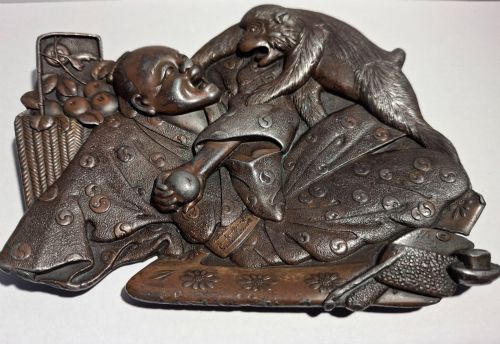
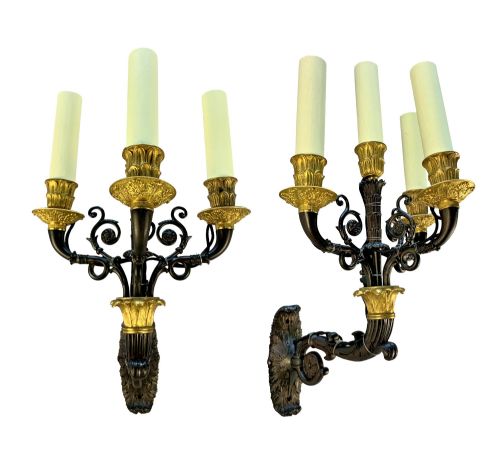
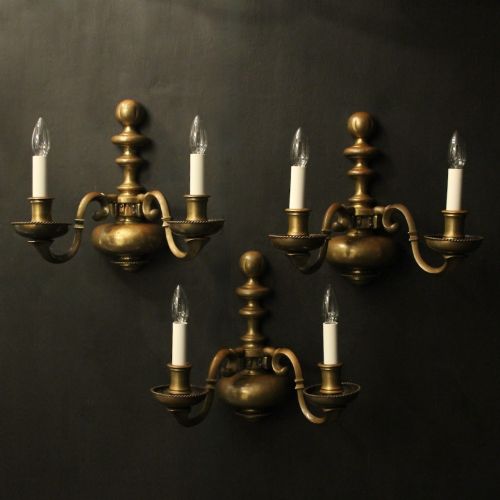
Patinated bronze appliques encompass wall lights, girandoles, and wall sconces designed to mount directly onto interior surfaces. These fixtures emerge in periods such as Regency, Victorian, and the early twentieth century, reflecting varied historical revivals. Buyers seeking these items encounter pairs and sets originating from English and French workshops.
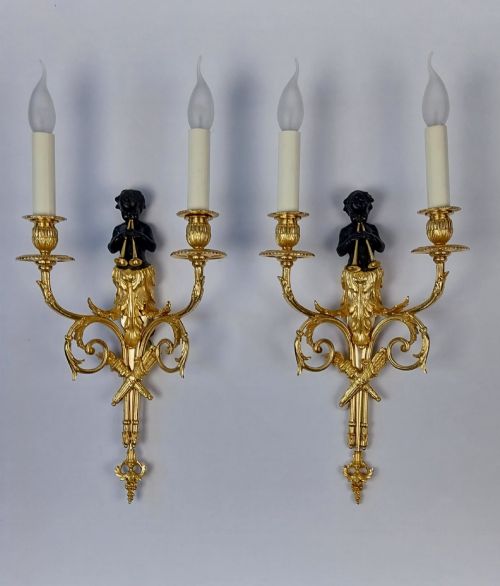
The dominant forms on this page take the shape of wall lights and wall sconces configured for candle or early electric illumination. Many examples incorporate figural elements like cherubs alongside classical architectural motifs. French Empire, Louis XVI, and Rococo styles recur frequently throughout the selection.
How they were made
Foundry work relies on bronze, brass, and ormolu combined with chemical or natural surface treatments to achieve a patinated bronze finish. Artisans frequently pair the dark metalwork with gilt bronze highlights to create tonal contrast on the casting. Certain designs integrate glass, mirror, or crystal components to reflect and amplify the light.
Construction involves casting the metal elements separately before assembling them into cohesive wall sconces or girandoles. Detailed chasing and finishing refine the surface texture of the figures and scrollwork. The integration of bronze and ormolu requires precise fitting of different metal alloys.
Listings feature items spanning the Victorian era, Regency period, and early twentieth century up to nineteen thirty.
What varies in quality
The treatment of the patinated bronze surface dictates visual richness across the piece. Finer items retain subtle tonal gradations and well-preserved gilding that interact harmoniously with the dark metal. Flat or overly uniform finishes diminish the sculptural impact of the casting.
The Patinated Bronze Appliques Glossary
- Applique
- A decorative wall-mounted fixture designed to hold candles or lamps. These metal ornaments are secured directly to wooden or plastered surfaces.
- Girandole
- A branched wall light incorporating reflective elements such as a mirror or glass drops. The reflective backing magnifies the illumination cast by the candles.
- Ormolu
- Finely chopped gold or gold amalgam fired onto a bronze base. This technique produces a bright golden surface that contrasts with dark patinated bronze.
- Patination
- The natural or induced ageing of a metal surface over time. Chemical treatments often accelerate this darkening process to create antique bronze tones.
- Sconce
- A wall-mounted lighting fixture projecting outwards from the surface. These fittings often take structural inspiration from torches or classical brackets.
Patinated Bronze Appliques: Frequently Asked Questions
Where should I mount these wall lights?
These wall lights suit flanking positions beside mirrors, fireplaces, or architectural doorways in traditional rooms. Their projection from the wall creates concentrated pools of accent illumination.
Ensure the mounting surface supports the combined weight of the bronze and any glass or crystal attachments. Height placement generally aligns slightly above eye level for optimal visual balance.
How do I clean patinated bronze?
Dust the surface regularly with a soft, dry cloth to prevent particulate accumulation within the recesses of the casting. Avoid harsh chemical cleaners or abrasive polishes that strip the protective patina.
Preserving the original surface skin maintains the historical character and visual depth of the metal. Professional conservation is advisable if deeper cleaning becomes necessary.
Can these antique sconces be wired for electricity?
Many period sconces accommodate modern electrical wiring through discreet internal channels or existing apertures. Professional electricians can safely adapt the fittings while retaining the original exterior appearance.
Wiring methods should respect the structural integrity of the antique bronze without altering primary visible surfaces. Consultation with a specialist ensures compatibility with historical components.
How do I distinguish French and English styles?
French pieces often display exuberant Rococo curves, Neoclassical symmetry, or Empire military motifs executed in gilt and patinated bronze. English traditional designs tend towards more restrained proportions and heavier structural casting.
Examining the mounting hardware and casting techniques provides further clues regarding origin. Workshops in both countries utilised high-grade bronze but maintained distinct regional ornamentation preferences.