

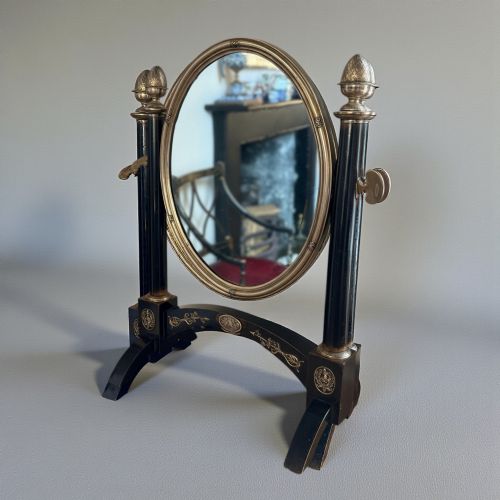
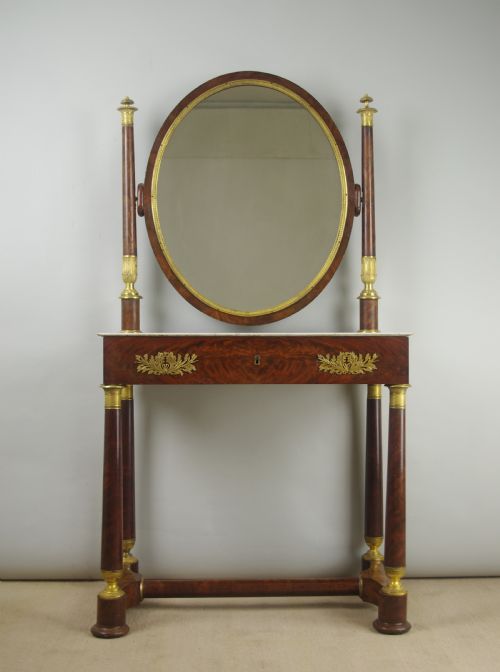
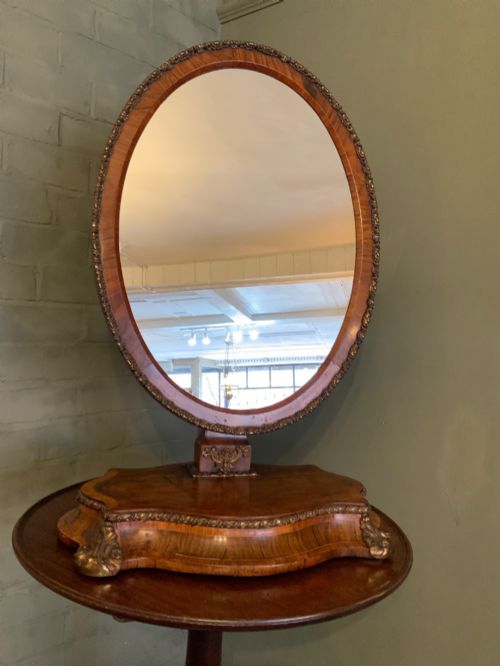
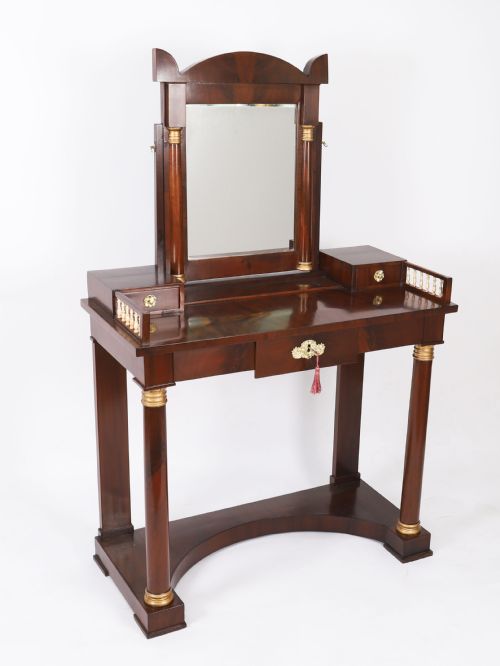


Empire Dressing Table
An empire dressing table brings monumental neoclassical proportion and rich mahogany into the bedroom, offering grand mirrors and sleek surfaces.
Empire Dressing Table
An empire dressing table combines architectural presence with functional design, typically appearing in mahogany, walnut, or birch across nineteenth-century examples. You will frequently encounter French and Swedish interpretations that range from full dressing tables with integrated mirrors to standalone toilet mirrors and console tables.
The form often includes adjustable pedestal mirrors, marble tops, and matching pieces such as vanity mirrors and stools. These items originate predominantly from the nineteenth century, spanning periods from early classical interpretations to later revival suites.
Materials and construction
Cabinet makers utilised dense timbers like mahogany and walnut as foundations, frequently applying rich veneers to create smooth, dark surfaces. Structural elements and decorative highlights rely heavily on cast ormolu, gilt bronze, and brass mounts.
Mirrors are paired with glass set into pivoting frames, whilst secondary materials like marble provide durable surfaces for console tables and dressing furniture. Ebonised wood and tooled leather appear as complementary finishes across specific pieces.
Empire Dressing Table Retail Price Guide 2026
Typical asking prices for empire dressing table among the pieces listed under this phrase on Sellingantiques today, from the lower quarter to the upper quarter. They describe what is for sale here now, not the wider market.
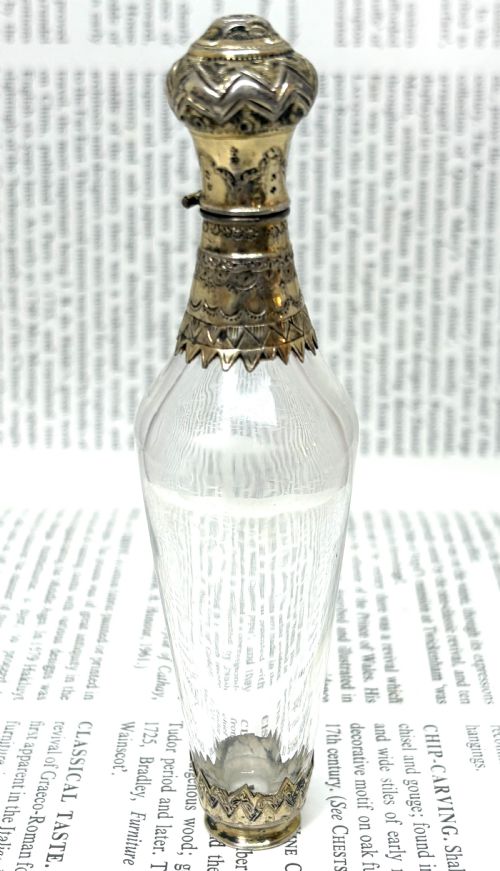
Among the stately mahogany and bronze stands a tiny silver-gilt scent bottle, proving that nineteenth-century vanity required proper accessorising down to the last drop.
Assessing quality and execution
The distinction between tiers rests upon the crispness of the cast ormolu mounts and the selection of timber grain. Finer examples display deeply chased gilt bronze details that integrate seamlessly with the mahogany carcase.
Construction methods determine longevity, seen in the stability of adjustable mirror mechanisms and the precise fit of drawers. Superior pieces maintain original glass and uncompromised marble tops without structural alterations.
The Empire Dressing Table Glossary
- Ormolu
- Gilt bronze mounted onto furniture or decorative objects. This technique involves applying a mercury-gilded layer to a bronze base.
- Console table
- A table designed to stand against a wall, often secured with brackets. These pieces frequently feature marble tops and structural mounts.
- Toilet mirror
- A smaller mirror designed to sit atop a dressing chest or table. They often feature pivoting frames supported by upright pedestals.
- Biedermeier
- A central European style emphasising utilitarian comfort and clean lines. Swedish interpretations frequently utilise birch timber.
Empire Dressing Table: Frequently Asked Questions
What defines an empire dressing table?
These tables draw on classical neoclassical design principles, featuring strong architectural lines and dark timber surfaces. They are characterised by symmetrical forms and restrained ornamentation.
Ormolu mounts and large pivoting mirrors complete the distinctive silhouette associated with the period.
How do I care for mahogany and ormolu?
Mahogany surfaces benefit from regular dusting with a soft cloth and occasional treatment with appropriate wax. Avoid harsh chemical cleaners that might strip the historic finish.
Ormolu mounts require gentle cleaning without abrasive agents to preserve the original gilding on the bronze base.
Where were these pieces made?
Surviving examples originate primarily from continental workshops in France, Sweden, Russia, and Vienna. French makers set the dominant stylistic tone for the movement.
Regional variations appear in the choice of native woods, such as birch in Swedish iterations compared to French mahogany.
Are mirrors original to the tables?
Many dressing tables retain their original pivoting glass plates, often showing minor signs of age and foxing. Replacement mirrors do occur across nineteenth-century furniture.
Examining the backing boards and mounting brackets helps determine whether the glass matches the age of the table frame.