


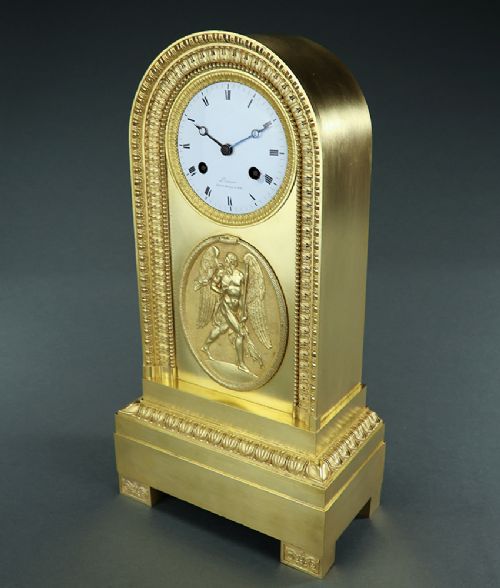
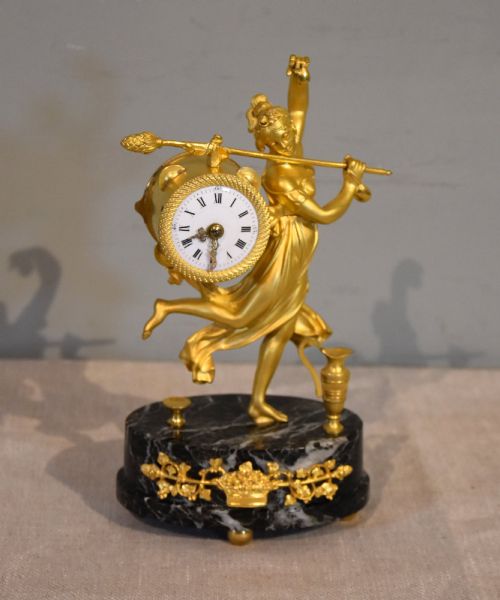


Empire Desk Clock
An empire desk clock brings stately neoclassical bronze work and precise timing straight to the desktop.
Empire Desk Clock
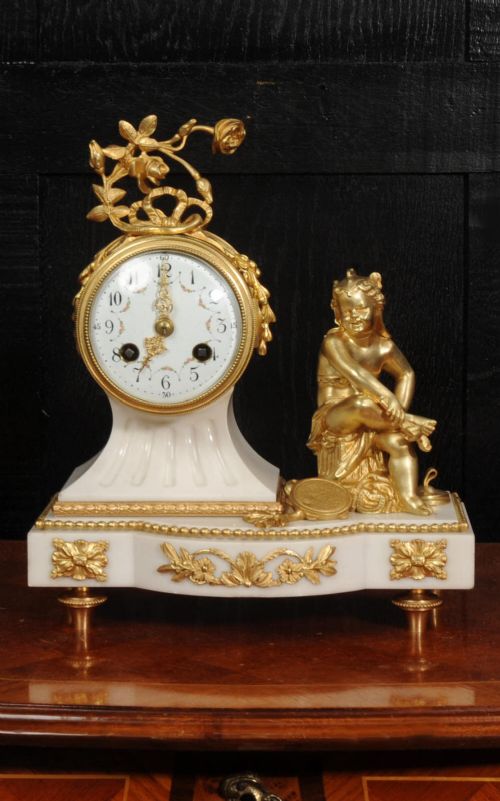
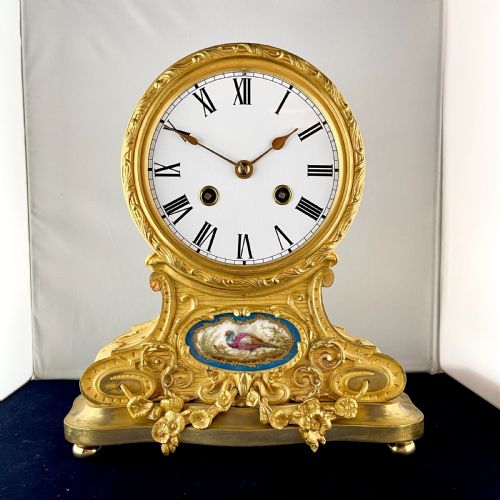
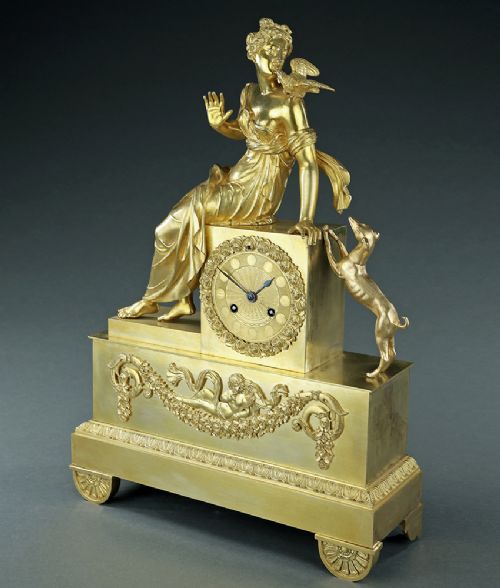
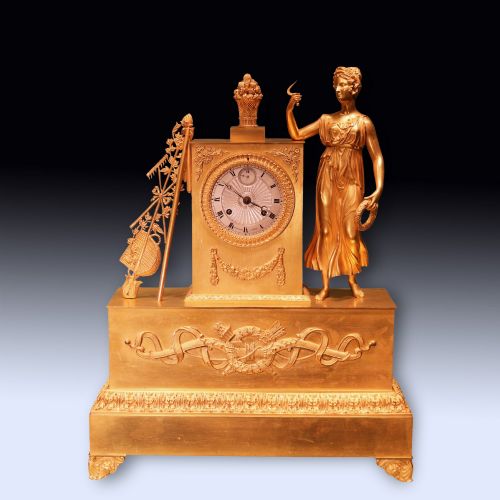
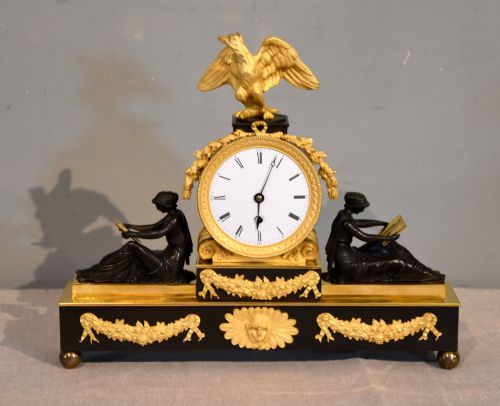
When searching for an empire desk clock, buyers encounter works spanning the nineteenth century, including Regency, French Empire, Charles X, and Napoleon III periods. These pieces take the form of mantel clocks, timepieces, portico clocks, and clock garnitures designed to sit on desks and surfaces.
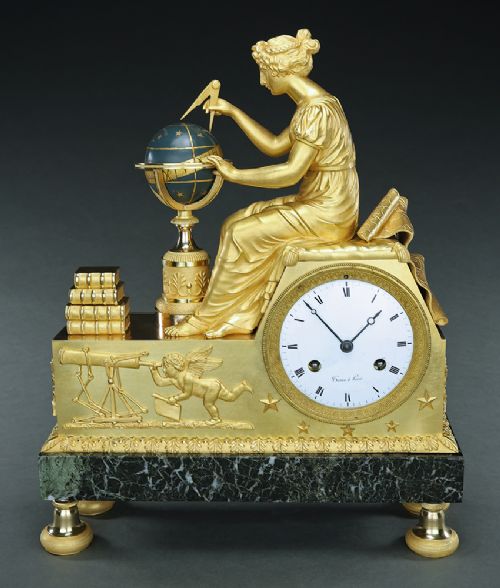
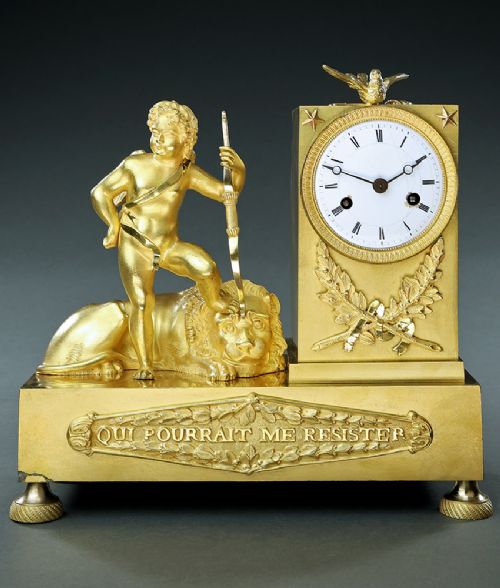
The materials recorded in these pieces include ormolu, gilt bronze, patinated bronze, brass, glass, marble, and enamel. Subjects often reference classical themes, astronomy, and allegorical narratives such as love and fidelity.
Most examples originate from French workshops, though English Regency makers also appear. The selection ranges from architectural marble cases to figural bronzes and drumhead designs.
How they were made
Makers shaped heavy metal using cast bronze and brass, applying mercury gilding or ormolu finishes to create bright gold surfaces alongside contrasting patinated dark bronze. Cases incorporate natural stones like green marble, red rouge marble, and sienna marble.
Movements utilise mechanical mechanisms such as fusee setups and pendulum regulators, paired with enamel dials for timekeeping. Glass components, including cut crystal elements, protect delicate portico structures and dials.
Empire Desk Clock Retail Price Guide 2026
Typical asking prices for empire desk clock among the pieces listed under this phrase on Sellingantiques today, from the lower quarter to the upper quarter. They describe what is for sale here now, not the wider market.
Listings feature nineteen-century periods including Regency, Charles X, and Napoleon III alongside materials like ormolu, marble, and patinated bronze.
What varies in quality
Internal movement execution also separates works. Pieces carrying signed maker details on quality mechanical movements indicate higher workshop standards than unmarked variants.
Japy Freres·Samuel Marti·Baetens London·Breguet·Hessen Paris
The Empire Desk Clock Glossary
- Ormolu
- Gilded bronze produced by applying a mercury and gold amalgam to a bronze base. This technique creates a durable golden finish seen on nineteenth-century clock mounts.
- Fusee
- A conical pulley used in clock movements to maintain even tension on the chain as the mainspring unwinds. It ensures steady timekeeping.
- Portico clock
- A mantel clock featuring a tall architectural case supported by four columns. They often incorporate cut crystal or mahogany.
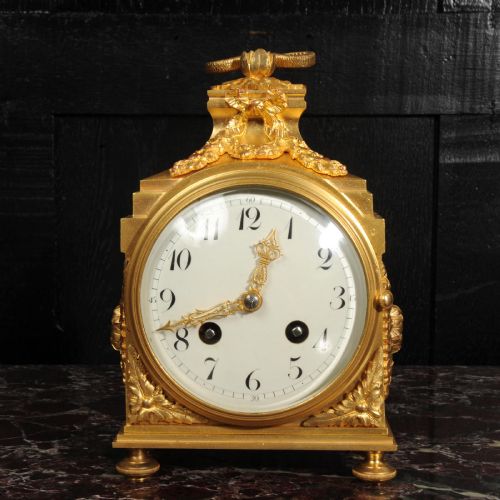
- Pendule d'Officier
- A portable military-style desk clock fitted with a carrying handle on top. These originated for campaign use during the Napoleonic era.
- Garniture
- A set comprising a central clock matched with decorative side pieces such as urns or candelabra. They form a unified decorative display on a surface.
Empire Desk Clock: Frequently Asked Questions
How do I wind an empire desk clock?
Winding requires inserting the key into the dial arbor and turning it gently until resistance meets the mainspring limit. Care must be taken not to overwind the mechanism.
Most mechanical movements run for eight days per wind. Keeping a consistent schedule helps maintain timekeeping accuracy.
Where should I place a heavy marble clock?
Heavy marble and bronze pieces require a sturdy, level surface capable of supporting substantial weight. Desks, heavy sideboards, and mantelpieces provide suitable locations.
Positioning away from direct sunlight and heating vents protects the internal oils and exterior enamel dials from environmental stress.
How do I distinguish French Empire from Regency styles?
French Empire pieces lean heavily on classical Roman motifs, military symbolism, and deep ormolu finishes paired with dark patinated bronze. Figures often depict mythological subjects and allegories.
Regency examples reflect British neoclassical tastes, frequently employing brass inlay, mahogany cases, and distinct fusee movements tailored for English interiors.
Are these clocks suitable for daily timekeeping?
These nineteenth-century mechanical pieces function reliably when properly serviced and cleaned by a professional horologist. Regular maintenance ensures the gear trains operate smoothly.
Setting the pendulum level on a stable surface allows the escapement to beat evenly for accurate daily time tracking.