


Empire Brass Wall Sconces
Empire brass wall sconces bring classical dignity to interiors through formal symmetry, rich cast metal, and historic French design.
Empire Brass Wall Sconces
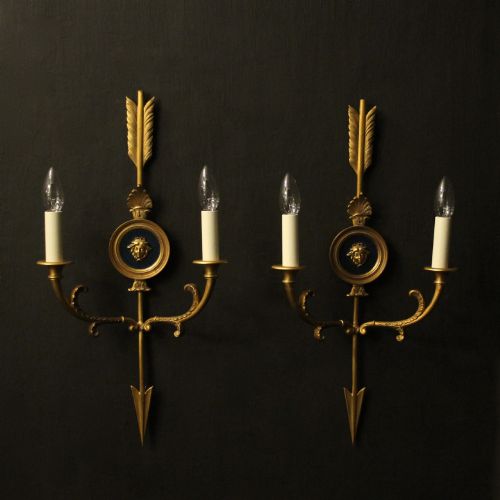
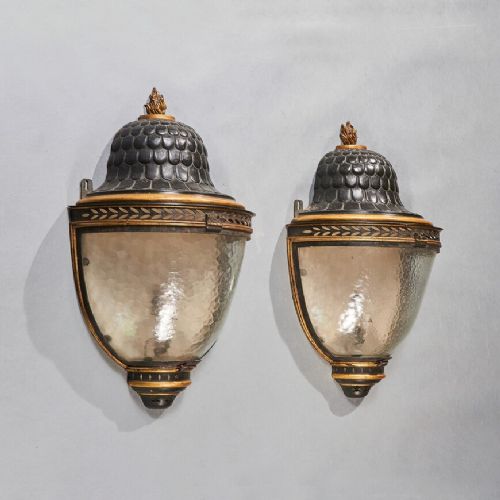
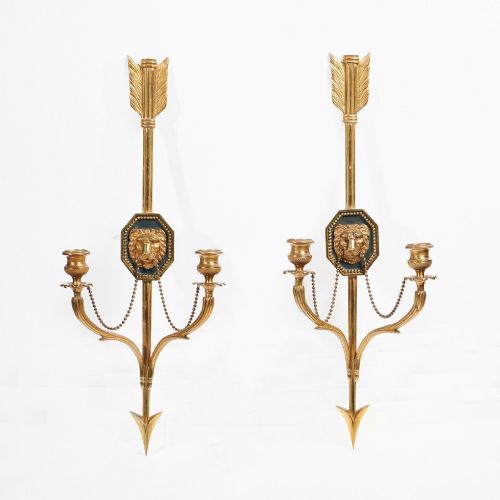
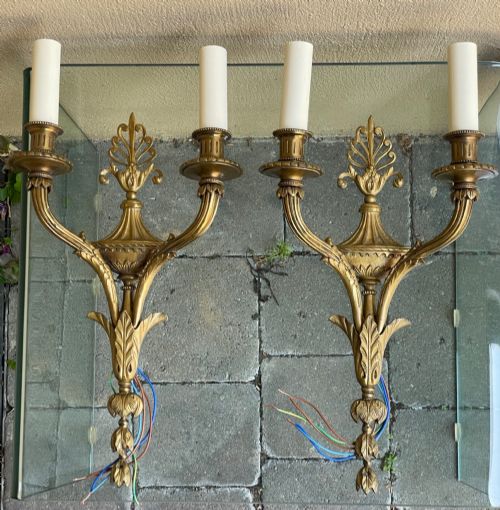
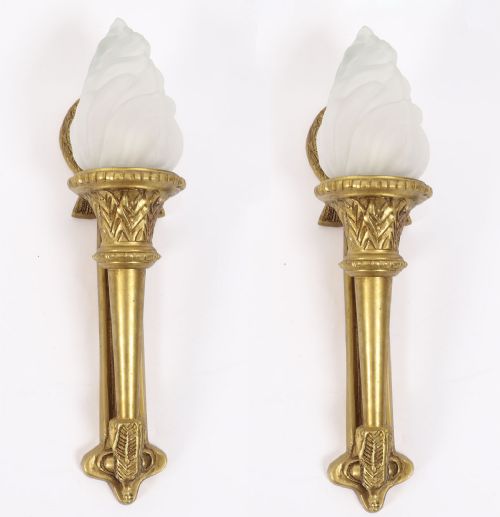
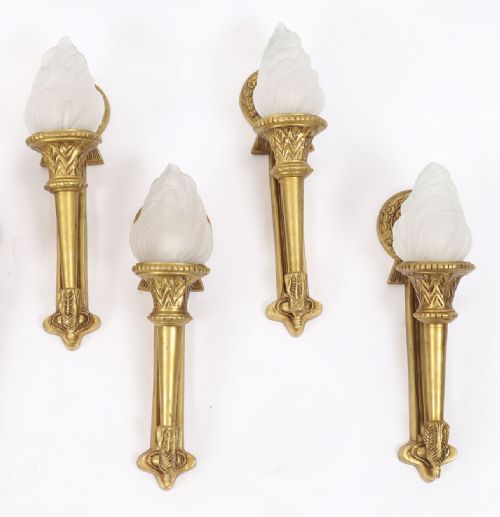
When you search for empire brass wall sconces, you encounter decorative lighting fixtures designed to mount directly onto interior walls, drawing heavily on classical antiquity and the French Empire style. The objects take various forms on this page, including twin-arm lights, wall lanterns, girandoles, and single-arm sconces.
Nineteenth-century examples, alongside pieces from the Edwardian era and the early decades of the twentieth century, dominate the selection. French origins appear frequently, alongside English Regency interpretations and Italian ormolu pieces.
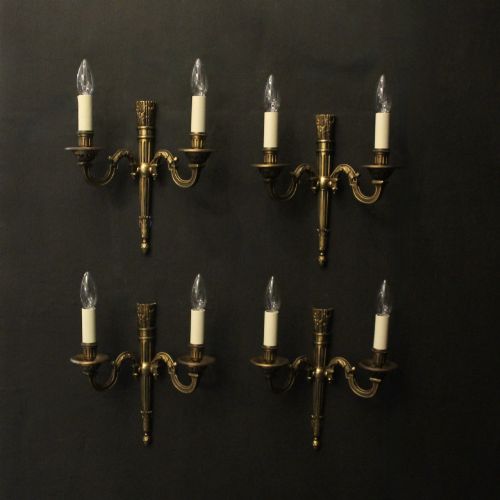
Most surviving examples arrive in matching pairs or sets of four, constructed to balance the illumination and decoration of a formal room. Buyers typically find fixtures featuring prominent classical motifs such as torches, lion heads, and strict architectural symmetry.
Materials and construction methods
Foundry work relies heavily on brass, bronze, and ormolu, with artisans casting metal into rigid classical shapes and applying surface treatments like gilding or patination. Gilt bronze and parcel gilt finishes provide the metallic brilliance characteristic of the style.
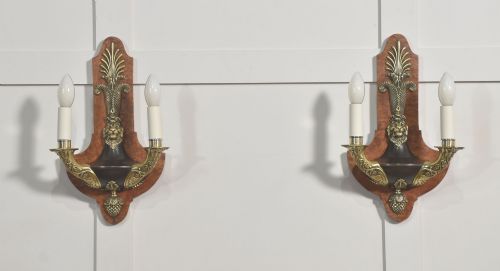
Secondary materials such as frosted glass, crystal, and tole peinte integrate into the designs, forming shades, backplates, or decorative bag components. Burr walnut and giltwood occasionally appear as backing supports for the metal branches.
Workshops utilised multi-part construction, screwing or pinning cast arms and sconce pans to central backplates. This modular method allowed makers to combine sturdy metal backings with delicate glass drops or elaborate girandole frames.
Several heavy nineteenth-century pairs feature fierce lion heads glaring from the backplates, ready to guard your hallway against dim lighting.
Assessing the grade of manufacture
Quality depends upon the crispness of the metal casting and the depth of the subsequent chasing work. Superior pieces display sharp relief in classical ornamentation like acanthus leaves and lion heads, whereas inferior production leaves details soft and blurred.
The durability of the surface finish marks another distinction, separating deeply applied fire gilding or heavy ormolu from thin, modern plating. Heavier gauge metal used in the backplates and arms ensures the fixture hangs securely and resists bending over decades of use.
The Empire Brass Wall Sconces Glossary
- Ormolu
- Gilt bronze created by applying a mercury and gold amalgam to a bronze object and heating it to drive off the mercury. This technique produced a durable, rich golden surface seen on high-end nineteenth-century lighting.
- Girandole
- A branched wall light or sconce fitted with reflective backplates or mirrors. The design maximised candle illumination by bouncing light off both the metal arms and the polished background.
- Tole Peinte
- Painted sheet metal used for decorative components like shades and backplates. Makers in the nineteenth century utilised this material to introduce coloured elements into classical wall lights.
- Applique
- A French term for a wall-mounted light fixture or sconce. Dealers often use this interchangeably with wall lights when describing continental pieces.
Empire Brass Wall Sconces: Frequently Asked Questions
How were empire wall sconces used?
These fixtures served to illuminate formal rooms by holding candles along interior walls, often positioned in pairs to flank mirrors, paintings, or architectural doorways. Their reflective surfaces helped spread the limited candle flame across the space.
In period interiors, they provided both ambient and task lighting during evening hours. The heavy metal construction ensured the wall mounts remained stable while holding burning wax candles.
Where should I place these sconces?
Mount empire brass wall sconces at eye level in hallways, dining rooms, or living spaces where their formal symmetry can anchor the room design. Placing them on either side of a fireplace or large mirror follows historical placement traditions.
Ensure the electrical wiring matches the output requirements of vintage fixtures if they have been converted from candles. Professional installation is recommended to support the weight of heavy bronze and ormolu backplates safely.
How do I distinguish French Empire from Regency?
French Empire pieces rely heavily on strict Napoleonic classical motifs, military trophies, and rich ormolu casting. English Regency items, while sharing the classical inspiration, often exhibit a slightly more restrained linearity and distinct local casting traits.
Examining the mounting hardware and construction joints helps reveal the workshop origin. French pieces frequently employ specific metric-aligned threading and distinct bronze alloys compared to English equivalents.
Are these sconces wired for electricity?
Many surviving antique wall lights undergo conversion to electricity during the twentieth century to suit modern domestic requirements. Original candle nozzles are often adapted to conceal internal wiring and lamp holders.
Buyers should inspect the interior wiring of each pair to confirm it meets current safety standards. Rewiring historical brass fixtures is a straightforward process for a qualified electrician.