


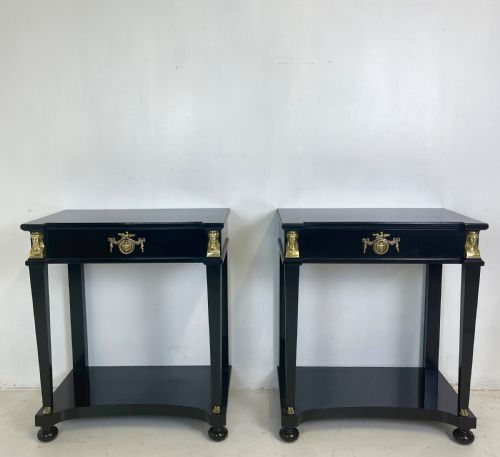


Empire Bedside Cabinets
These empire bedside cabinets bring architectural dignity and rich timbers to a bedroom, offering a distinct neoclassical silhouette that commands attention.
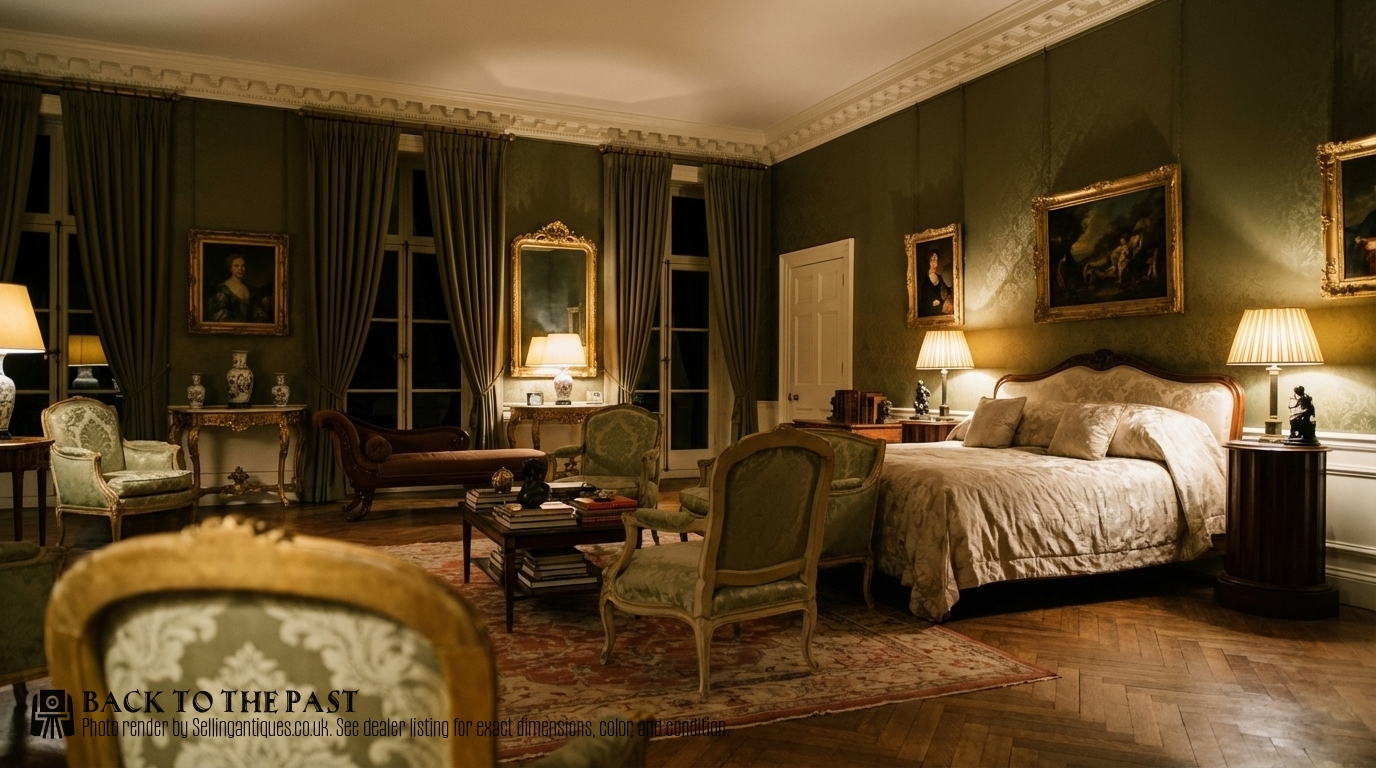
Empire Bedside Cabinets
When searching for empire bedside cabinets, collectors encounter formal forms rooted in the early nineteenth century alongside later revivals from the twentieth century. These pieces encompass bedside tables, commodes, pedestal cabinets, and side cabinets originating from French, Italian, and Scandinavian workshops.
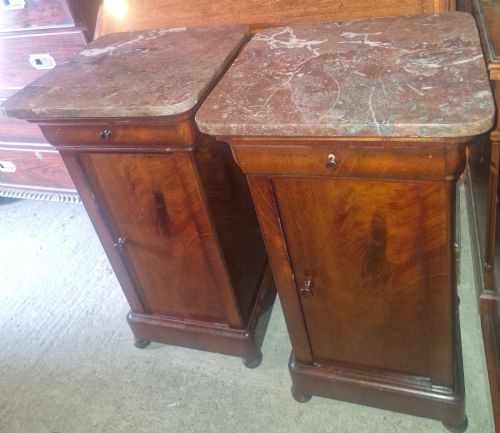
The most frequent variations on this page include mahogany, flame mahogany, and burr walnut structures, often constructed in matched pairs. Buyers also find cylindrical, hexagonal, and rectangular carcasses designed to sit beside a bed or function as small side tables.
Continental versions display strong neoclassical lines, frequently drawing inspiration from French Empire and Biedermeier design principles. Pieces span periods from the eighteen hundreds through the Victorian era and into nineteen-twenty revivals.
Materials and Construction
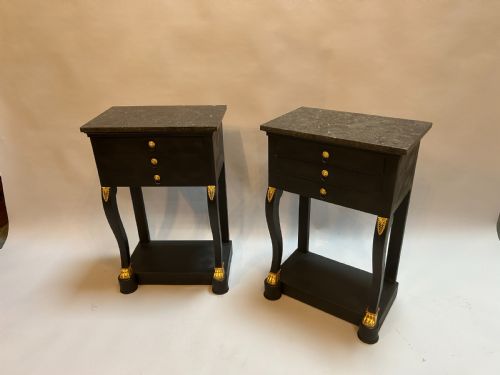
Cabinetmakers utilised dense timbers such as mahogany, flame mahogany, walnut, and sycamore to form the primary carcasses. These rich wood surfaces are frequently paired with contrasting ebonised details and topped with polished marble slabs.
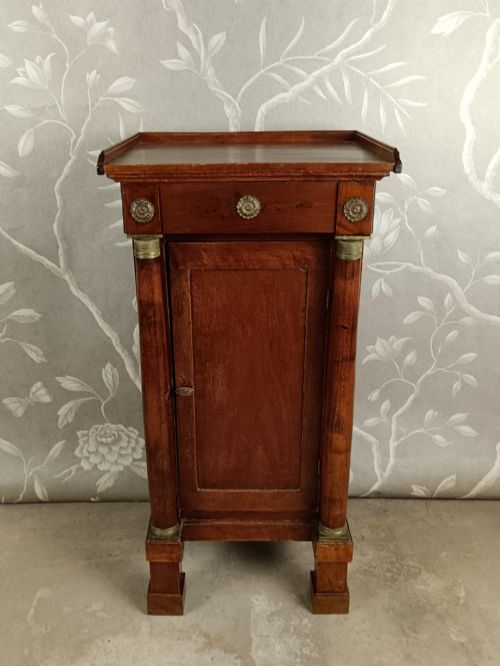
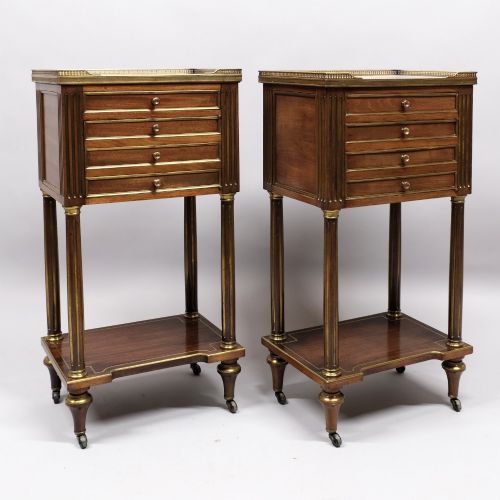
Cast brass and ormolu mounts provide structural accenting, framing drawer fronts and corners with classical motifs. Gilt metal hardware is secured to the wood to emphasise the symmetry and geometric rigour characteristic of the style.
Listings feature pieces spanning the nineteenth century, including Regency, Victorian, and Biedermeier examples alongside nineteen-twenty revivals.
Assessing Quality
Quality rests upon the selection of timber veneers, where highly figured flame mahogany or burr walnut displays an intentional symmetry across the facade. The depth and crispness of the cast ormolu or brass mounts also separate standard examples from finer commissions.
Construction methods determine longevity, visible in the precision of the joinery within drawers and the seamless fitting of marble tops to wooden bases. Original mounts and intact patination on the timber signify a higher grade of preservation.
The Empire Bedside Cabinets Glossary
- Ormolu
- Gilded bronze mounts applied to furniture surfaces for decorative contrast. This technique was widely utilised during the nineteenth century on neoclassical pieces.
- Biedermeier
- A central European style emphasising utilitarian comfort and clean architectural lines without excessive ornamentation. Furniture from this tradition often highlights natural wood grain.
- Commode
- A low chest of drawers or cabinet with a flat top. These forms often serve bedside or secondary storage functions in a bedroom.
- Flame mahogany
- Mahogany timber cut to produce a distinctive flickering grain pattern resembling flames. Cabinetmakers selected these veneers for prominent drawer fronts and tabletops.
- Neoclassical
- An artistic movement drawing inspiration from the classical art and architecture of ancient Greece and Rome. This aesthetic dictates the strict symmetry and column motifs seen on these cabinets.
Empire Bedside Cabinets: Frequently Asked Questions
Are empire bedside cabinets sold in pairs?
Many listings feature matching pairs, reflecting the original requirement for symmetrical bedside placement in formal bedrooms. Single cabinets also appear frequently.
Buyers seeking balanced bedside arrangements will find both historical pairs and twentieth-century revival sets across the inventory.
What wood types are common?
Mahogany and flame mahogany dominate the selection, often accompanied by burr walnut and sycamore. These dense timbers provide a dark, uniform background for decorative metal mounts.
Ebonised wood and marble tops frequently complete the material palette, adding weight and textural contrast to the designs.
How do I identify the period?
Early pieces date to the eighteen hundreds and the Regency era, displaying hand-cut joinery and heavy neoclassical proportions. Later revivals from the late nineteenth century and nineteen-twenty reproduce these forms with slight variations in construction.
Examining the internal drawer construction and the style of the brass mounts helps distinguish original nineteenth-century pieces from later revivals.
How do marble tops function?
Marble slabs provide a durable, cooling surface that protects the wood underneath from liquid and daily use. These stone inserts sit directly into the cabinet carcass.
White or grey marble variations appear on both cylindrical stands and rectangular bedside commodes.