


Embossed Brass Vessel
An embossed brass vessel brings weight and historic texture to a room, turning practical fireside containers and planters into focal points.
Embossed Brass Vessel
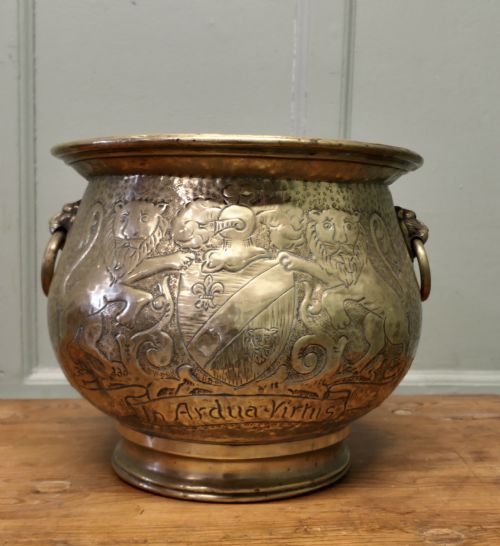
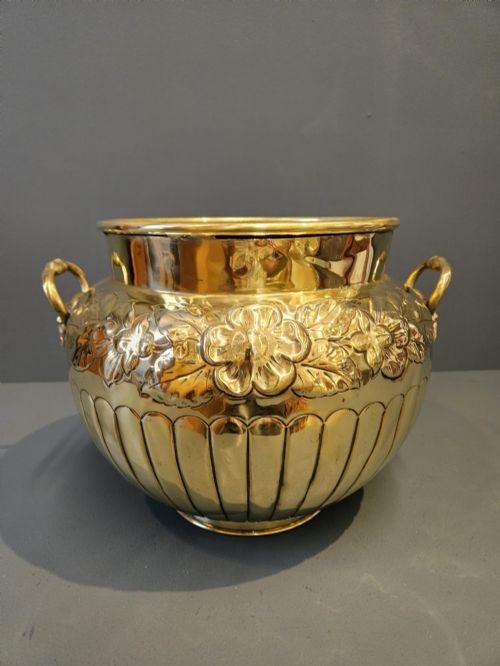
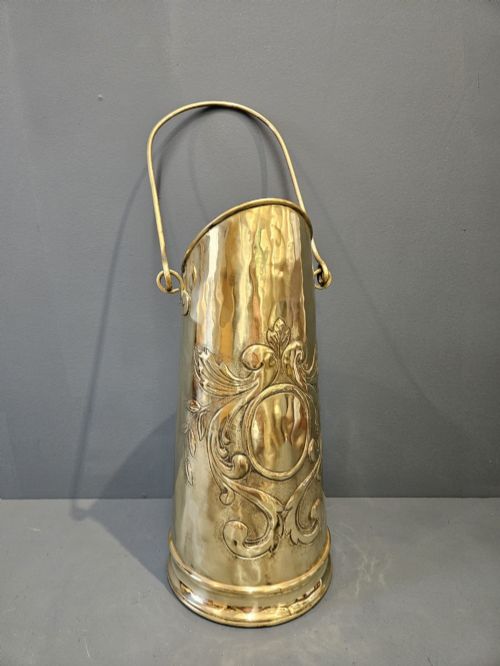
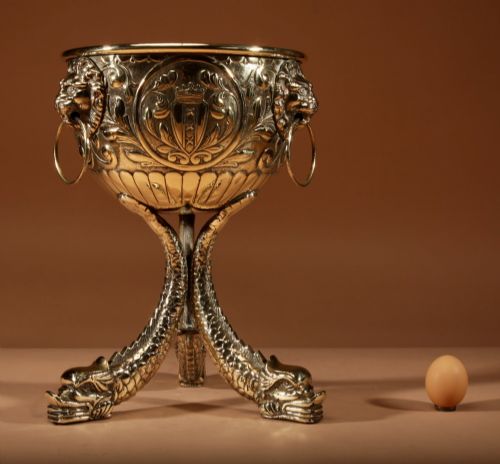
An embossed brass vessel serves primarily as a jardiniere, coal bucket, or vase, designed to hold plants, fuel, or flowers within period interiors. These objects range from compact Victorian table pieces to large floor-standing log bins produced across Europe and Asia.
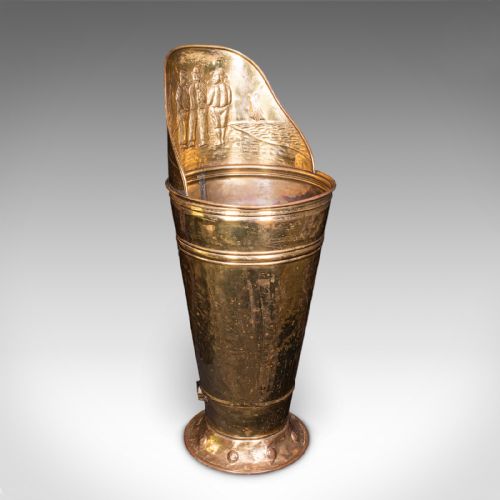
The selection centres heavily on nineteenth-century Victorian pieces alongside Dutch traditional designs and early twentieth-century dinanderie work. Buyers encounter various forms including cachepots, trophy vases, and umbrella stands shaped from metal sheets.
Makers utilised brass and copper extensively, sometimes pairing the metal bodies with ebonised wood handles or silver plate details. Styles span from Gothic revival and Art Nouveau curves to restrained French and Chinese Republic period aesthetics.
How they were made
Artisans formed these objects by hammering sheet metal over wooden moulds or casting structural elements like handles and feet separately. Workers then joined the components through soldering or riveting before applying surface decoration.
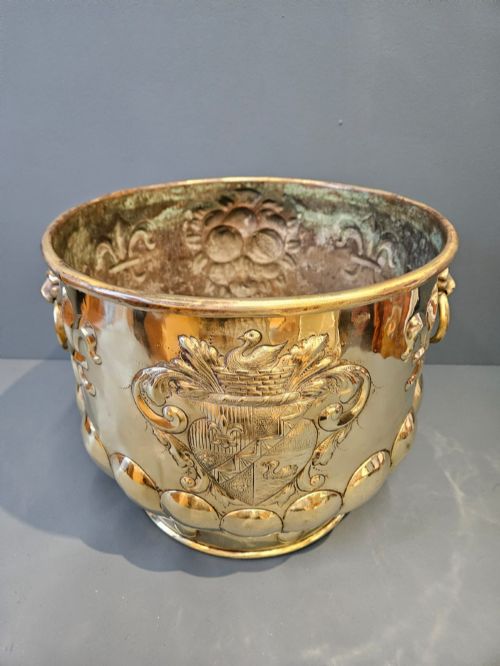
Embossing and chasing techniques created the raised patterns, crests, and shields visible across the metal surfaces. Craftsmen utilised punches and chisels from the reverse side to push the design outward into high relief.
Some nineteenth-century vessels secretly double as peat bins, proving that Victorians insisted on decorative dignity even for bog turf.
What varies in quality
Quality rests in the crispness of the hand-chased relief and the thickness of the original metal sheet. Heavy gauge brass holds its structural integrity better over generations of domestic use.
Detailing on handles, feet, and applied crests distinguishes standard production items from finer workshop pieces. Well-executed seams and integrated reinforcement bands indicate careful construction.
Benham & Froud
The Embossed Brass Vessel Glossary
- Dinanderie
- Metalware originating from Dinant in Belgium, designating beaten and embossed brass or copper decorative objects. The term applies broadly to historic vessels produced in this traditional manner.
- Jardiniere
- An ornamental stand or container designed to hold growing plants or flower pots. These vessels often feature waterproof liners or heavy metal walls.
- Cachepot
- A decorative outer pot or container that conceals a plain plant pot inside. These items prevent water damage to furniture surfaces.
- Coal scuttle
- A container used for holding coal near a fireplace, typically fitted with a hinged lid and carrying handles. Many period examples combine utilitarian function with ornate brass embossing.
Embossed Brass Vessel: Frequently Asked Questions
How do I clean an embossed brass vessel?
Dust the surface regularly with a soft dry cloth to prevent dirt accumulation in the recessed embossed details. Avoid harsh chemical polishes that strip away the aged patina accumulated over decades.
Gentle washing with warm soapy water removes stubborn grime without harming the metal. Dry the vessel thoroughly afterwards to prevent water spotting.
Can I use these vessels for real plants?
Many of these metal containers served as jardinieres and cachepots designed specifically to hold plants. Metal can react to constant moisture, so checking for protective interior liners is advisable.
Placing a modern plastic pot inside the antique vessel protects the historic brass from internal corrosion and soil contact.
What is the difference between brass and copper vessels?
Brass is an alloy of copper and zinc, yielding a bright golden hue that darkens gracefully with age. Copper contains no zinc, displaying a distinct reddish-brown tone.
Both metals appeared frequently in nineteenth-century domestic wares, sometimes combined within the same piece through contrasting rims or handles.
How do I date an antique brass vessel?
Stylistic indicators such as Gothic revival motifs or Art Nouveau curves point towards specific nineteenth and early twentieth-century decades. Construction methods, including hand-beating versus machine stamping, also suggest the period of origin.
Examining fixings like rivets, screws, and solder joints helps distinguish older handmade pieces from later reproductions.