


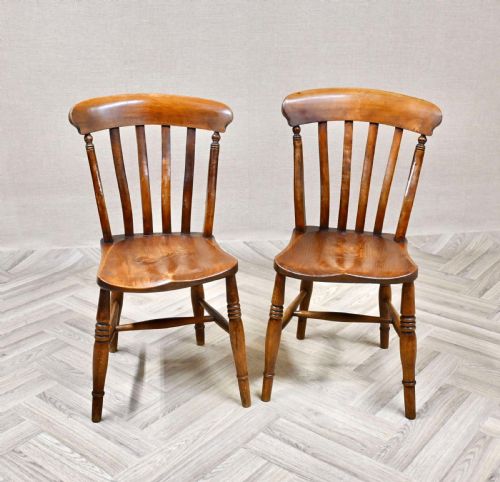
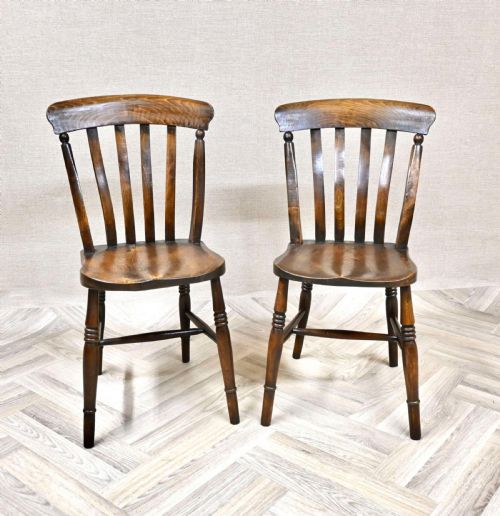
Elm Wooden Kitchen Chairs
Elm wooden kitchen chairs combine robust country utility with enduring regional forms, offering daily strength and timeless timber character.
Elm Wooden Kitchen Chairs
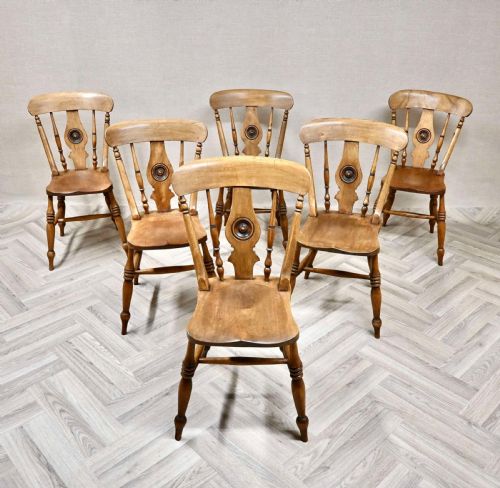
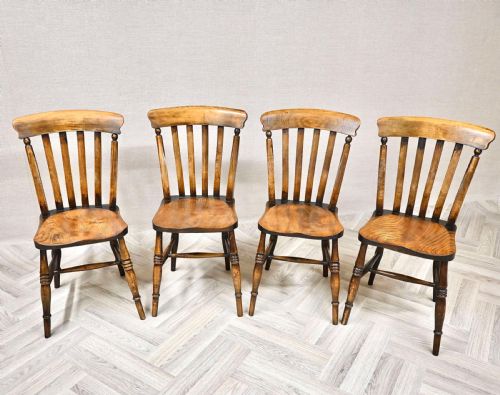
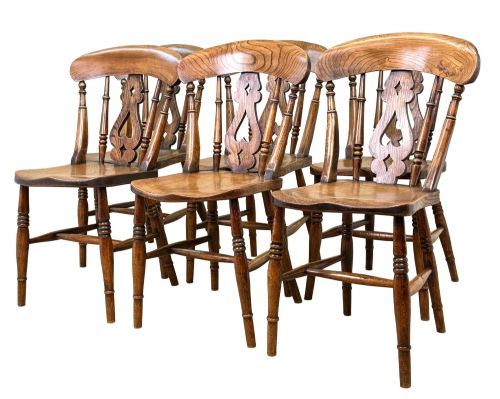
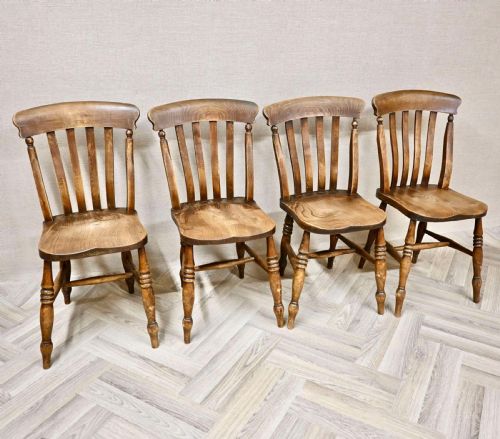
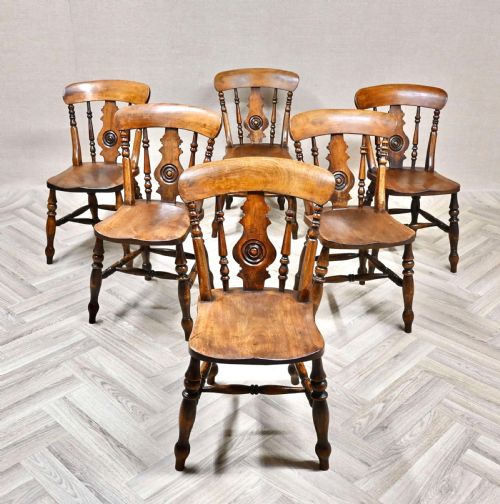
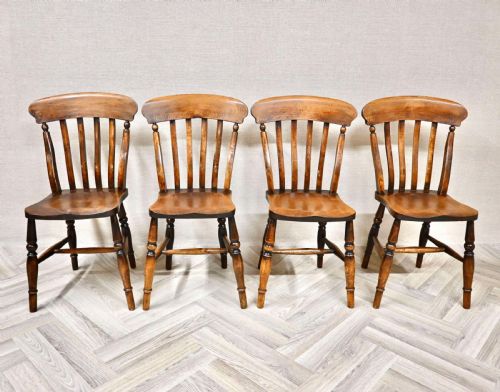
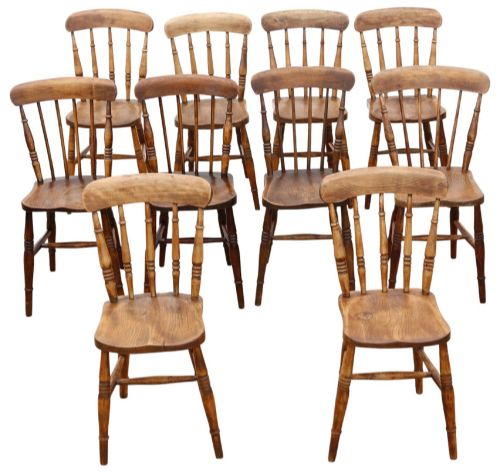
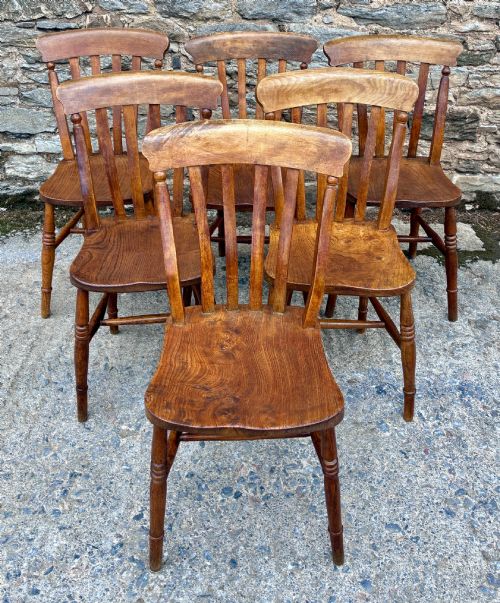
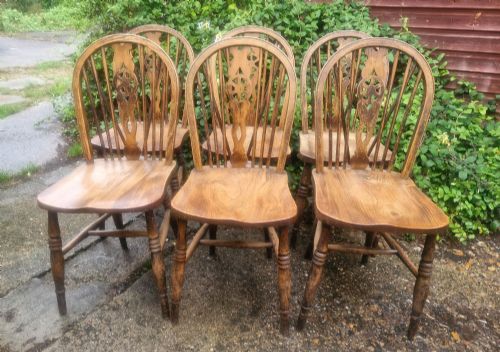
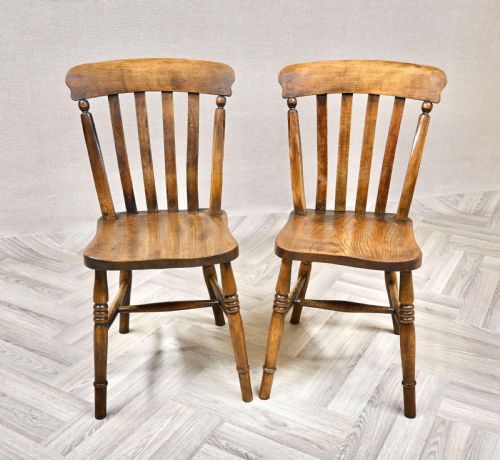
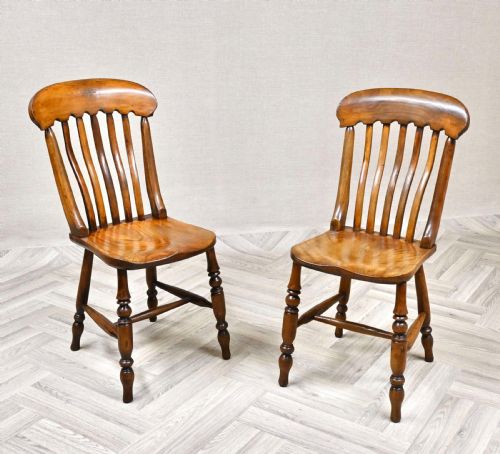
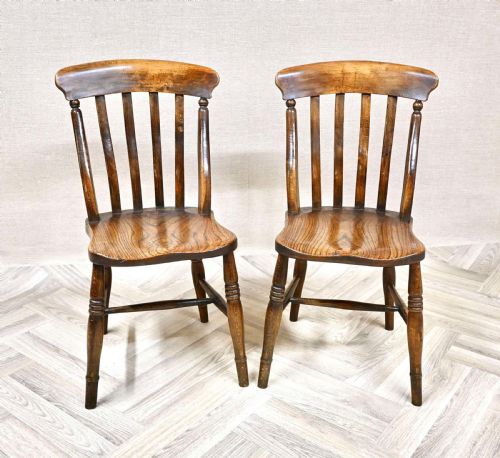
Elm wooden kitchen chairs comprise robust seating forms produced primarily across the nineteenth and early twentieth centuries for domestic use. Buyers encounter regional Windsor variants, including stick backs, hoop backs, wheel backs, and lath backs, alongside armchairs and dining sets.
The selections span English Country, Victorian Country, and Edwardian styles, frequently showing traditional farmhouse or utility characteristics. Makers utilised sturdy local timbers to construct practical furniture designed for heavy household service.
Construction and Materials
Craftsmen paired solid elm seats with complementary woods such as beech, ash, oak, and yew for the spindles, legs, and bentwood bows. Elm provided an interlocking grain that resisted splitting under the heavy downward pressure of the seat.
Turned components and steam-bent uprights were joined using traditional pegged and wedged mortise and tenon construction. This method permitted slight structural flexibility while maintaining rigid long-term durability across the frame.
Some nineteenth-century makers incorporated subtle thumb depressions into the solid elm seats to improve initial comfort.
Design and Material Quality
Quality differences emerge in the selection of timber figures and the crispness of the wood turnings on the legs and spindles. Finely figured elm seats show richer grain patterns and deeper surface patination built through decades of use.
Structural integrity depends on the retention of original components, matching sets, and balanced proportions within the hoop or lath backs. Greater harmony in harlequin or matched sets indicates careful historical curation by dealers.
The Elm Wooden Kitchen Chairs Glossary
- Windsor
- A chair built with a solid wooden saddle-shaped seat into which the legs and back spindles are separately socketed. This construction method provides exceptional structural strength.
- Crinoline stretcher
- An arched underframe connecting the legs of a chair to provide rigidity. It gets its name from the hooped shape resembling nineteenth-century petticoats.
- Lath back
- A chair back featuring a central vertical wooden slat or splat flanked by spindles. It offers solid lumbar support while retaining an open profile.
- Harlequin set
- A collection of chairs that share similar periods, styles, and materials but were not originally made as one group. They match in overall character rather than precise design.
- Wheel back
- A Windsor chair variation featuring a pierced wheel motif incorporated into the wooden back splat. The design gained popularity during the Victorian era.
Elm Wooden Kitchen Chairs: Frequently Asked Questions
What is a Windsor kitchen chair?
A Windsor kitchen chair is a traditional seat featuring distinct turned legs and spindles socketed directly into a solid carved wooden base.
These chairs were produced in various regional English styles for practical household environments.
How do I care for antique elm furniture?
Antique elm requires minimal maintenance using a soft, dry cloth to remove dust and occasional application of natural wax.
Keep wooden chairs away from direct heat sources and dramatic humidity shifts to prevent timber movement.
Are these chairs comfortable for daily dining?
Elm kitchen chairs feature ergonomically scooped wooden seats designed to distribute weight comfortably during long sittings.
Many owners add loose cushions for extra softness while preserving the visible timber surface.
How can I date an old wooden chair?
Dating relies on examining tool marks, timber shrinkage patterns, joinery methods, and the specific regional style of the turnings.
Nineteenth-century examples often show hand-turned components and deep surface patination from generational use.