

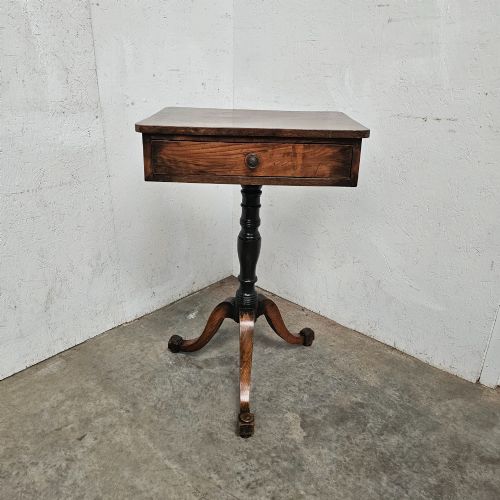
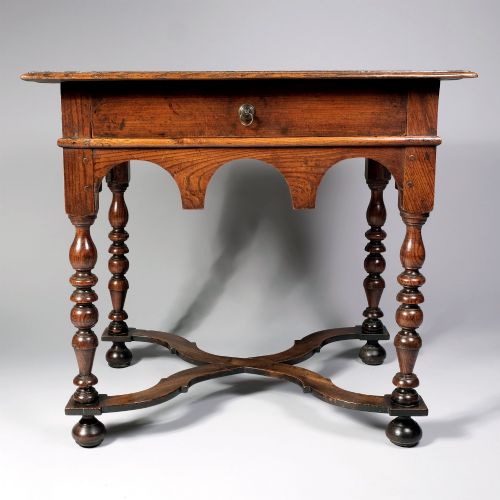


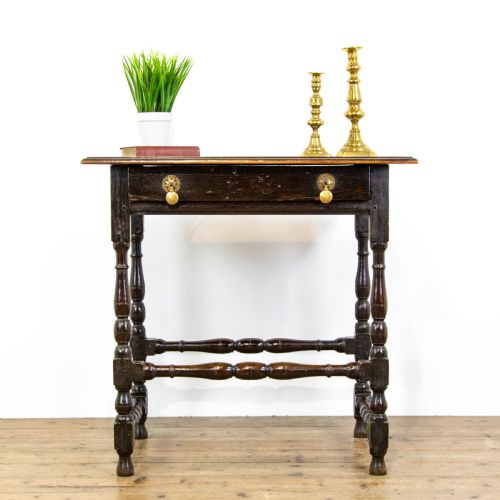
Elm Wood Drawer Table
An elm wood drawer table brings robust domestic utility and rich grain into a room, offering practical surface space alongside concealed storage.
Elm Wood Drawer Table
When you search for an elm wood drawer table, you encounter pieces spanning the seventeenth through the nineteenth centuries, drawing on English, European, and Chinese traditions. The selection includes side tables, console tables, sofa tables, and compact tabletop chests incorporating integrated drawers.
English country examples lean towards rustic farmhouse or Georgian vernacular styles, often combining elm with fruitwood or yew. Chinese provincial and Qing dynasty pieces present distinctive altar and console forms with carved details.
The most common forms on this page are side tables and console tables from the eighteenth and nineteenth centuries. These utilitarian items served everyday domestic roles in kitchens, parlours, and workshops before becoming decorative pieces.
What varies in quality
Quality rests in the figure and selection of the timber, where rich burr or figured grain elevates a provincial side table or occasional piece. The crispness of hand-cut joints and the retention of original brass drawer furniture also distinguish finer workshops from utilitarian vernacular production.
Proportion and integrity dictate value, favouring pieces that retain their original timber surfaces, untouched drawer linings, and structural stability without excessive later intervention.
Elm Wood Drawer Table Retail Price Guide 2026
Typical asking prices for elm wood drawer table among the pieces listed under this phrase on Sellingantiques today, from the lower quarter to the upper quarter. They describe what is for sale here now, not the wider market.
One clever eighteenth-century elm piece hides a chamber pot inside the polite disguise of a small Georgian bedside chest.
The Elm Wood Drawer Table Glossary
- Elm
- A durable hardwood characterised by a twisting grain pattern and warm brown colour. Cabinet makers valued it for seats and tables that required resistance to splitting.
- Side table
- A small table designed to stand against a wall, typically featuring one or more drawers beneath the top surface. These versatile items served domestic storage needs in various rooms.
- Console table
- A table supported by wall brackets or legs, often placed in hallways or reception rooms. Chinese examples in this form feature structured frames and carved aprons.
- Sofa table
- A rectangular occasional table designed to stand in front of or beside a sofa, usually fitted with drop leaves and small drawers. The Regency period produced refined versions in figured timbers.
- Close stool
- A piece of furniture enclosing a chamber pot, historically disguised as a small chest or bedside cabinet. Eighteenth-century examples often utilised elm for strength.
Elm Wood Drawer Table: Frequently Asked Questions
What is an elm wood drawer table used for?
These tables provide a sturdy surface for lamps, books, or display objects while offering enclosed storage in drawers for small household items. They function effectively as hall tables, bedside surfaces, or compact desks.
Historically, utilitarian versions served in kitchens and workshops, whereas finer Georgian and Regency examples furnished parlours and drawing rooms.
How do I care for antique elm furniture?
Maintain the wood by applying a natural beeswax polish occasionally and buffing it gently with a soft cloth. Avoid placing the table near direct heat sources or in strong sunlight.
Stable indoor humidity prevents the timber from drying out or splitting, preserving the historical joints and surface patina.
How can I tell English elm from Chinese elm?
English elm often displays a coarser, more interlocking grain figure and frequently appears alongside secondary woods like fruitwood in farmhouse furniture. Chinese elm generally exhibits a tighter, quieter grain pattern on altar styles and provincial console tables.
Construction details and joinery methods also differ between European vernacular traditions and Qing dynasty cabinet making.
What period do these tables come from?
The listings span from the late seventeenth-century William and Mary period through the Georgian era and the nineteenth century. Twentieth-century vernacular pieces also appear alongside earlier designs.
Stylistic markers such as leg turning, apron carving, and drawer construction help indicate the likely decade of manufacture.