

Elm Spindle Chair
An elm spindle chair brings vernacular craft and durable timber into domestic spaces.
Elm Spindle Chair
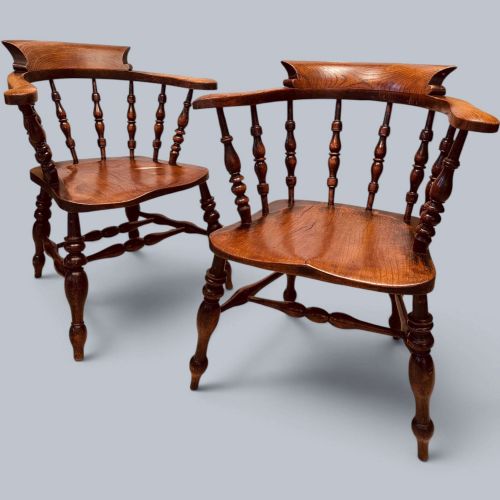
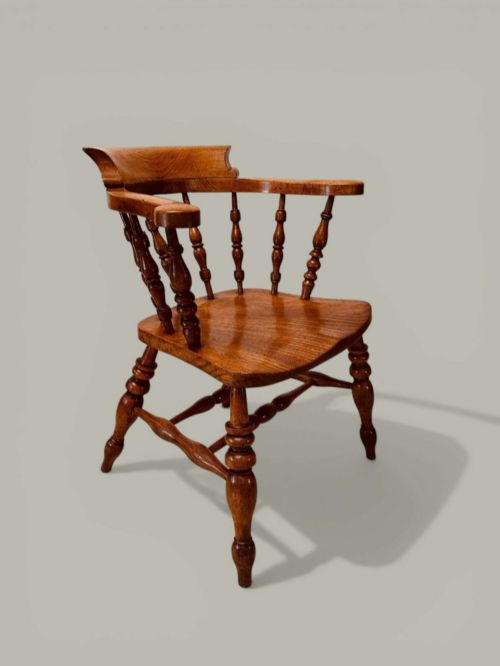
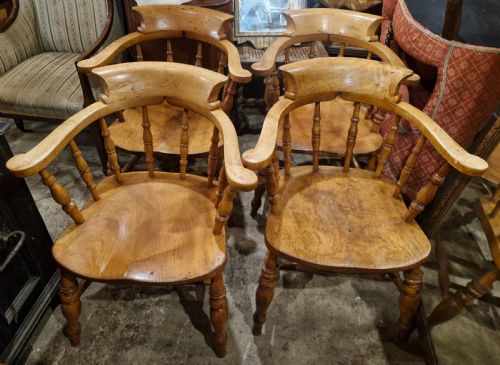
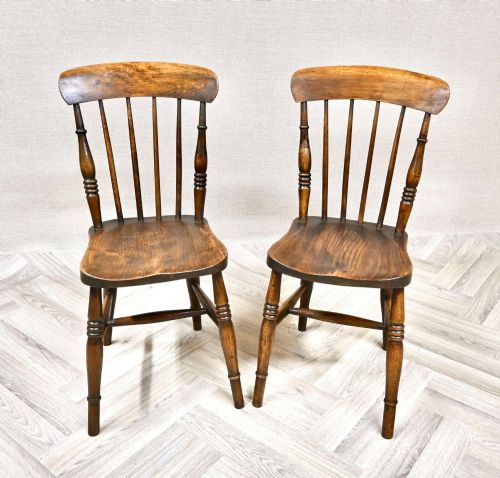
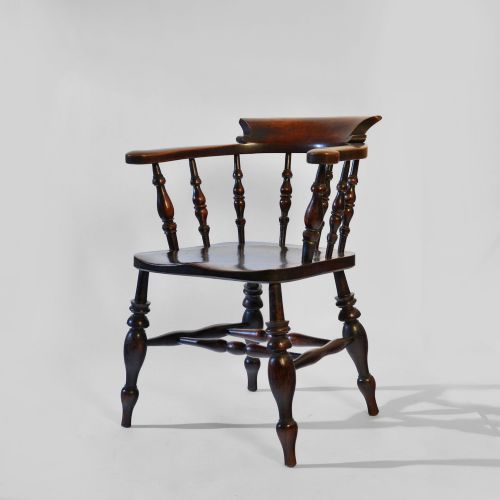
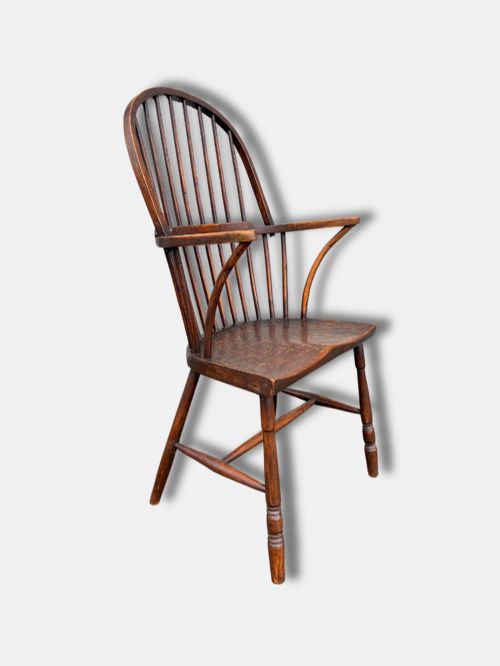
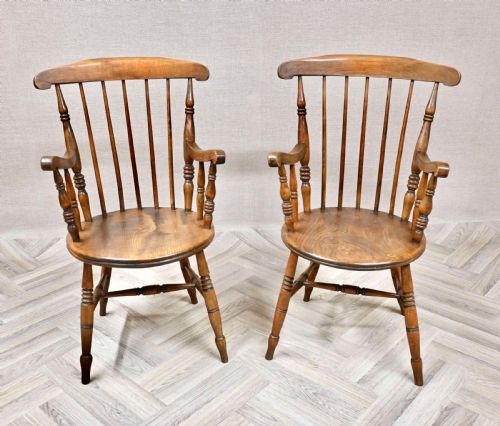
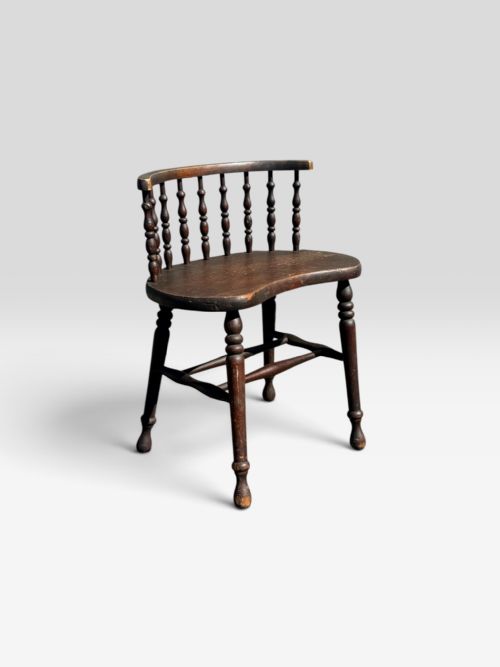
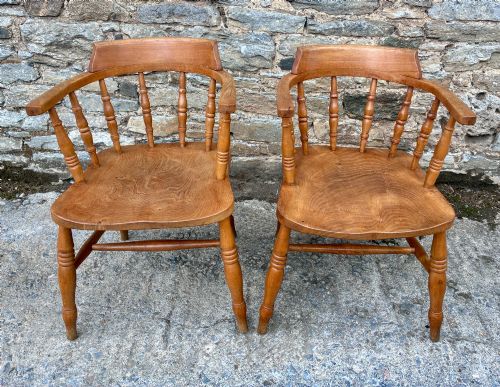
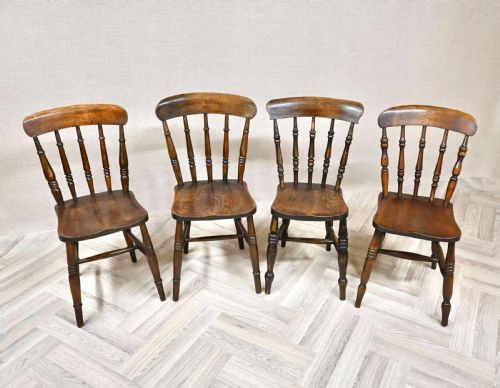
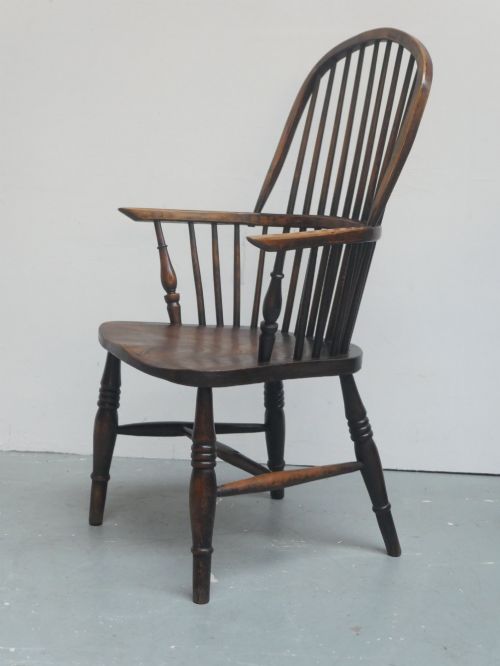
When searching for an elm spindle chair, buyers examine traditional seating forms originating from English country workshops and farmhouses across several centuries. These pieces encompass windsor armchairs, captain chairs, smoker bows, and stick-back dining chairs intended for everyday domestic use.
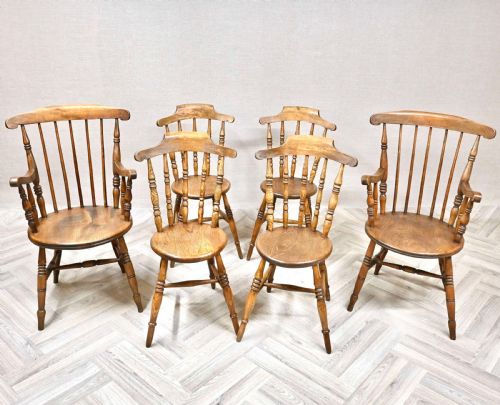
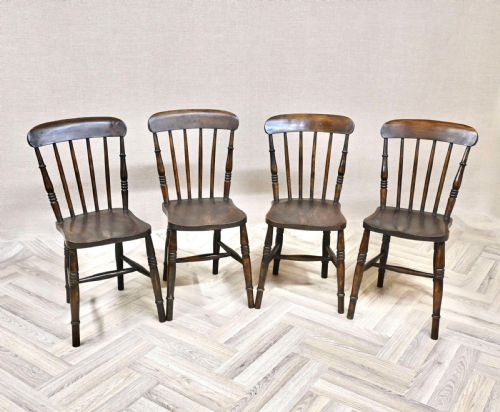
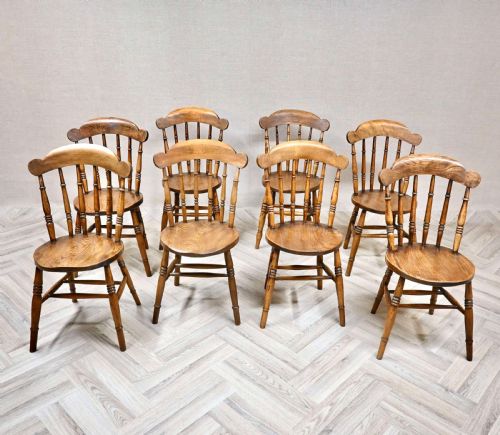
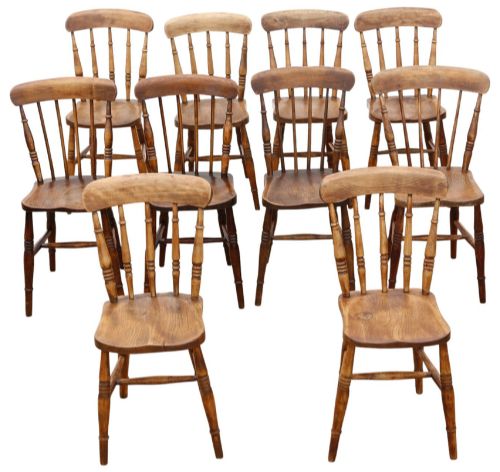
The most common examples on this page date from the nineteenth century, including Victorian kitchen chairs and rustic farmhouse seating. Forms range from single armchairs to matched or harlequin sets suitable for dining tables and desks.
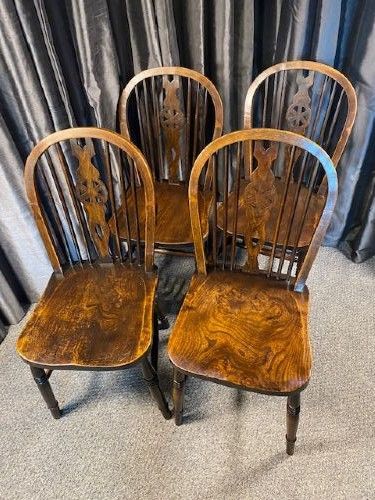
Regional variations appear across the selection, featuring hoop-back, comb-back, and spindle-and-lyre configurations. Makers constructed these seats for utility, employing sturdy timbers that survived generations of practical service.
How they were made
Makers constructed these chairs primarily using solid elm for seats, paired with ash, beech, or oak for spindles, legs, and bentwood components. Some regional examples incorporate laburnum or rush to form resilient, tactile seating surfaces.
Traditional bodging techniques involved turning green wood on pole lathes and steam-bending components such as hoops and armbows. Frameworks relied on wedged mortise and tenon joints to secure upright spindles into thick sculpted seats.
Elm Spindle Chair Retail Price Guide 2026
Typical asking prices for elm spindle chair among the pieces listed under this phrase on Sellingantiques today, from the lower quarter to the upper quarter. They describe what is for sale here now, not the wider market.
Several kitchen chairs arrive in harlequin sets, proving that mismatched dining companions have bickered happily since Victorian times.
What varies in quality
Construction fidelity and timber selection distinguish individual chairs, particularly in the thickness of the elm seat and the tapering of turned spindles. Pieces retaining crisp tool marks and original structural wedging demonstrate superior craftsmanship from regional workshops.
Patina and surface preservation separate standard utilitarian seating from exceptional survivals. Chairs showing harmonious timber grain without excessive replacement parts or intrusive repairs command greater attention from collectors.
J Spencer
The Elm Spindle Chair Glossary
- Windsor chair
- A wooden chair constructed with a solid sculpted seat into which the legs and back spindles are independently inserted. This method creates a sturdy frame without relying on traditional box stretchers.
- Crinoline stretcher
- An arched underframe connecting the legs of a windsor chair to provide extra stability. It often curves outward beneath the seat.
- Smoker's bow
- A low-backed Windsor armchair with a continuous curved armrail supported by turned spindles. These were common in offices, inns, and farmhouse kitchens during the nineteenth century.
- Comb-back
- A windsor chair variation where the top rail resembles the teeth of a comb, extending the vertical spindles upward. This form frequently appears on eighteenth-century examples.
- Vernacular
- Objects built by local craftsmen following regional traditions rather than formal academic design patterns. These pieces prioritise functional utility and local material availability.
Elm Spindle Chair: Frequently Asked Questions
What is an elm spindle chair?
An elm spindle chair is a traditional wooden seat featuring a solid elm timber base and upright turned spindles forming the backrest.
These pieces emerged from English country workshops to serve practical roles in farmhouses, kitchens, and studies.
How were windsor chairs used?
These chairs functioned primarily as everyday seating around kitchen tables, farmhouse hearths, and writing desks.
Their robust construction allowed them to withstand heavy domestic use across generations.
How do I live with an antique elm chair?
Place the chair away from direct heat sources and rapid temperature fluctuations to prevent timber movement.
Maintain the wood using traditional waxes to preserve the tactile surface and historic patina.
How can I tell different periods apart?
Earlier eighteenth-century examples often display comb-backs or high hoops with ash components, while Victorian versions frequently incorporate beech frames and steam-bent smoker bow rails.
Turned leg profiles and stretcher designs also shift from early crinoline arches to later H-stretchers.