

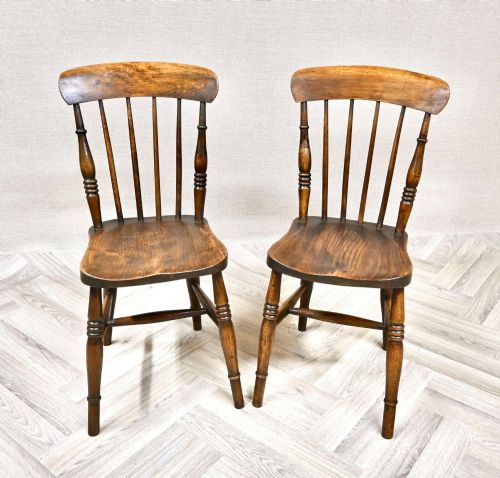
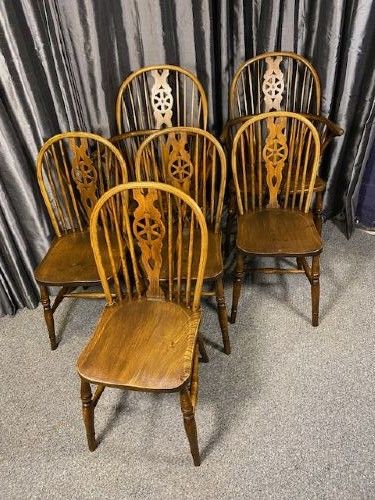
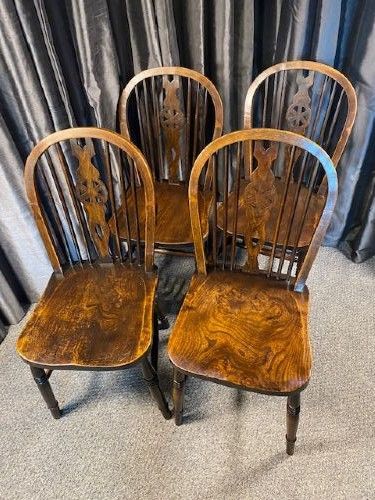
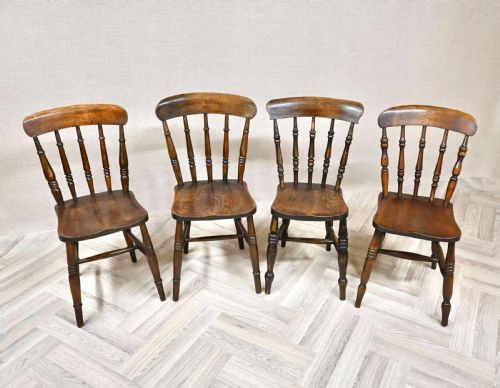
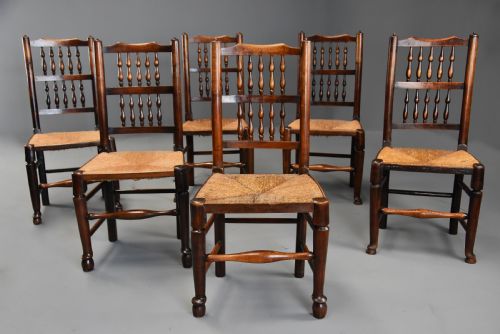
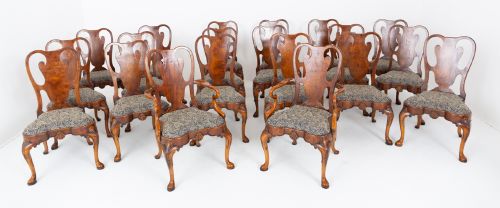
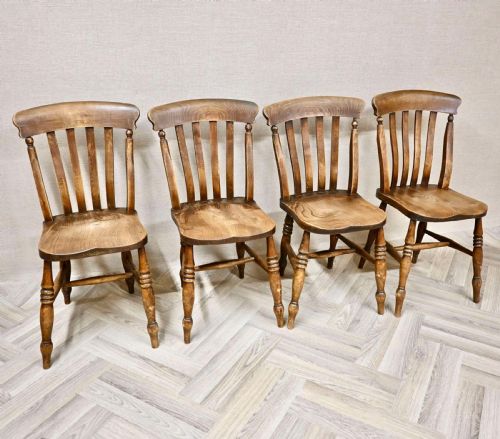
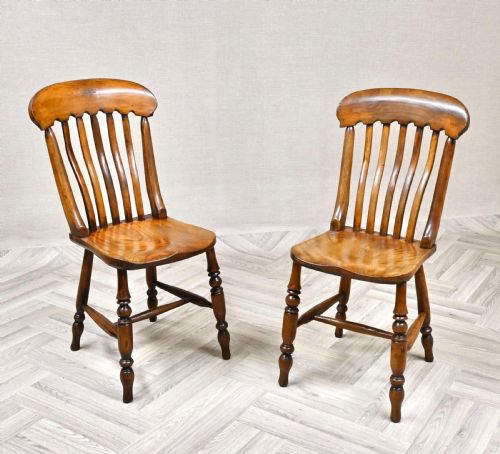
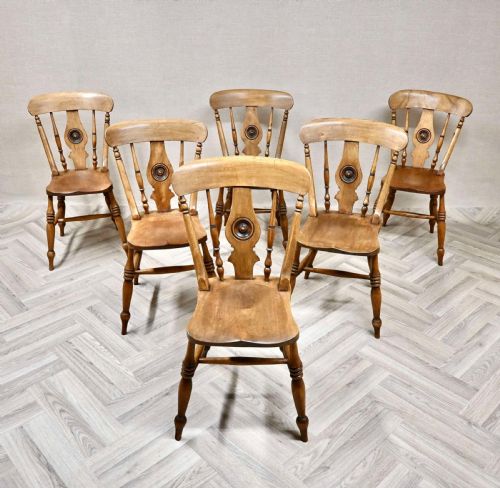
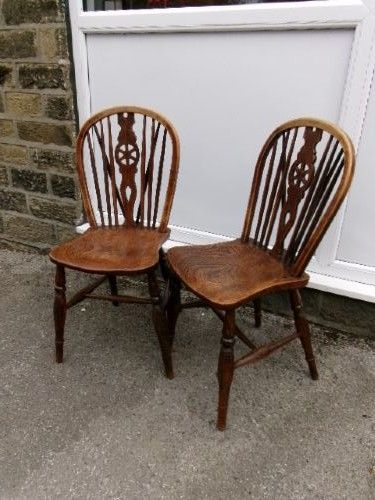
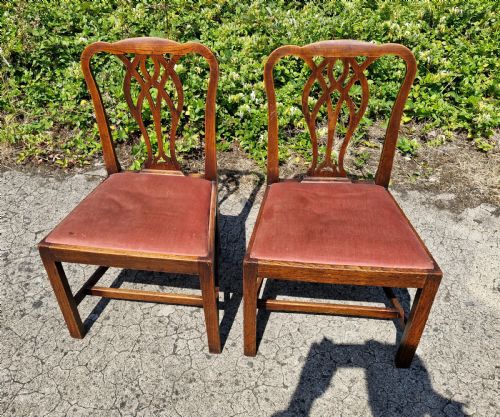
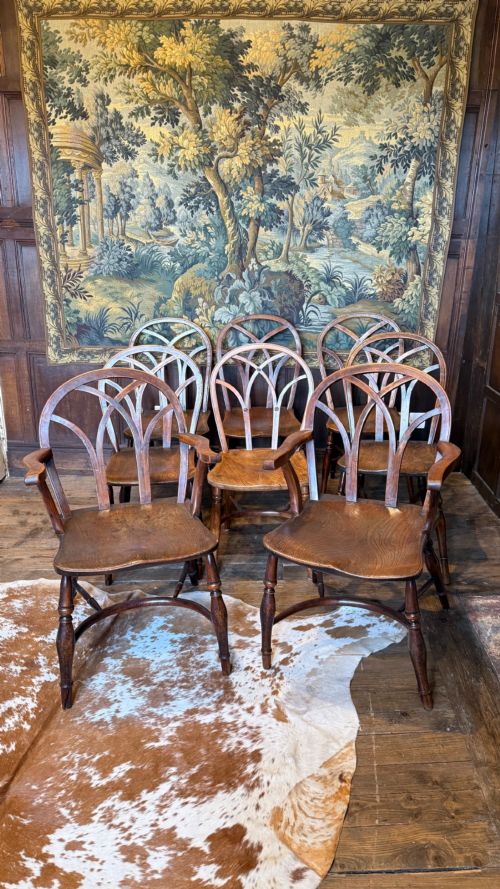
Elm Seat Side Chairs
Elm seat side chairs bring robust vernacular character and tactile country comfort to any room.
Elm Seat Side Chairs
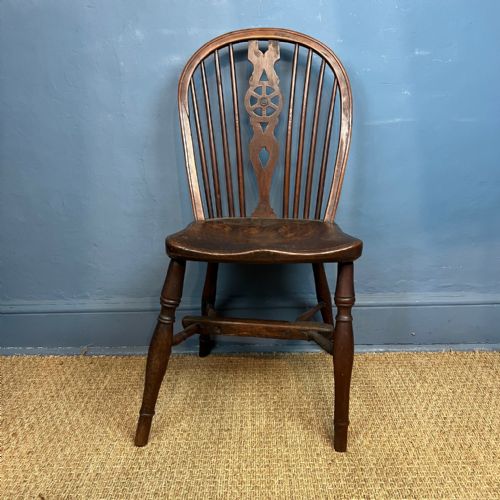
Elm seat side chairs represent the practical domestic seating produced across British workshops during the eighteenth and nineteenth centuries. These pieces encompass regional variations from sturdy kitchen dining chairs to spindleback and ladderback forms designed for everyday use.
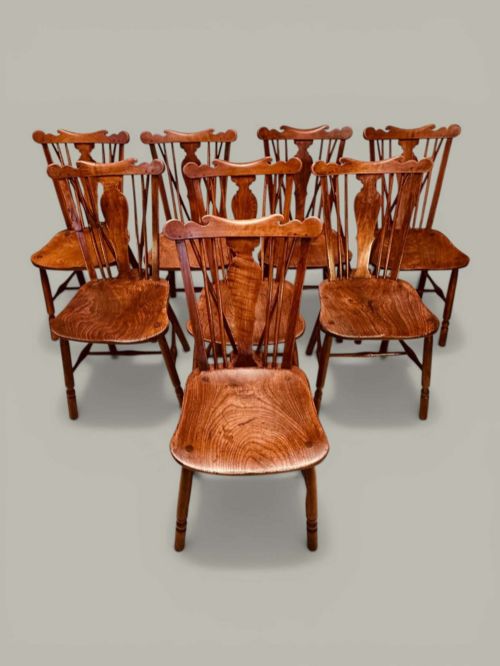
Buyers encountering this selection will most frequently find nineteenth century and Victorian examples rooted in English country traditions. Many pieces emerge as matched sets or pairs intended for farmhouse dining tables and reception halls.
How they were made
Craftsmen built these chairs by combining durable domestic woods, pairing solid elm for the contoured seats with complementary timbers like beech, ash or oak for the turned legs and spindles. This mixed construction utilised the specific mechanical strengths of each wood to handle daily wear.
Makers shaped the heavy timber seats using adzes and scorps to create comfortable hollowed forms before pegging and wedging the structural joints. Selected examples incorporate rush seating or retain remnants of early finishes such as red lacquer.
Elm Seat Side Chairs Retail Price Guide 2026
Typical asking prices for elm seat side chairs among the pieces listed under this phrase on Sellingantiques today, from the lower quarter to the upper quarter. They describe what is for sale here now, not the wider market.
Listings span the eighteenth century through the twentieth century, featuring traditional woods including elm, beech, ash, oak and rush.
What varies in quality
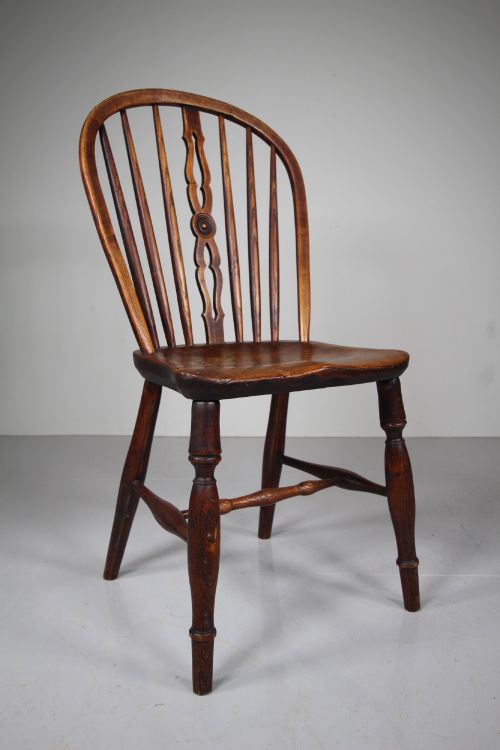
The distinction between ordinary utility seating and superior examples rests upon the depth of the timber grain, the crispness of the spindle turnings and the preservation of a rich patination through decades of use. Chairs displaying robust double stretchers and well balanced proportions demonstrate higher workshop standards.
Completeness of a matched set heavily influences the standing of these pieces, particularly when found in larger groupings rather than single chairs. The integrity of the original wood grain and the comfort achieved in the sculpted seat further separate standard vernacular items from finer regional interpretations.
Worksop
The Elm Seat Side Chairs Glossary
- Windsor
- A traditional chair constructed with a solid wooden seat into which the legs and back spindles are directly tenoned. These sturdy pieces frequently feature bow backs and sculpted saddle seats.
- Spindle back
- A chair design utilising slender turned vertical wooden rods within the backrest to provide light yet rigid support. This construction method derives from vernacular country chair making traditions.
- Ladderback
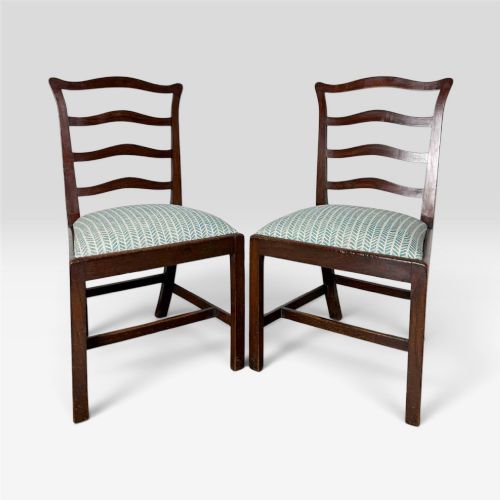
- A regional seating style characterised by horizontal arched slats spanning the rear upright posts. These traditional chairs often incorporate woven rush pads.
- Lathe back
- A country chair variation incorporating steam bent or turned wooden rails across the upper back frame. The style is closely associated with nineteenth century kitchen seating.
- Patina
- The surface sheen and colour depth developed by timber over long periods through handling, polishing and natural ageing. Good patination reveals the character of the underlying grain.
Elm Seat Side Chairs: Frequently Asked Questions
What defines an elm seat side chair?
These chairs combine a solid elm seat with a wooden frame designed for dining and general household utility without armrests.
They draw upon regional British vernacular traditions, ranging from Windsor kitchen seating to ladderback and spindleback forms.
How were these chairs used historically?
Households placed them around farmhouse kitchen tables, in reception halls and within everyday living spaces for dining and domestic tasks.
Their robust construction allowed them to withstand heavy daily wear across generations of practical use.
How do I live with antique country chairs?
You can integrate them around modern or traditional dining tables to introduce organic texture and historical warmth to a room.
Maintaining stable indoor humidity helps preserve the solid timber and prevents shrinkage in the joined components.
How can I tell the period of a chair?
Dating relies on observing construction techniques, tool marks, timber selection and the stylistic evolution of the spindle and leg turnings.
Eighteenth century examples often show greater hand shaping, while Victorian pieces reflect more standardised workshop production methods.