
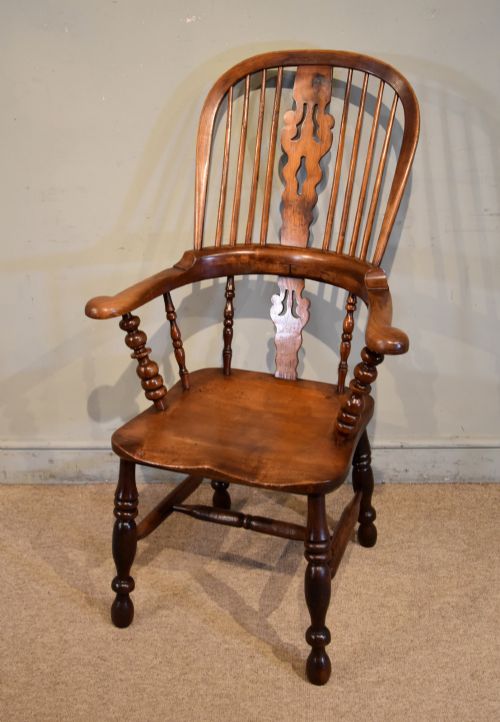
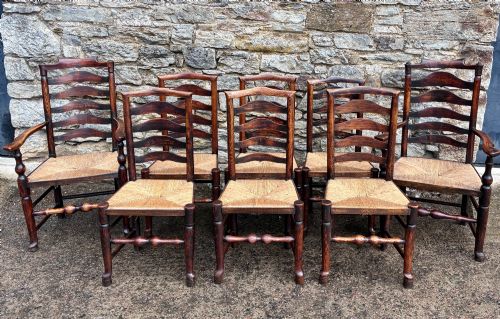
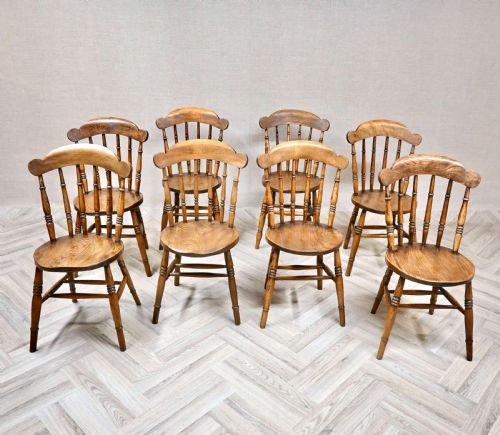
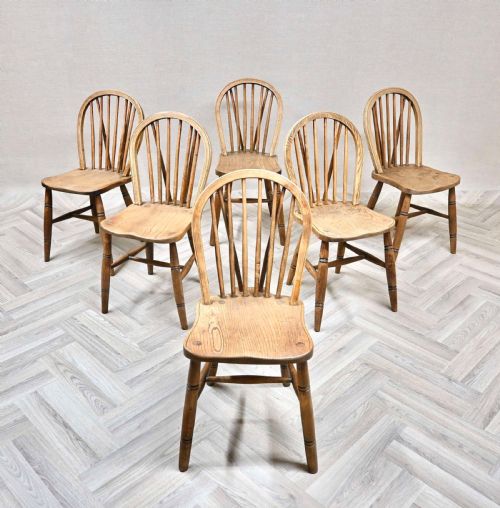

Elm Seat Kitchen Chairs
Elm seat kitchen chairs are sturdy vernacular dining seats from the nineteenth century prized for their sculpted timber saddles and robust country craftsmanship.
Elm Seat Kitchen Chairs
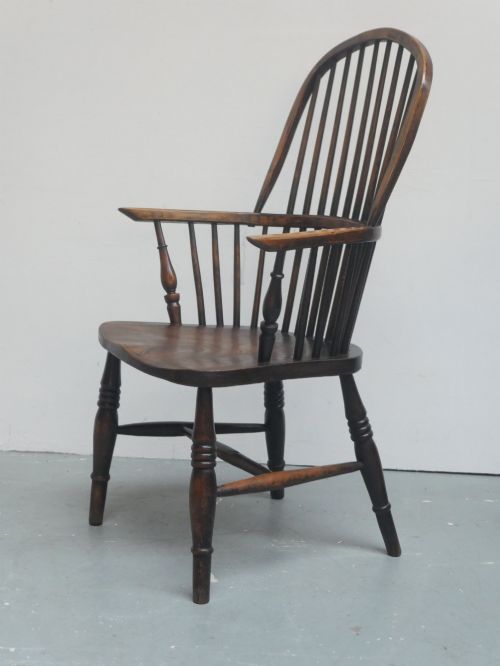
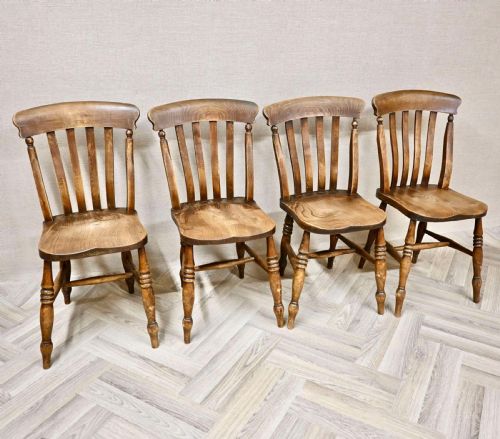
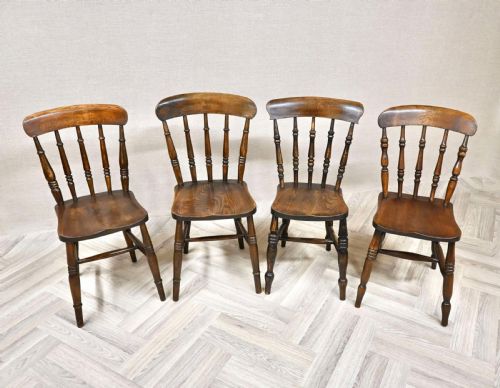
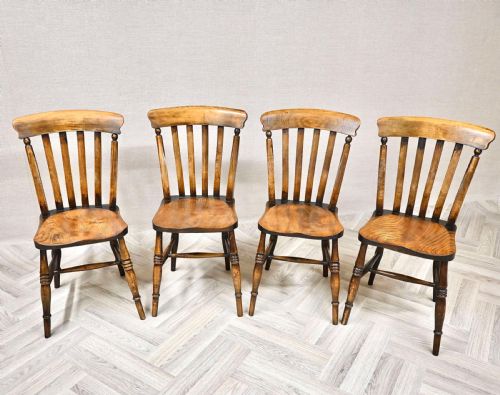
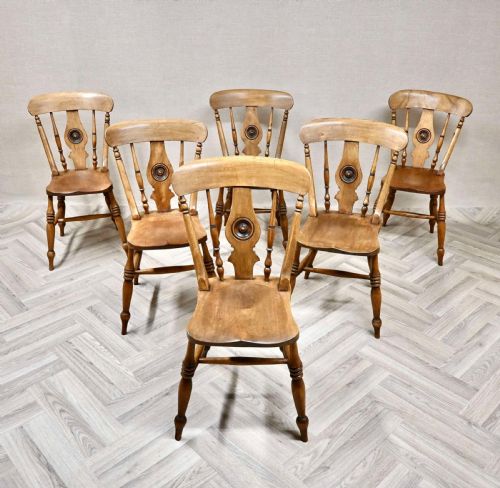
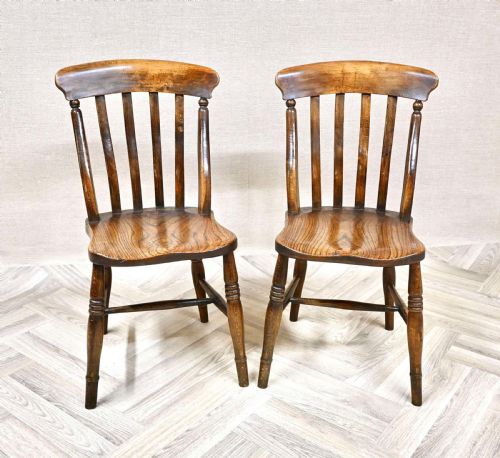
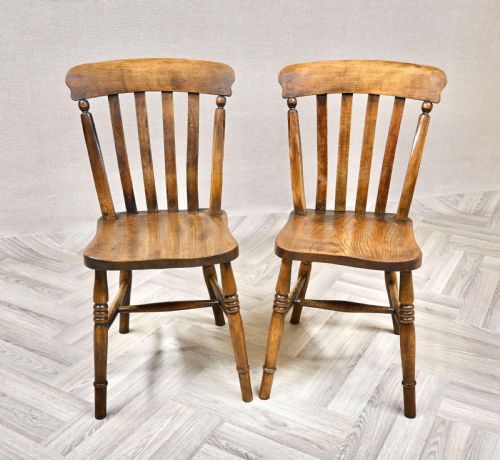
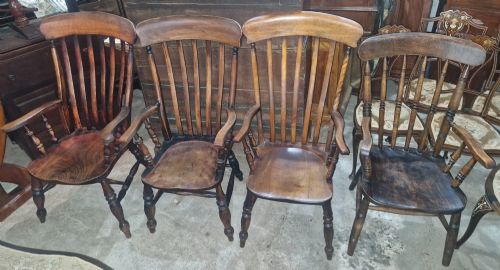
Elm seat kitchen chairs embody the practical utilitarian design of nineteenth-century English country houses and farmhouses. They frequently appear as matching sets of four or six, alongside occasional carvers and armchairs.
The inventory on this page spans the Victorian era through the early twentieth century, encompassing styles such as English Country Vernacular and Rustic Farmhouse. Windsor variations dominate the selection, showing distinct regional framing traditions.
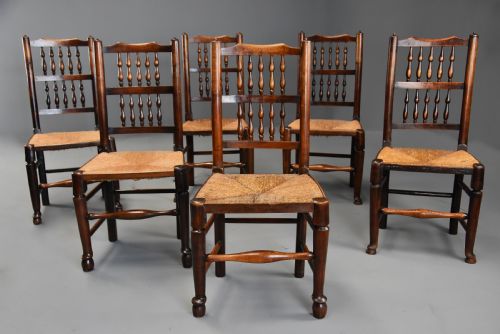
Common regional forms include wheelbacks, lathbacks, hoop and stick backs, and spindle backs. These sturdy seats served hardworking domestic spaces before transitioning into popular items for contemporary dining rooms.
Materials and construction methods
Makers paired robust elm for the plank seats with flexible woods like beech and ash for the steam-bent hoops, backs, and turned legs. Elm was chosen for the seat because its interlocking grain resisted splitting under heavy daily use.
Traditional Windsor construction involved boring holes directly into the solid timber seat slab to receive the undercarriage legs and the upright spindles. Additional strength came from H-stretchers or double stretchers wedged between the legs.
Makers occasionally incorporated rush seating alongside solid timber planks, while surface finishes relied on natural wax patination developed through generations of domestic use.
Generations of farmhouse dinners left elm seats deeply dished and beautifully polished by everyday friction.
Distinctions in quality and execution
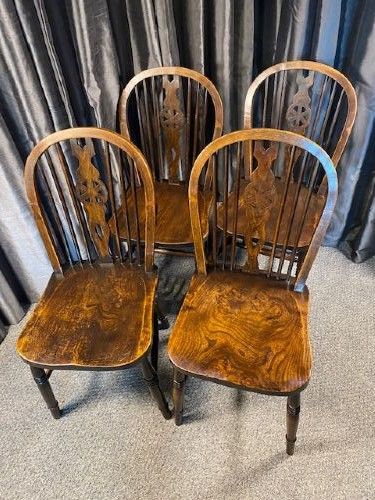
Quality in these vernacular pieces rests upon the depth of the saddle sculpting in the elm seat and the harmony of the turned components. Superior examples display deeply dished plank seats that offer genuine ergonomic comfort.
The integrity of the structural joinery dictates long-term stability, particularly where the spindles meet the seat and the top rail. Tighter tolerances in wedged tenons and well-matched timber grains elevate a set above standard utilitarian production.
The Elm Seat Kitchen Chairs Glossary
- Windsor chair
- A wooden chair built with a thick solid timber seat into which the legs and back spindles are separately inserted. This structural method creates a resilient framework without requiring a heavy internal chassis.
- Penny seat
- A saddle-shaped wooden seat base featuring a distinct circular depression carved into the centre. This specific sculptural shaping provides enhanced comfort for extended sitting.
- Lathback
- A chair back featuring flat wooden slats or laths riveted horizontally or vertically across the frame. It represents a common regional variation of the traditional stick back design.
- Stretcher
- A horizontal wooden brace connecting the legs of a chair to provide lateral stability. Double stretchers offer extra reinforcement in heavily utilised farmhouse seating.
- Carver
- An armchair designed with supportive armrests, traditionally placed at the head of a dining table. They frequently match the simpler side chairs in a larger set.
Elm Seat Kitchen Chairs: Frequently Asked Questions
How do I care for antique elm seats?
Maintain the timber by applying natural beeswax sparingly to nourish the dry grain. Avoid placing antique seating near direct heat sources to prevent timber shrinkage and splitting.
Keep humidity levels stable in the room where the chairs reside. Regular dusting with a soft cloth preserves the historic surface patination without stripping the finish.
Are these chairs suitable for daily dining?
These nineteenth-century chairs were originally built for heavy daily use in farmhouses and kitchens. Their robust timber construction makes them exceptionally well-suited for modern dining tables.
Ensure that all leg joints and stretchers remain tight before regular seating use. Periodic professional checks by a restorer will maintain their structural integrity for daily life.
What defines a Windsor chair?
A Windsor chair relies on a distinct construction method where all components insert directly into a solid plank seat. The legs, back spindles, and armbows operate as independent structural elements.
This clever engineering distributes weight evenly across the heavy elm base. It produces a remarkably sturdy chair that outlasts traditional framed joinery.
How do I identify different back styles?
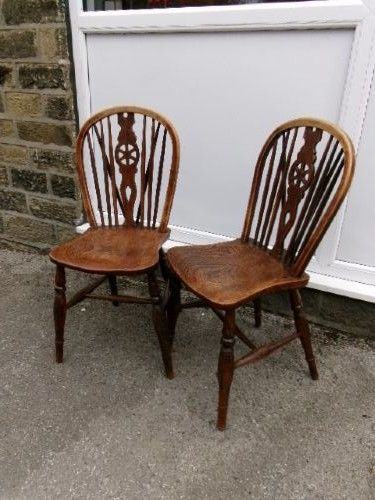
Back styles are classified by the configuration of the wooden members rising from the seat. Wheelbacks feature a pierced splat shaped like a carriage wheel, whereas lathbacks use flat horizontal slats.
Stick backs and spindle backs utilise vertical turned rods to support the upper rail. Hoop backs bend a single continuous piece of timber to form both the arms and the top crest.