
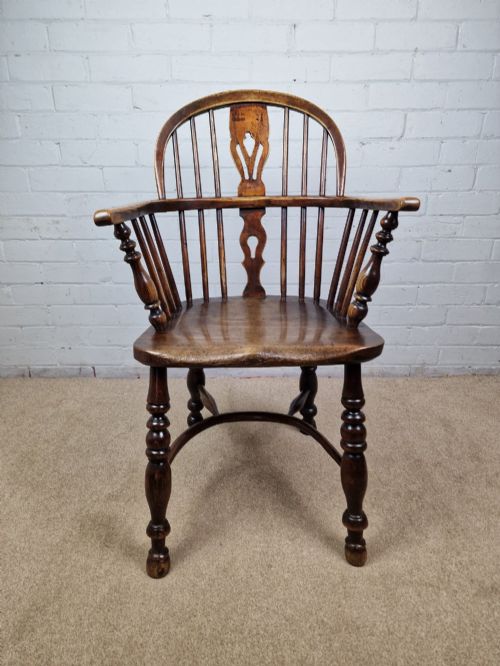


Elm Seat Captains Chair
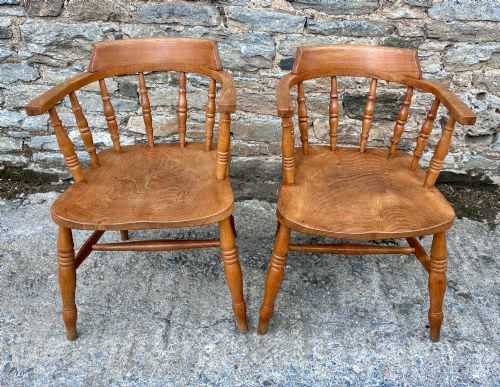
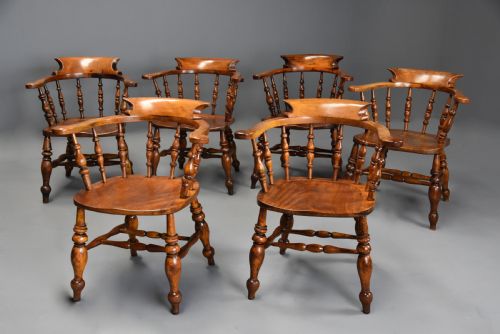
An elm seat captains chair offers robust vernacular comfort, built from sturdy woods like ash, beech, and yew with a rich, grained seat.
Elm Seat Captains Chair
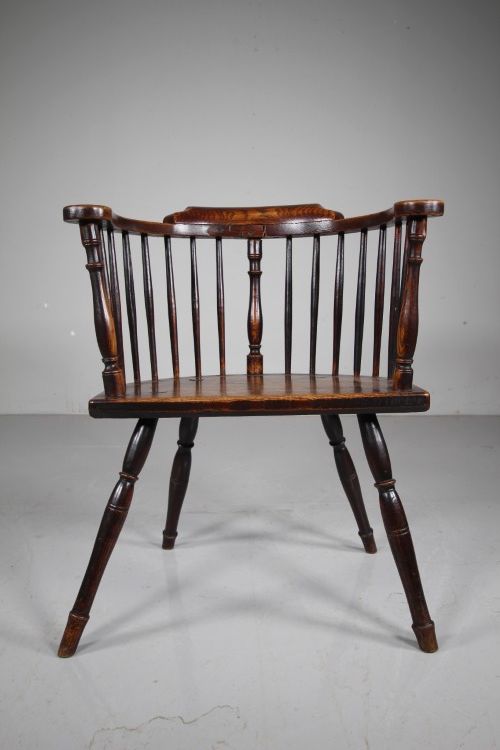
When you search for an elm seat captains chair, you are looking at sturdy wooden seating designed for enduring daily use in homes, offices, and taverns. These pieces function primarily as armchairs, desk chairs, and low back Windsor chairs originating from English country traditions across the eighteenth, nineteenth, and early twentieth centuries.
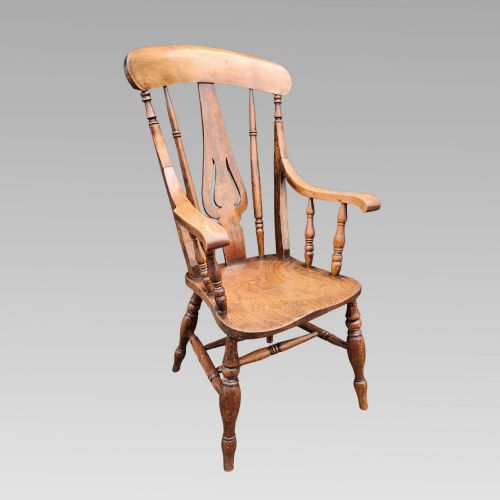
You are most likely to meet Victorian examples and nineteenth century country versions on this page. They typically appear as smokers bows, broad arm models, or spindle and lyre back farmhouse armchairs built with solid timber components.
The form spans straightforward utilitarian seating for clerks and tavern patrons alongside more refined domestic library and office chairs. Their common thread remains the shaped wooden seat paired with a curved wooden arm bow.
How they were made
Constructed primarily using traditional Windsor chairmaking techniques, these seats combine solid shaped elm with turned components in beech, ash, or yew. The central seat plank is sculpted with a deep saddle depression for comfort, while spindles and legs are turned on a lathe and joined using pegged mortise and tenon joints.
Additional structural integrity often comes from double H under stretchers linking the legs beneath the seat. Woods like burr elm provide distinctive figure in the timber, while secondary framing woods supply the necessary tensile strength for upright spindles and curved arm rails.
Many of these sturdy captain seats carry generations of ink stains on their writing arms from long hours spent by clerks.
What varies in quality
The distinction between ordinary and superior pieces rests on timber selection and sculptural depth. Chairs utilising highly figured burr elm seats or contrasting woods such as yew for the arms display a higher grade of craftsmanship than uniform utilitarian versions.
Proportion and execution of the steam bent arm bow also dictate quality. A well balanced sweep with comfortable arm heights and neatly turned spindles shows greater maker skill than heavier, purely functional workshop output.
Fred Walker Rockley
The Elm Seat Captains Chair Glossary
- Smokers bow
- A low back Windsor chair variant with a continuous curved arm rail and short turned spindles, popular in 19th century domestic and tavern settings. This form provides compact elbow support while maintaining a low profile.
- Windsor chair
- A chair built with a solid wooden seat into which all other components - legs, back spindles, and armbow - are separately socketed. The construction relies on interlocking turned and bent parts rather than a continuous frame.
- Under stretcher
- The horizontal wooden rods connecting the legs beneath the seat to prevent outward spreading and add rigidity. Double H versions offer increased structural bracing.
- Broad arm
- An expanded wooden armrest designed on some captain and office chairs to provide a flat writing surface. It broadens the functional utility of the seat.
- Burr elm
- A specialised growth formation in elm timber yielding highly textured, swirling grain patterns. It is prized by makers for decorative seating surfaces.
Elm Seat Captains Chair: Frequently Asked Questions
What is a smokers bow chair?
A smokers bow is a low back Windsor chair featuring a rounded wooden arm bow and short turned spindles. It was commonly used in taverns, smoking rooms, and farmhouses.
They share the solid elm seat construction typical of captain chairs but maintain a more compact silhouette designed for comfortable leaning.
How do I date an elm seat chair?
Dating relies on observing construction methods, tool marks, timber choice, and wear patterns across the frame. Nineteenth century versions often show distinct lathe turning styles and varied secondary woods like beech or ash.
Archival examples from the Georgian and Victorian eras display evolving joinery techniques and proportions that help separate earlier vernacular pieces from later reproductions.
Were these chairs used at desks?
Many nineteenth century examples served directly as desk, office, or clerk chairs. Their sturdy arm supports and shaped seats made them suitable for prolonged seating in studies and administrative rooms.
Low back designs fit neatly beneath writing tables while offering robust back support during daily work.
Why is elm used for the seat?
Elm timber possesses interlocking grain fibres that resist splitting when subjected to heavy daily use and seasonal temperature changes. This resilience made it the preferred wood for sculpted saddle seats.
Makers relied on its toughness to support the wedged leg tenons and heavy downward pressure without cracking.