

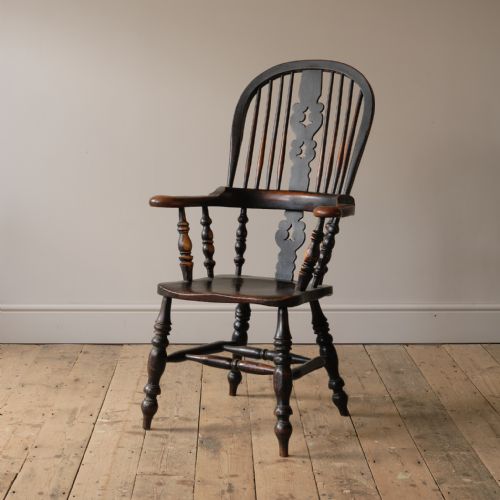
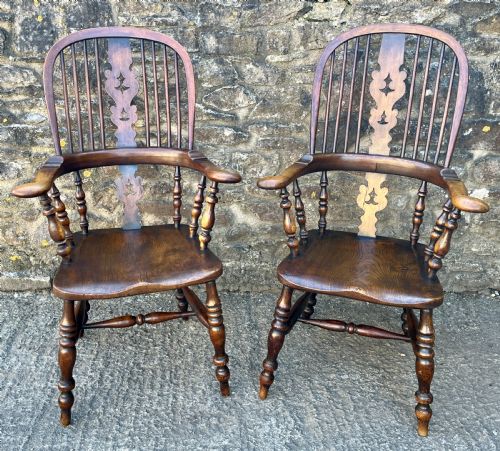


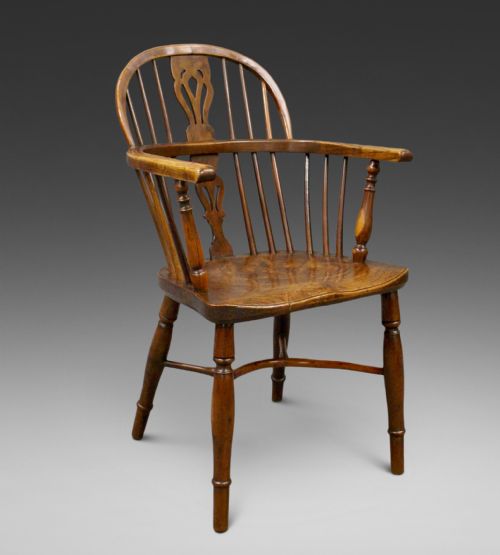


Elm Broad Arm Armchair
An elm broad arm armchair brings enduring rustic character to a room, offering a solid timber seat and the distinctive wide arm rest characteristic of country seating.
Elm Broad Arm Armchair
The elm broad arm armchair is a traditional country seating form defined by its generous, flat wooden armrest designed to hold a book or writing material. Buyers exploring this category encounter sturdy Windsor chairs created during the nineteenth century, the Victorian era, and the Edwardian period.
The regional variations include Yorkshire and North Country examples alongside Welsh stick chairs. Most pieces on this page combine an elm seat with ash spindles, yew wood framework, or fruitwood accents.
These chairs serve as practical everyday seating and display the honest construction methods of English vernacular furniture making. Their robust proportions and warm timber tones suit both traditional and modern interiors.
Construction and timber selection
Makers constructed these armchairs by seating spindle backs and legs directly into a thick, saddled elm seat using traditional wedged tenon joints. Elm provided the necessary toughness and resistance to splitting for the solid seat plank.
Ash and yew wood supplied the strength required for the bentwood hoops, arched bows, and slender spindles. Fruitwood and beech occasionally appeared in the framework, showcasing the varied timber resources available to regional joiners.
Elm Broad Arm Armchair Retail Price Guide 2026
Typical asking prices for elm broad arm armchair among the pieces listed under this phrase on Sellingantiques today, from the lower quarter to the upper quarter. They describe what is for sale here now, not the wider market.
Materials recorded across these pieces include elm, ash, yew, oak, yew wood, beech, and fruitwood.
Assessing craftsmanship and proportion
Quality in these chairs rests upon the balance of the proportions and the degree of sculptural shaping evident in the elm seat. A superior example displays a deeply saddled seat, well-turned spindles, and a flowing continuous arm bow.
The choice and combination of timbers influence the overall character, with figured yew wood or rich dark elm commanding particular attention. The integrity of the joined structure and the preservation of the original timber surface distinguish finer regional pieces.
The Elm Broad Arm Armchair Glossary
- Broad arm
- An armchair featuring an extended, flat wooden armrest designed to provide a writing or resting surface. This feature is particularly characteristic of northern country seating.
- Windsor chair
- A chair built with a solid wooden seat into which the legs and back spindles are tenoned directly. The back typically incorporates a bentwood bow or comb piece.
- Vernacular furniture
- Domestic objects made by local craftsmen using regional traditions and readily available materials rather than following metropolitan fashion. These pieces prioritize utility and local construction methods.
- Saddled seat
- A wooden chair seat hollowed out into a concave shape for comfort. This technique requires skilled adze and scorper work by the maker.
- Stick chair
- A form of vernacular seating where the back and legs are simply tenoned into a solid plank seat without a steam-bent overarching bow. They represent an early and robust method of construction.
Elm Broad Arm Armchair: Frequently Asked Questions
How do I care for an elm seat?
Keep wooden chairs away from direct heat sources and sudden temperature shifts to prevent the timber from splitting. Apply a suitable wax polish periodically to nourish the surface and maintain the natural lustre of the grain.
Avoid using harsh chemical cleaners or excess moisture when dusting the chair. Gentle care preserves the historical finish and the rich colour accumulated over centuries.
Were these chairs used for writing?
The wide wooden arm was specifically created to provide a convenient surface for writing, reading, or holding papers. This practical addition made them popular in farmhouses and studies before dedicated writing desks became common.
Examples from Yorkshire and northern regions frequently exhibit this generous arm design. They combine the supportive back of a Windsor chair with a functional work surface.
What woods are mixed in these chairs?
Makers frequently combined multiple timbers within a single chair based on the structural demands of each part. Elm was chosen for the thick solid seat because its interlocking grain resists splitting.
Ash, yew wood, and fruitwood were utilised for the bent hoops, slender spindles, and turned legs. This multi-timber construction demonstrates the resourcefulness of regional woodworkers.
How can I tell a regional style?
Regional variations appear in the shaping of the arm bow, the turning of the legs, and the profile of the comb piece. Yorkshire and North Country pieces often display distinctive comb-back arrangements and robust proportions.
Welsh stick chairs show different construction details in how the back sticks meet the top rail. Examining these structural nuances reveals the local workshop traditions behind each piece.