





Elizabethan Blanket Box
These elizabethan blanket box pieces are heavy timber chests of the sixteenth century, built to hold household linens and valuables safely.
Elizabethan Blanket Box
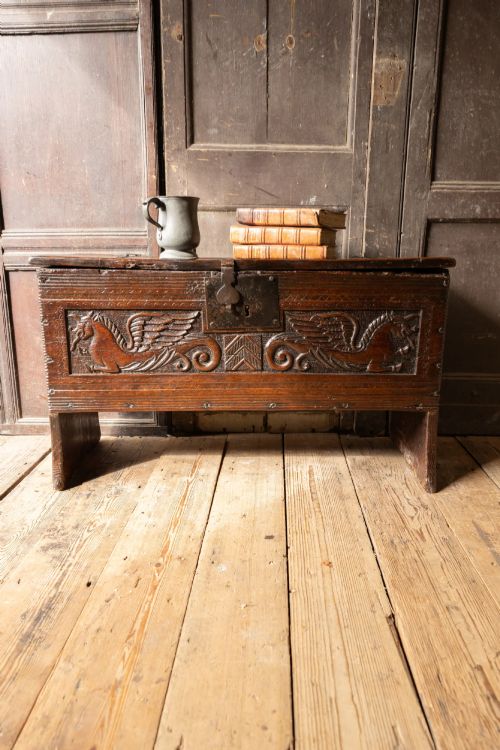
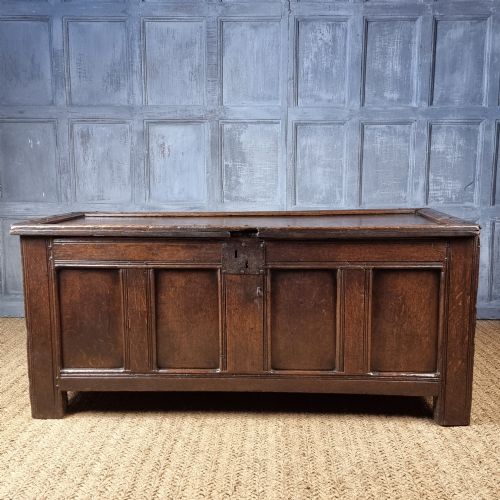
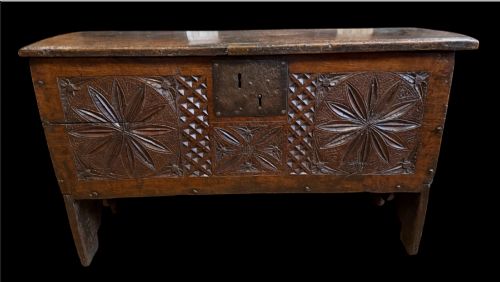
An elizabethan blanket box most often takes the form of a boarded or plank chest constructed from solid oak, designed for domestic storage in the sixteenth century. Many surviving examples originate from regional workshops in Wales and the West Country, displaying sturdy pegged construction and primitive joinery.
Makers occasionally produced variant forms such as small box stools or occasional tables from the same period. Later nineteenth century revivals also appear on the market, copying the heavy proportions and carved ornamentation of the original Tudor and Elizabethan eras.
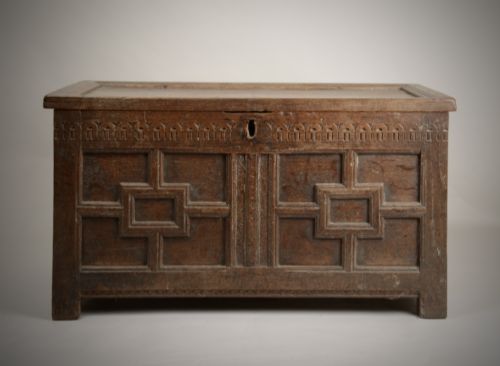
The primary forms found here are simple six-plank chests and carved coffers intended to sit against walls or at the foot of beds. These receptacles served both practical storage needs and displayed the status of the household through carved decoration.
Materials and construction
The primary material across these pieces is solid oak, frequently supplemented by fruitwood inlay and secured with wrought iron hardware. Craftsmen relied on boarded construction and simple plank joints to build durable boxes capable of withstanding heavy daily use.
Decoration on authentic sixteenth century examples involves hand carving directly into the timber, featuring motifs such as winged fantastic beasts and geometric panels. Later revival pieces replicate these traditional timber selection and joining techniques to mimic sixteenth century output.
Elizabethan Blanket Box Retail Price Guide 2026
Typical asking prices for elizabethan blanket box among the pieces listed under this phrase on Sellingantiques today, from the lower quarter to the upper quarter. They describe what is for sale here now, not the wider market.
Listings here span the sixteenth, eighteenth, and nineteenth centuries, featuring oak, fruitwood inlay, and wrought iron hardware.
Assessing quality
Quality in an elizabethan blanket box rests upon the crispness of the original hand carving and the proportion of untouched sixteenth century timber. Pieces featuring detailed figural work, such as carved winged fantastic beasts, stand apart from plain planked variants.
The degree of later alteration affects the standing of a piece, as many chests suffered replacement hinges, feet, or lid boards over the centuries. Retaining original ironwork and authentic regional construction marks the difference between a standard boarded coffer and a notable regional survival.
The Elizabethan Blanket Box Glossary
- Boarded chest
- A primitive storage box constructed from vertical planks pinned together with wooden pegs, forming the basis of early domestic furniture.
- Coffer
- A heavy wooden box with a lid, traditionally used for storing valuables, documents, or textiles before the widespread use of wardrobes.
- Box stool
- A small seated piece of furniture featuring a hinged lid that provides concealed storage beneath the seat.
- Wrought iron
- Iron beaten into shape by hand while hot, commonly used for the strap hinges and latches on early chests.
Elizabethan Blanket Box: Frequently Asked Questions
What were elizabethan blanket boxes used for?
These robust chests primarily stored household textiles, woollen blankets, and valuable documents in sixteenth century homes. Their heavy construction and lidded design kept contents secure from damp and pests.
In wealthy households, they also functioned as impromptu seating or tables when draped with textiles, serving multiple roles in modest domestic spaces.
How do I spot a revival piece?
Revival pieces, often dating from the nineteenth century, tend to feature machine-sawn timber and brighter, cleaner internal surfaces. The colour and patina of the oak generally lack the deep oxidation accumulated over four centuries.
Carving on later copies can appear overly uniform or stiff compared to the varied hand work found on genuine sixteenth century woodwork.
Where were these chests made?
Surviving sixteenth century examples frequently originate from regional English workshops, with distinct groups hailing from Wales and the West Country. Local carpenters used native oak to build these sturdy storage items.
Regional differences appear in the specific choice of carving motifs and the thickness of the boards used in the basic construction.
How should I care for an oak chest?
Keep early oak furniture away from direct heat sources and sudden temperature shifts to prevent the dry timber from splitting or warping. Maintain a stable indoor climate to protect the ancient wood.
Apply occasional traditional wax to nourish the surface, avoiding modern chemical polishes that can damage the historic patina.