


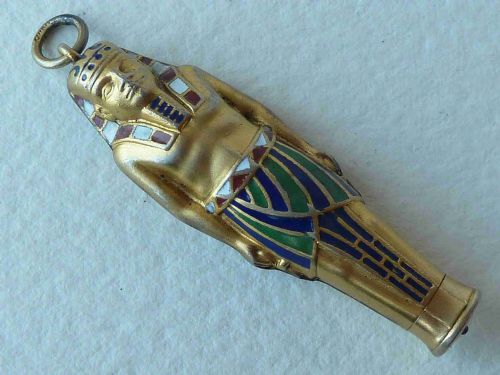
Egyptian Revival Silver
Egyptian revival silver brings the unmistakable motifs of the pharaohs, sphinxes and scarabs into domestic objects and personal ornaments.
Egyptian Revival Silver
Egyptian revival silver encompasses decorative items, desk accessories and personal ornaments created during the Victorian, Art Nouveau and Art Deco periods. These pieces draw directly on the archaeology and decorative arts of ancient Egypt, translating architectural forms, hieroglyphs and divine figures into metalwork.
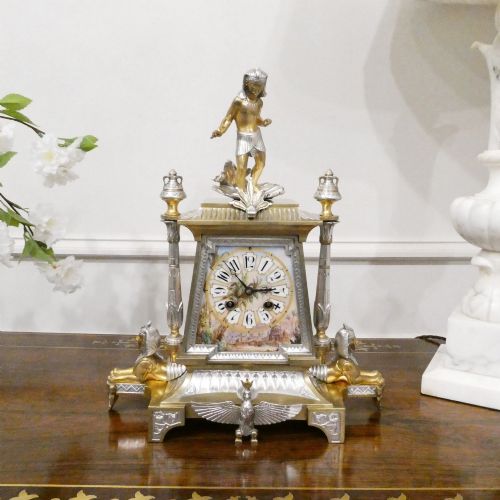
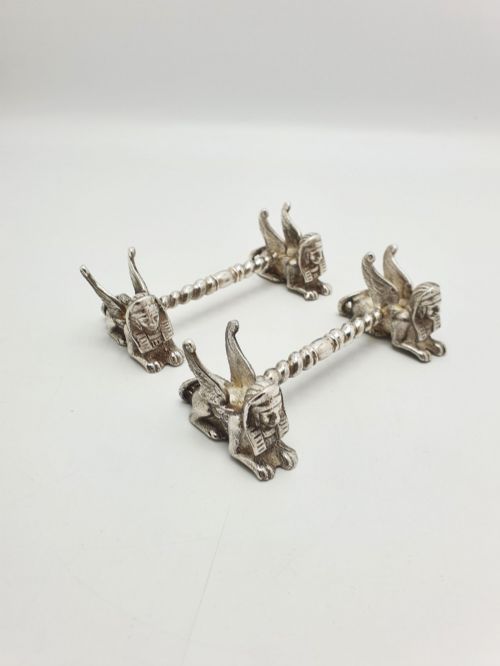
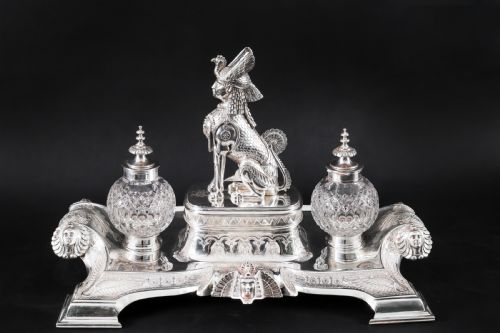
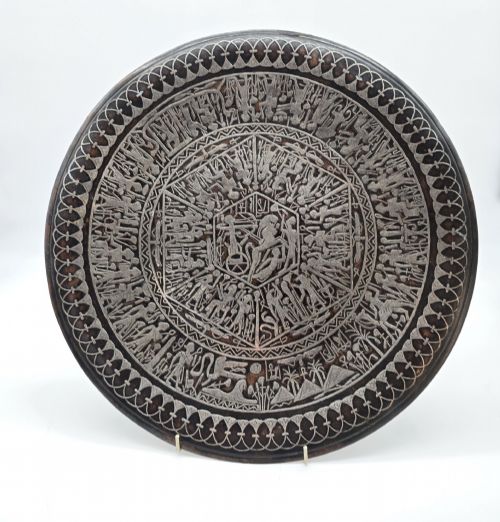
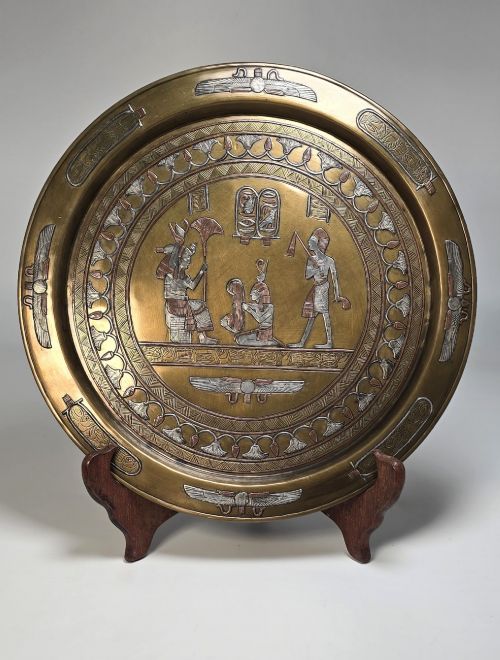
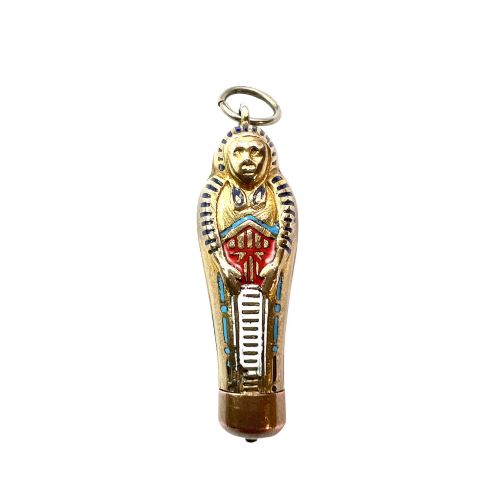
Buyers encountering this search phrase find everything from small novelty propelling pencil pendants and vesta cases to larger mantel clocks, inkstands and wall chargers. The smaller items often take the form of sarcophaguses, scarabs or sphinxes, while the larger decorative works incorporate Cairo ware inlays and classical figures.
The objects span multiple decades from the late nineteenth century through to the mid twentieth century. Pieces from the Victorian era sit alongside later Art Deco iterations, demonstrating how the fascination with Egypt endured across distinct stylistic movements.
How they were made
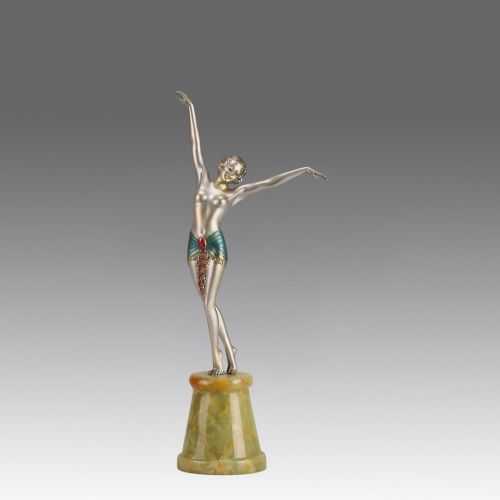
Makers utilised sterling silver, silver plate, bronze and brass as foundations for these pieces, frequently combining metals such as copper and silver inlay to create contrasting surface patterns. Cold-painted bronze and gilt metal also appear, adding distinct colouration to figurative works.
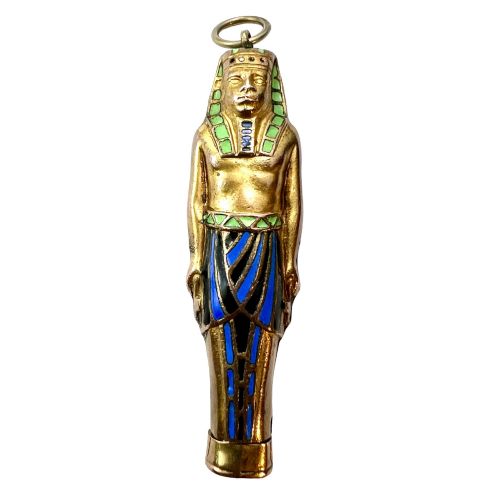
Enamel work frequently provides vivid detail on smaller items like pendants and charms, while Cairo ware pieces rely on metal inlay techniques. Casting, chasing and plating form the primary structural methods across the range of objects.
Several miniature pharaohs secretly slide open to reveal tiny removable mummies tucked inside.
What varies in quality
Quality rests in the precision of the casting and the crispness of the chased details that define the pharaonic motifs. Superior pieces maintain sharp relief on miniature figures like sphinxes and scarabs, whereas lesser examples show softened edges and generalized forms.
The standard of applied materials creates a clear distinction across the range. Finer items integrate hand-applied enamel work and complex metal inlays cleanly into the design, reflecting the skill of the silversmith or workshop.
Richard et Cie·Josef Lorenzl·Wilkinson and Co·Levinger and Bissinger·Charles Horner·Thomas White·Henry Bourne
The Egyptian Revival Silver Glossary
- Cairo ware
- Metalwork featuring distinct silver and copper inlay patterns, often associated with Grand Tour souvenirs and Middle Eastern metalworking traditions from the late nineteenth and early twentieth centuries.
- Sarcophagus
- A stone or metal coffin container, miniaturized in these silver and enamel pieces to form novelty pendants, vesta cases and charms that open to reveal a hidden mummy.
- Scarab
- The dung beetle sacred in ancient Egypt, frequently rendered in silver, pewter and enamel as brooches, pendants and jewellery.
- Propelling pencil
- A mechanical writing instrument that advances its lead through a turning mechanism, often formed here as an Egyptian pharaoh or sarcophagus.
- Vesta case
- A small pocket container designed to hold matches, frequently fashioned in sterling silver with engraved or applied Egyptian revival motifs.
Egyptian Revival Silver: Frequently Asked Questions
What periods do these pieces date from?
The items span from the late nineteenth century through the Victorian period and into the Art Deco and mid-twentieth century eras. Makers drew inspiration from archaeological discoveries during these decades.
Most examples cluster around the late Victorian period and the nineteen-twenties, reflecting renewed public interest following major tomb excavations.
How were smaller novelty pieces used?
Items like sarcophagus pendants, scarab brooches and propelling pencils functioned as personal accessories and items of daily utility. They allowed wearers to display fashionable archaeological interests on watch chains or clothing.
Vesta cases held matches for daily use, combining practical function with detailed pharaonic iconography.
What materials appear most frequently?
Sterling silver and silver plate form the primary structural metal for most objects, often paired with enamel for added colour. Bronze, brass and pewter also appear across sculptures, inkstands and brooches.
Cairo ware items typically incorporate copper and silver inlay upon a bronze or brass body, creating distinct contrasting surface designs.
How do I distinguish Victorian from Art Deco pieces?
Victorian examples tend to display heavier, ornate engraving and classical architectural proportions inspired by early excavations. They often include substantial sterling silver inkstands and sphinx figures.
Art Deco items from the nineteen-twenties favor stylized, streamlined geometries in figures and pendants, frequently incorporating vibrant enamel work and novelty mechanisms.